“ Esmé was still in her wrapper of silk and lace, when Lady Blakeney came to her next day. Came, white and excited, her eyes blazing, her face tense. For half an hour Esmé sat almost silent, listening to an outpouring of plot and plan. The weak, flighty woman developed undreamt-of powers of organization. ”
Esmé
Definition and stakes
Esmé, a literary figure frequently portrayed as a woman navigating intricate emotional and social realms, appears in a range of 19th- and early 20th-century narratives. Authors such as Peer, Hichens, and Young examine her through perspectives of endurance, intercultural exchanges, and philosophical contemplation.
In The Oyster, Peer presents Esmé as a woman confronting deception and societal pressures, while Young’s The Stronger Influence emphasizes her engagement with colonial settings. Likewise, Lew Wallace’s Ben-Hur draws thematic parallels in matters of self-identity and obligation. These differing portrayals converge on Esmé’s lasting significance as an emblem of human frailty and the struggle between individual autonomy and external pressures.
Quotes about “Esmé”
F. E. Mills Young, The Stronger Influence
“ The native woman and the English girl spoke in tongues incomprehensible to one another; but the language of baby worship is universal; and the Kaffir mother smiled appreciatively, pleased at the notice taken of her babe. She went on her way with the light of the sun in her eyes, which met its fierceness as the eyes of the animals meet the sun, unblinking and without inconvenience. Esmé looked after her and admired her free graceful walk, the upright poise of her head. The people who live in the sun show a superb indifference to its power. ”
“ Unpitied, wrongly suspected, Esmé's heart broke as she tore at the locked door. If one could find the backward road—if the Great Powers would give us back the years, seeing as we see now. Lie and scream and bleed, little human, the way is always onward—there are no scissors to cut the false stitches we have made. ”
“ The cold air called for furs. Their rich softness was everywhere, and among them all Esmé felt her coat attracted admiring eyes. Over her black dress, the blue lining brilliant over the dark, with her hair massed against a dead black hat, Esmé was remarkable. "An actress?" she heard a woman ask. What Esmé would call a stodgy woman, expensively dressed, a country cousin with a London friend. "No, a Mrs Carteret, remarkable-looking, isn't she?" "Well, Bertie. What is it?" Esmé could scarcely wait as her husband ordered tea. "What has Uncle Hugh done?" ”
The Best Short Stories of 1918…
“ He went head on at the other, and they fell, woven as one machine, just inside the German lines.“Somehow I got back to our fellows; God knows I wish I hadn’t.“Every man in our escadrille paid in his own way unconscious tribute to Esmè’s memory. We were awfully and justly proud of him,—it’s something to have died for France,—but for all of us the fun, the excitement, of the work had gone, been snuffed out. No one turned corkscrew somersaults, Esmè’s great stunt; no one did any of his special tricks any more, not even to show off before the new men. ”
“ Men stared at the beautiful English woman in her daring green hat and gorgeous furs. Sipping her liqueur, Esmé tried to lose her irritation in dreams of the future. Bertie would be home; they would take up their old happy life; but even more happily. She would be so well off now. Able to buy her own frocks, to help in many ways. When she got back she would go off to hunt somewhere. Esmé looked at her hands; they were so much thinner. Would she be strong enough to hunt? ”
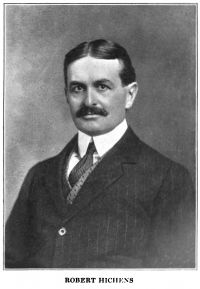 Robert Smythe Hichens,
The Green Carnation
(1894)
Robert Smythe Hichens,
The Green Carnation
(1894)
“ Smith says seems to me rather true." "I think one's temperament should be one's leader in life, certainly," he answered. "The blind leading the blind." "It is beautiful to be blind. Those who can see are always avoiding just the very things that would give them most pleasure. Esmé says that to know how to be led is a much greater art than to know how to lead." ”
William Gray Elmslie, Professor W. G. Elmslie, D.D.: Memoir and Sermons
“ You must not kick away the ladder by which you rose to fortune. Ah! and sometimes into the bright sunshiny present the past comes with a very long bill to pay—comes with a very stern face and a demanding hand, and bids you, perhaps, risk all that is making your heart so warm, and so proud, and so gay.That was the case with Esther. She was a Jewess. She owed her birth and her breeding to that despised, exiled people. She had won her proud position on the emperor's throne through the planning, and toiling, and sacrifice of her Jewish guardian. And now her people's destiny hangs on the balance. ”
Zénaïde A. Ragozin, Chaldea: From the Earliest Times to the Rise of Assyria
“ By making their founders, Asshur, and Aram, and Heber, etc., sons or descendants of one great head or progenitor, Shem, a son of Noah. It is a kind of parable which is extremely clear once one has the key to it, when nothing is easier than to translate it into our own sober, positive forms of speech. The above bit of genealogy would read thus: A large portion of humanity is distinguished by certain features more or less peculiar to itself; it is one of several great races, and has been called for more than a hundred years the Semitic, (better Shemitic) race, the race of Shem. ”
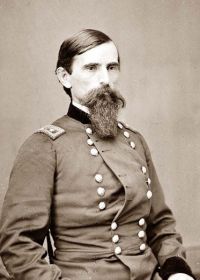 Lew Wallace,
Ben-Hur: A tale of the Christ
(1880)
Lew Wallace,
Ben-Hur: A tale of the Christ
(1880)
“ They do not know in the city that I have back my people. I shrank from telling it to the Egyptian; but this little one will rejoice with me over their restoration, and welcome them with love and sweet services of hand and heart. She will be to my mother another daughter; in Tirzah she will find her other self. I would wake her and tell her these things, but—out on the sorceress of Egypt! Of that folly I could not command myself to speak. I will go away, and wait another and a better time. I will wait. Fair Esther, dutiful child, daughter of Judah! ”
William Gray Elmslie, Professor W. G. Elmslie, D.D.: Memoir and Sermons
“ Nothing lay between them and the actual possession and enjoyment but the country of Edom, so they sent an eager message to the king, their kinsman, asking leave to pass through the territory so that they might get at their enemies and his. The king of Edom doubted them, or he was churlish, and refused to give them passage. No doubt every brave young Hebrew warrior went to Moses at once and said, "Let us force our way through; if they will not yield us passage we shall make it for ourselves—we are able, we have the weapons, we have the spirit; let us get at the homes that are waiting for us." ”
 Franz Delitzsch,
Biblical commentary the Old Testament…
Franz Delitzsch,
Biblical commentary the Old Testament…
“ For, as Kliefoth has correctly observed, “there are six heathen nations mentioned, viz., Asshur, Elam, Meshech-Tubal, Edom, the princes of the north, and Sidon; and if we add Egypt to the list, we shall have seven, which would be thoroughly adapted, as it was eminently intended, to depict the fate of universal heathenism.” A principle is also clearly discernible in the mode in which they are grouped. Asshur, Elam, and Meshech-Tubal represent the greater and more distant world-powers; Edom the princes of the north, and Sidon the neighbouring nations of Israel on both south and north. ”
Charles Johnston, Travels in southern Abyssinia, Vol… (1844)
“ The connexion also of the name Esau, or Esar, with the profession of soldiers, is evident, for in oriental mythology it is identified with the god Mars; whilst on the other hand, the word Israel, in Hebrew, I believe, as in Amharic has an immediate reference to labour, as the name Jacob has also to the heel, which coincides very singularly with the idea prevalent in India, that the labouring class have all sprung from the foot of Brahmah. ”
 George Adam Smith,
The Expositor's Bible: The Book of the Twelve Prophets…
George Adam Smith,
The Expositor's Bible: The Book of the Twelve Prophets…
“ Amos looked out on foreign nations across a quiet Israel; his views of the world are wide and clear; but in the Book of Hosea the dust is up, and into what is happening beyond the frontier we get only glimpses. There is enough, however, to make visible another great change since the days of Jeroboam. Israel's self-reliance is gone. She is as fluttered as a startled bird: They call unto Egypt, they go unto Assyria. ”
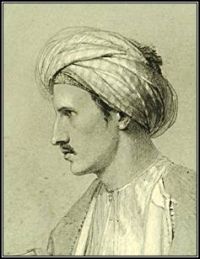 Edward William Lane,
An account of the manners and customs of the modern Egyptians
(1890)
Edward William Lane,
An account of the manners and customs of the modern Egyptians
(1890)
“ The Wezeer Sháheen then went, with his troops, outside the camp; and Mohammad Ibn-Kámil the Dromedarist came to him, and kissed his hand. The Wezeer asked him respecting ’Osmán. He answered, ‘I have no tidings of him.’ Meanwhile, El-Melik ’Eesa went to ’Osmán, and said to him, ‘The Wezeer is come with his troops, and they are outside the camp.’ So ’Osmán rose, and, reeling as he went, approached the tents; and the Wezeer Sháheen saw him, and perceived that he was drunk, and called to him. ’Osmán came. The Wezeer smelt him, seized him, and inflicted upon him the ‘hadd’ ”
 Georg Ebers,
The Historical Romances of Georg Ebers
Georg Ebers,
The Historical Romances of Georg Ebers
“ Mesu fell away; [Mesu is the Egyptian name of Moses, whom we may consider as a contemporary of Rameses, under whose successor the exodus of the Jews from Egypt took place.] and Pentaur may follow him. Must my aim be an unworthy one because it does not attract the noblest? Not so. Each feels himself made of better stuff than his companions in destiny, constitutes his own law, and fears to see the great expended in trifles; but I think otherwise; like a brook of ferruginous water from Lebanon, I mix with the great stream, and tinge it with my color. ”
 Ernest Renan,
The Position of the Shemitic Nations in the History of Civilization
(1862)
Ernest Renan,
The Position of the Shemitic Nations in the History of Civilization
(1862)
“ We should search in vain for an epic or a tragedy among the Shemitic nations; as vainly should we search among the Indo-European nations for anything analogous to the Kasida of the Arabs, and that species of eloquence which distinguishes the Jewish prophets and the Koran. ”
 Sabine Baring-Gould,
Legends of Old Testament Characters
(1871)
Sabine Baring-Gould,
Legends of Old Testament Characters
(1871)
“ Of Shem the Rabbis have somewhat to say. "I have found in the Midrash that the Rabbi Johanan, son of Nuri, said: 'The holy, ever-blessed God took Shem, son of Noah, and consecrated him priest of the Most High, that he should minister before Him; and He let his Majesty dwell with Him, and He gave him the name Melchizedek, a priest of the Most High God, king of Salem. His brother Japheth learnt the law of him in his school, till Abraham came, who learnt it in the school of Shem. ”
Thomas Kirkup and St George Stock, 1911 Encyclopædia Britannica (1911)
“ The Essenes were an exclusive society, distinguished from the rest of the Jewish nation in Palestine by an organization peculiar to themselves, and by a theory of life in which a severe asceticism and a rare benevolence to one another and to mankind in general were the most striking characteristics. ”
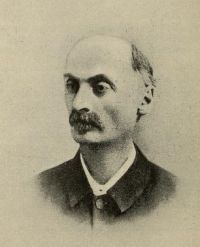 A. H. Sayce,
Early Israel and the Surrounding Nations
A. H. Sayce,
Early Israel and the Surrounding Nations
“ Israel was herding its flocks in Egypt, Edom was establishing itself in the mountains of Seir. Esau, the brother of Jacob, had already gathered around him a body of followers, and had married into the family of a Horite chief. His descendants, partly by conquest, partly by absorption, planted themselves securely in the country which was henceforth to be called Edom. Horite and Amalekite Bedâwin were alike absorbed into the new-comers, whose position in Edom resembled that of the Israelites in Canaan. ”
 James Freeman Clarke,
Ten Great Religions: An Essay in Comparative Theology
James Freeman Clarke,
Ten Great Religions: An Essay in Comparative Theology
“ There is not as great a difference, perhaps, but it is as real and as constant. Then the characters of races remain distinct, the same traits reappearing after many centuries exactly as at first. We find the same difference of character between the Jews and Arabs, who are merely different families of the same Semitic race, as existed between their ancestors, Jacob and Esau, as described in the Book of Genesis. Jacob and the Jews are prudent, loving trade, money-making, tenacious of their ideas, living in cities; Esau and the Arabs, careless, wild, hating cities, loving the desert. ”
Bible (1914)
“ Fight not against the Moabites, neither go to battle against them: for I will not give thee any of their land, because I have given Ar to the children of Lot in possession.10 The Emims first were the inhabitants thereof, a people great, and strong, and so tall, that like the race of the Enacims,11 They were esteemed as giants, and were like the sons of the Enacims. But the Moabites call them Emims.12 The Horrhites also formerly dwelt in Seir: who being driven out and destroyed, the children of Esau dwelt there, as Israel did in the land of his possession, which the Lord gave him. ”
 Sir William Cornwallis Harris,
The Highlands of Ethiopia
Sir William Cornwallis Harris,
The Highlands of Ethiopia
“ A proselyte to the religion of Ethiopia, Osmán had renounced the false prophet, and put away every Mohammadan abomination, coffee only excepted. Without the sober berry, he averred life to be a very burden; and the clergy were fain to close their eyes upon the malpractices of one, whose geographical information, united with great abilities as a spy, had exalted him to the highest place in the royal favour. ”
 Élisée Reclus,
Africa by Élisée Reclus/Volume 2
(1892)
Élisée Reclus,
Africa by Élisée Reclus/Volume 2
(1892)
“ Here is the centre of the religious empire, which stretches on the one hand as far as Senegal, on the other to Mesopotamia, comprising not less than 1,500,000 subjects, all "in the hands of their Sheikh, as the body is in the hands of those who lay out the dead." ”
 Orson F. Whitney,
Elias: An Epic of the Ages
Orson F. Whitney,
Elias: An Epic of the Ages
“ From Shem came Abraham, the ancestor of the House of Israel; and from Japheth the Gentiles, the founders of the most enlightened nations of modern times, including the United States of America. Ham, through Canaan, was the progenitor of the negro race, long held in slavery in this and other Gentile countries. The Ethiopian has also served the Semite, as Noah predicted. How Japheth has "dwelt in the tents of Shem," is partly shown by the history of Palestine, long dominated by the Gentiles, particularly the Turks, who still possess it. ”
Arthur Lillie, The Influence of Buddhism on Primitive Christianity
“ All the gods of the [Pg 21] Semites,—El, Schaddai, Adon, Baal, Moloch, Yahve, Kemosh,—were conceived in the likeness of Eastern monarchs. They had right absolute over all that was born and all that died in their realms. Man admits his vassalage. He adores the 'master,' and brings to his lord the first-fruits of his flock, his field, and his family." ("Religion of Israel," c. vi.) The French author goes on to say that during their sojourn in Egypt the Jews sacrificed human victims. ”
Unknown, The Book of the Thousand Nights and One Night (1901)
“ Divert thyself with eating and drinking and put away grief and concern from thy heart, and I will bring thee a hundred kings’ daughters; for thou hast no call to the daughters of the Jinn, over whom we have no power and who are not of our kind.’ But Seif said, ‘I cannot renounce her nor will I seek another than her.’ ‘How then shall we do, O my son?’ asked King Aasim; and Seif said, ‘Bring us all the merchants and travellers and pilgrims in the city, that we may question them of the city of Babel and the garden of Irem. ”
Various, Great short stories, Volume III…
“ It happened to me near Assiout, in Ismail's days. I was a bold young man then—too bold for Egypt. My father had a piece of ground by the river side that was afterward taken from us by Ismail for the Daira. "In our village lived a Sheikh, a very hard man; a Mussulman, an Arab, a descendant of the Prophet. He was the greatest Sheik for miles and miles around. He had a large white house, with green blinds to the windows, while all the rest of us in his government lived in mud-built huts, round and low like beehives. He had date palms, very many, and doums, and doura patches. ”
Theodore Gerald Soares, Heroes of Israel
“ The story of the deliverance from Egypt makes a long chapter, but it is full of exciting interest and shows the fearless character of the great leader who trusted in his God. It was a bold thing for Moses to return to Egypt and try to persuade the king to let Israel go. But when he was sent to threaten Pharaoh it was indeed a task requiring courage. Imagine a single man to-day demanding of the sultan of Turkey that he should free his slaves. ”
Franz Delitzsch,
Biblical commentary the Old Testament…
“ Verses 6-9 All the supports and helpers of Egypt will fall, and the whole land with its cities will be laid waste. - Eze 30:6. Thus saith the Lord Jehovah, Those who support Egypt will fall, and its proud might will sink; from Migdol to Syene will they fall by the sword therein, is the saying of the Lord Jehovah. Eze 30:7. And they will lie waste in the midst of waste lands, and its cities be in the midst of desolate cities. Eze 30:8. They shall learn that I am Jehovah, when I bring fire into Egypt, and all its helpers are shattered. ”
1911 Encyclopædia Britannica (1911)
“ SHEM (Hebrew for “ name, renown, posterity ”) , in the Bible, the eldest of the three sons of Noah, whose superiority over Canaan is reflected in the tradition that Noah pronounced a curse upon the latter (Gen. ix. 20–27) . In the genealogies (x. 2X sqq.) , Shem numbers among his descendants Assyrian, Arabian, Aramaean and Hebrew populations, whence the ethnic Semitic (strictly speaking, Shemitic) has been coined as a convenient term for these peoples. ”
