“ When the ‘Communitas’ or Estates of Scotland met at Scone on the 5th of February 1283, to regulate the succession to the crown, we find that the great holders of the land in Scotland consisted at this time, first, of thirteen of the great hereditary earldoms, one of which was held by a family of Anglic descent, and four by Norman barons who had succeeded by inheritance in the female line to the ancient Celtic earls ”
Estates of Scotland
Definition and stakes
The theme of “Estates of Scotland” has been addressed by authors such as Robert Chambers, Eben William Robertson, Hugh MacDiarmid, George W. T. Omond and Aeneas James George Mackay. It is often associated with terms like England, land, property, estate and law.
Quotes about “Estates of Scotland”
Various, Blackwood's Edinburgh Magazine…
“ We think we have said enough to convince our readers that this clause is not likely to set free many entailed estates in Scotland—at all events, not without a chaos of litigation, in which the elements of profit will have a tendency to range themselves on the side of the lawyers. ”
George W. T. Omond, The Early History of the Scottish Union Question
“ The Estates, in language not usually to be found in the statute-book, declare that the Act is passed in order that “as the present age is ravished in admiration with an so fortunate [67] beginning, so that the posterity may rejoice in the fruition of such an effectual Union of two so famous and ancient Kingdoms, miraculously accomplished in the blood and person of so rare a monarch.”But the Estates, while ready to lavish praise on the king, were determined that the Union was not to interfere with the independence of Scotland. ”
Lee L. Powers, The Cathedral Towns and Intervening Places of England…
“ We could but feel sorry that the laws of primogeniture and entailment of property yet prevail, and that England thus deprives herself and poor Ireland, her disconsolate child, of the rich blessings of an interested and land-loving, as well as soil-working people. The land is owned by a few lords. Estates must be kept entire, and so handed down through the male heirs from generation to generation. No absolute sale is possible, and a homestead can rarely be bought. The farm, be it little or great, cannot be owned by the tiller, but is held by the lord of the domain. ”
Various, Encyclopaedia Britannica, 11th Edition…
“ Scotland.—By the law of Scotland all men have right and privilege of game on their own estates as a real right incident thereto, which does not pass by an agricultural lease except by express words, or in the case of ground game by the act of 1880. The landlord is liable to the tenant for damage done to the surface of the lands in exercise of his right to the game and also for extraordinary damage by over-preserving or over-stocking. ”
Various, The New Gresham Encyclopedia. Ebert to Estremadura
“ Real estate descends to heirs; personal to executors or administrators. In ordinary language, an estate is a piece of landed property, especially one of some size. Estate duty, see Death Duties. In political history the term estate is applied to a distinct order or class in society. The term 'fourth-estate' is often used to designate the Press.Estates of Scotland, the name given to a body of similar constitution to the English Parliament, but with important differences, the king himself, as well as his officers, being responsible to the Estates for wrongs done. ”
John C. Cobden, The White Slaves of England
“ In Scotland, the estates of the nobility are even larger than in England. Small farms are difficult to find. McCulloch states that there are not more than 8000 proprietors of land in the whole of Scotland; and, as in England, this number is decreasing. In some districts, the cottages of the peasantry are as wretched [Pg 20] as any in England or Wales. ”
Robert S. Rait, The Scottish Parliament Before the Union of the Crowns
“ If the production of a legal system forms but a small apologia for a Parliament which existed [xxvi] for several centuries, it nevertheless entitles the Scottish Estates to be reckoned among the forces which have made the nation; and it is legitimate cause of satisfaction that, in spite of all the forces of misgovernment which held sway for so long, the peculiarity of the law of Scotland is its regard for the poor and the weak. ”
Various, Chambers's Journal of Popular Literature… (1853)
“ The courts of Scotland, as a rule, decline to interfere with the administration of the estates of deceased foreigners, among whom Englishmen are included. It is a necessary condition to a Scotch court confirming an executor or appointing one that the domicile of the deceased shall have been in Scotland. Some of the English courts are guided by much more expansive ideas of their duty, and will take charge of the estate of any man, if it be large enough to promise remuneration to Chancery and Probate practitioners. ”
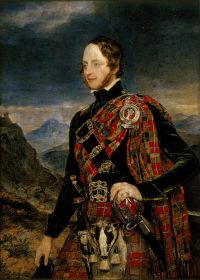 Eben William Robertson,
Scotland under her early kings Volume 1…
(1862)
“ If David may be looked upon as the regulator of the “Two Estates,”—the Clergy, and the Baronage and Freeholders connected with the land,—he may be regarded as the founder of the “Third Estate” in Scotland, the actual creator of the free population [293] connected with the towns. An intramural population was an anomaly amongst the people of the North, and in their older codes no provision was made for a free proprietary dwelling in towns, land, and land only, being connected with freedom and hereditary right. ”
The Scottish Highlands, Highland Clans and Highland Regiments…
“ Agreeably to these observations, it is from the great estates on the northern and western sides of Scotland that the descendants of the original tacksmen of the land, with their families, have been obliged to migrate by the positive and unrelenting demands of rent beyond what it was in their power to give, and, indeed, in violation of those conditions that were understood and observed between the original granter and original tenant and their posterity for centuries. ”
Various, Chambers's Journal of Popular Literature… (1853)
“ Scotland, of course, as well as England, enjoys the benefit of the statutory provisions applicable to estates under three hundred pounds. The persons entitled to succeed, or one of them, can do all that is necessary to transfer the estate from the dead to the living without the intervention of a lawyer or the burden of his bill of costs. He can go to the sheriff-clerk of the county of the domicile, give the requisite information ”
Henry Hallam, Constitutional History of England…
“ The first were to plant on their lands within three years forty-eight able men, eighteen years old or upwards, born in England or the inland parts of Scotland; the others to do the same in proportion to their estates. All the grantees were to reside within five years, in person or by approved agents, and to keep sufficient store of arms; they were not to alienate their lands without the king's licence, nor to let them for less than twenty-one years; their tenants were to live in houses built in the English manner, and not dispersed, but in villages. ”
The Scottish Highlands, Highland Clans and Highland Regiments…
“ The country lies very quiet; it is exceeding poor; trade is [298] nought; the English has all the moneys. Our noble families are almost gone: Lennox has little in Scotland unsold; Hamilton’s estate, except Arran and the Baronrie of Hamilton, is sold; Argyle can pay little annual rent for seven or eight hundred thousand merks; and he is no more drowned in debt than public hatred, almost of all, both Scottish and English; the Gordons are gone; the Douglasses little better; Eglintoun and Glencairn on the brink of breaking; many of our chief families estates are cracking ”
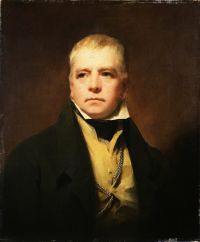 Sir Walter Scott,
A Legend of Montrose — Tales of my Landlord–3rd series…
“ The causes which moved the Convention of Estates at this time to take such an immediate and active interest in the civil war of England, are detailed in our historians, but may be here shortly recapitulated. They had indeed no new injury or aggression to complain of at the hand of the King, and the peace which had been made between Charles and his subjects of Scotland had been carefully observed; but the Scottish rulers were well aware that this peace had been extorted from the King, as well by the influence of the parliamentary party in England, as by the terror of their own arms. ”
Robert Chambers, Domestic annals of Scotland (1861)
“ John Lumsdain, who was nominated to the charge of the estates of the Earl of Panmure, had greatly obstructed the establishment of the church in the district, and proved altogether ‘very uneasy to presbyteries and synods.’ Suppose the unruly king of Sweden should land on the east of Scotland, there were all the tenants of those large estates in the obedience of men who would hail his arrival and forward his objects! ”
Various, Lippincott's Magazine, August, 1885
“ In some cases the extravagance and bankruptcy of the old owners caused the titles to pass to Englishmen, while in others the inheritors of the estates were more and more inclined to insist upon their legal rights and to introduce in the management of their property rules similar to those in use in England. Early in the present century sheep-farming was found to be profitable, and many large areas of glen and mountain were cleared of the greater part of their population and converted into sheep-farms. Many of the mountainous parts of Scotland are of little use for agricultural purposes. ”
Philip Wilson, Studies in Irish History, 1649-1775… (1903 | portal)
“ In 1787, the English Government restored the estates confiscated in Scotland in 1745. (Parliamentary History, vol. xxiv., 1316-1322.) I am not aware that this measure has been censured by any of the writers who have denounced the repeal of the Act of Settlement. ↑ Clarendon, in a letter to James (August 14th, 1686) probably over-rates the number of purchasers. "There are very few of the original soldiers and adventurers now left, or of their descendants: of the latter not twenty families and no great number of the former. ”
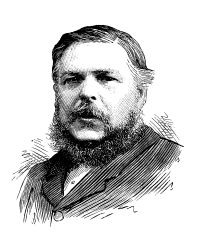 Robert Giffen,
Popular Science Monthly
(1884)
“ The explanation appears to be, however, that the increase of property in Scotland is, to some extent, only apparent, being due partly, for instance, to the fact that by Scotch law mortgages are real property, whereas in England they are personal property, so that it was necessary, in the course of administering the tax, to pass a special law enabling the Commissioners of Inland Revenue to bring Scotch mortgages into the category of personal property. ”
Various, The Cornhill Magazine (vol. XLI, no… (1860)
“ Lawyers acquired land very freely in Scotland at all times. Whatever may have been the methods by which some legal founders of families in England acquired wealth, Scottish writers, including Sir Walter Scott, give a dark picture of the lawyer laird. The comparative poverty of land-owners, and land being the sole security for money in the country, gave the sharp man of business peculiar opportunities. ”
Robert Mudie, The Modern Athens
“ Freeholds, in the Scottish counties, are held either by charters directly from the King, or by charter from subjects as their vassals. No part of the lands in Scotland being now in the hands of the crown, the extent of holdings by crown charter cannot be increased; and, as the rents of the crown vassals were valued a considerable time ago, an increase of rent, either from the improvement of the estate, or from any other cause, does not increase its political value. None but those who hold of the crown, and whose valued rents are of the stipulated amount, can vote for members of parliament ”
Various, Blackwood's Edinburgh Magazine…
“ And there can be no doubt that the system of entails has saved many an ancient line from being thrust from its home of centuries to a strange spot, and this not only among the titled and wealthy, but among the yeomanry and "statesmen." In England, of course, a family may frequently perish through the possession of an estate in fee-simple passing into the hands of an unthrifty representative of the line, as the settlements require constant renewal. But in Scotland the system of perpetual entail exercises a much more potent influence in their behalf. ”
William Neilson Hancock, What are the causes of the distressed state of the Highlands of Scotland… (1852)
“ In the next place, the cost of selling land in Scotland is very considerable. I made the most careful inquiries on this point, and, without troubling you with the results in detail, I may state generally, that all the impediments to the cheap sale of land which exist in this country exist in Scotland, only in each case in a less degree. The result is, that the cost of making out perfect title to land is less in Scotland than here, but is still so great as to operate as an effectual barrier to the sale of land in small enough parcels to admit of the creation of peasant properties. ”
Francis Watt, The book of Edinburgh anecdote (1912)
“ A successful counsel usually ends on the bench, and at the Scots bar the exceptions are rare indeed. The two most prominent that occur to one are Sir George Mackenzie and Henry Erskine. Now, Scots law lords at one time invariably, and still frequently, take a title from landed estate. This was natural. A judge was a person with some landed property, which was in early times the only property considered as such, and in Scotland, as everybody knows, the man was called after his estate. ”
Eben William Robertson,
Scotland under her early kings Volume 1…
(1862)
“ The sale was of course a political fiction, founded on the assumed forfeiture of the Scottish branch of the earl’s family, through which their hereditary office was supposed to have reverted to their English connections. The real king and the pseudo-king united in the joint exercise of an act of shadowy sovereignty—a joint protest of their claims as vassal king and overlord of Scotland—the sole substantial gain, the purchase-money, falling to the earl ”
Sir Walter Scott,
A Legend of Montrose — Tales of my Landlord–3rd series…
“ Fife-shire being in a peculiar manner their own, and possessing many and powerful friends even north of the Forth and Tay, the Scottish Convention of Estates saw no danger sufficient to induce them to alter the line of policy they had adopted, or to recall from the assistance of heir brethren of the English Parliament that auxiliary army of twenty thousand men, by means of which accession of strength the King's party had been reduced to the defensive when in full career of triumph and success. ”
D. Macleod Malloch, Law and Laughter
“ From the Institution of the Court of Session by James V of Scotland till well into the nineteenth century, it was the custom of Scottish judges when taking their seat on the Bench to assume a title from an estate—it might even be from a farm—already in their own or their family's possession. So we find that nearly every parish in Scotland has given birth to a judge who by this practice has made that parish or an estate in it more or less familiar to Scottish ears. ”
Alexander Mackenzie, The History of the Highland Clearances
“ Bright, in a speech delivered at Birmingham, August 27, 1866, that one-half of the soil of Scotland belongs to ten or twelve persons? Are you aware of the fact that the monopoly of landed property is continually increasing and becoming more and more exclusive? ”
 John Cassell,
Cassell's Illustrated History of England
(1865)
“ This once discovered and reflected upon, men rose in the conscious dignity of their own nature, and very soon in England and Scotland, the third estate, as it was called, became in reality the first estate, for it was now perfectly aware that out of it proceeded the life-blood of the government, the supplies for all its exigencies, and that it had but to raise its voice to be heard throughout every department of the state, every corner of the realm. ”
“ Secondly, the smallest possession held by a free farmer appears to have been two bovates or oxgangs of land, or the fourth of a ploughgate, called in some parts of the country a husband-land; and we find that in the north of Scotland the name of Rath was given to this portion of land, a name which in the Irish Laws signified the homestead, which formed the lowest single tenancy. ”
Eben William Robertson,
Scotland under her early kings Volume 1…
(1862)
“ Men possessed property in land long before it was secured by written documents, and many a burgh had been in the enjoyment of rights and privileges by unwritten law long before it was thought necessary to obtain the sanction of a feudal charter, which must no more be regarded as necessarily creating a new burgh, than as necessarily introducing a foreign settler into Scotland, and eradicating a native proprietor. ”
 Andrew Lang,
A Short History of Scotland
“ Scotland had but little of the constitutional evolution so conspicuous in the history of England. The reason is that while the English kings, with their fiefs and wars in France, had constantly to be asking their parliaments for money, and while Parliament first exacted the redress of grievances, in Scotland the king was expected “to live of his own” on the revenue of crown-lands, rents, feudal aids, fines exacted in Courts of Law, and duties on merchandise. ”
Related terms
Authors who wrote about “Estates of Scotland”
Robert ChambersEben William Robertson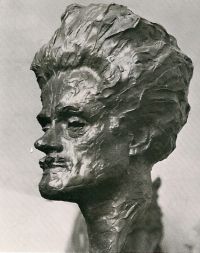 Hugh MacDiarmidGeorge W. T. Omond
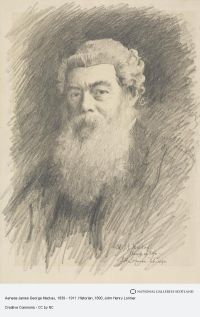 Aeneas James George MackayDavid MaxwellRobert S. RaitMargaret MacArthurRobert Mudie
 W. F. SkeneT. B. Lang
 Walter ScottWilliam Neilson HancockJohn D. CarrickFrancis Watt
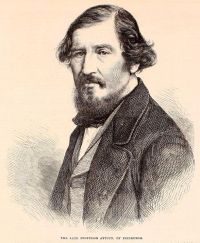 William Edmondstoune Aytoun
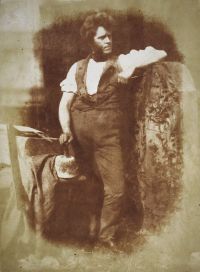 Hugh Miller
 Jane PorterEdward Bannerman RamsaySir Walter Scott
Eben William RobertsonHugh MacDiarmidGeorge W. T. OmondAeneas James George MackayDavid MaxwellRobert S. RaitMargaret MacArthurRobert MudieW. F. SkeneT. B. LangWalter ScottWilliam Neilson HancockJohn D. CarrickFrancis WattWilliam Edmondstoune AytounHugh MillerJane PorterEdward Bannerman RamsaySir Walter Scott