Flamboyant Gothic

Definition and stakes

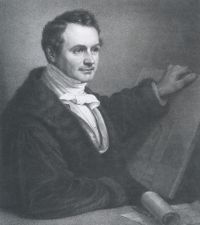
Portrait of John Ruskin John Ruskin,  The Stones of Venice, Volume 1…

“ In fact, when the groups of shafts became excessively complicated, the expansion of their small abaci was of no use: it was dispensed with altogether, and the mouldings of pier and jamb ran up continuously into the arches.
This condition, though in many respects faulty and false, is yet the eminently characteristic state of Gothic: it is the definite formation of it as a distinct style, owing no farther aid to classical models; and its lightness and complexity render it, when well treated, and enriched with Flamboyant decoration, a very glorious means of picturesque effect.
”
Source: Gutenberg

P. L. Jacob,  The Arts in the Middle Ages and at the Period of the Renaissance

“ But after the Rayonnant Gothic came the Flamboyant, which, always{395} under the pretext of lightness and grace, denaturalises the ornaments, the forms, and even the proportions of the architectural members. It effaces the horizontal lines which used to give two stories to the windows of the nave, fills up the nave with irregular compartments, cœurs, soufflets, and flammes; suppresses the angles of the pillars and sharpens the mouldings; leaves even to the most massive supports nothing but an undulating, vanishing, impalpable form, where shadow cannot fix itself ”
Source: Gutenberg

Get perspective with Kwize: daily news enlightened by great literature