“ What right have we, under any pretence whatever, to deny the obligation of a law, so plainly, so solemnly, so awfully promulgated by the God of heaven himself? The very position of the fourth commandment in the decalogue, might teach men to regard it with peculiar veneration. It is the link that binds together heaven and earth—our duty to God and our duty to our neighbour. It is the pillar that supports the whole moral and religious fabric. To attempt to set aside the obligation to observe the fourth commandment, is therefore, in our view, a daring attack on the authority of the Lawgiver. ”
Fourth Commandment
Definition and stakes
The theme of “Fourth Commandment” has been addressed by authors such as John Nevins Andrews, Philip P. Wells, Maimonides, Joseph Deharbe and Matthew Henry. It is often associated with terms like God, ten, army, law and commander.
Quotes about “Fourth Commandment”
Tamar Davis, A General History of the Sabbatarian Churches (1851)
“ In consideration of this, and the strong worldly tendencies that bind the human heart, it is not surprising that thousands who have been brought up to recognise the obligatory and sacred character of the fourth commandment, and who were fully convinced of its unalterable claims, have been induced to abandon it; while others, for the same reasons, although fully convinced of their duty, have refused to embrace it. ”
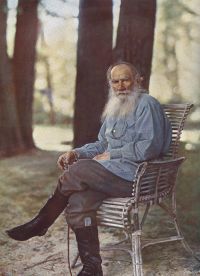 Leo Tolstoy,
My Religion
(1885, 2nd edition, 1889)
“ This fourth commandment was the one that I first understood; and it revealed to me the meaning of all the others. This simple, clear, and practical fourth commandment says: “Never resist evil by force, never return violence for violence: if any one beat you, bear it; if one would deprive you of any thing, yield to his wishes; if any one would force you to labor, labor; if any one would take away your property, abandon it at his demand.” ”
Charles Coppens, The spiritual exercises of St. Ignatius (1916)
“ The Fourth Commandment obliges subjects to reverence and obey their superiors when they mean to impose an obligation of conscience; and they must be supposed to mean it when the good of souls or the glory of God requires them thus to use their authority. A precept of obedience in virtue of the vow is rarely imposed; but commands in matters of some importance derive from the natural law power to oblige any subjects to obey their lawful superiors, independently of any vow. If serious consequences are likely to follow from the violation of the command, the sin may be grievous. ”
Joseph Deharbe, A Complete Catechism of the Catholic Religion (1912)
“ Respect the Commandment of fasting and abstinence as a Commandment which God Himself has given you through His Church, and consider it an honor to observe it strictly. THE THIRD, FOURTH, AND FIFTH COMMANDMENTS OF THE CHURCH. 1. What are we commanded by the Third and Fourth Commandments of the Church? By the Third and Fourth Commandments we are commanded, 1. To confess our sins faithfully at least once a year; and 2. To receive the Holy Communion worthily at Easter or during the Easter-time; that is, from the first Sunday in Lent till Trinity Sunday, inclusive. ”
 François Guizot,
World's Best Histories — Volume 7…
“ Strictly faithful to the spirit of the Gospel as to the supreme equality of all men in the presence of God, whatever might occasionally have been his consideration for the wishes of Louis XIV., Bossuet, when expounding the fourth commandment, the respect and submission due by children to their parents, was satisfied with adding,—"What else is commanded to us by the fourth commandment? ”
Matthew Henry, Matthew Henry's Commentary on the Whole Bible… (1700s)
“ This practice was forbidden in Rome by Numa, a pagan prince; yet commanded in Rome by the pope, a Christian bishop, but, in this, anti-christian. The use of images in the church of Rome, at this day, is so plainly contrary to the letter of this command, and so impossible to be reconciled to it, that in all their catechisms and books of devotion, which they put into the hands of the people, they leave out this commandment, joining the reason of it to the first; and so the third commandment they call the second, the fourth the third, &c.; ”
Edward Lewes Cutts, Parish Priests and Their People in the Middle Ages in England
“ Of the Ten Commandments.—Of the ten commandments of the Old Testament three relate to God, and constitute the first table; the remaining seven concern our neighbour, and are called the Commandments of the Second Table. The First Commandment is, [213] Thou shalt have no other gods before Me; by which all idolatrous worship is forbidden; and by inference all lots and incantations and superstitions [214] of letters, and such-like figments are forbidden. In the Second, where it is said, Thou shalt not take the Name of the Lord thy God in vain, all heresy is principally condemned ”
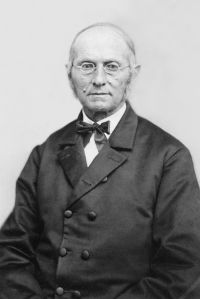 Joseph Bates,
The Seventh Day Sabbath, a Perpetual Sign…
“ I never can be made to believe that our glorious Commander designed that we should leave our sacrifices smoking on the altar of God, in the midst of the enemies' land, but rather that we should be pushing onward from victory to victory, until we are established in the Capital of His kingdom. ”
Matthew Henry, Commentary on the Whole Bible… (1700s)
“ Those that willingly walk after the commandment, even when it walks contrary to the command of God, will find the commandment an encroaching thing, and that the more power is given it the more it will claim. ”
Clement I, translated by Alexander Roberts and James Donaldson, Ante-Nicene Christian Library/Volume I (1865)
“ Let us then, men and brethren, with all energy act the part of soldiers, in accordance with His holy commandments. Let us consider those who serve under our generals, with what order, obedience, and submissiveness they perform the things which are commanded them. All are not prefects, nor commanders of a thousand, nor of a hundred, nor of fifty, nor the like, but each one in his own rank performs the things commanded by the king and the generals. The great cannot subsist without the small, nor the small without the great. ”
Joseph Fielding Smith, Origin of the 'Reorganized' Church and the Question of Succession
“ And yet, this commandment without which the whole earth was to be utterly wasted and destroyed—this eternal commandment that had been prepared before the foundation of the world—is not binding on them! ”
 Orson Spencer,
Letters Exhibiting the Most Prominent Doctrines of the Church of Jesus Christ of Latter-Day Saints
“ The first object of this priestly order is to teach all nations to become loyal and good citizens of the kingdom of God, observing all the commandments of God. One universal commandment of God is, for all men every where to repent and be baptized, and keep all other laws of God, as they shall be dispensed from the great High Priest through the delegated authorities. Now if all men do not obey these commands, they are liable to be dealt with as transgressors, and punished as evil doers. The command to obey is imperative upon all men. ”
 Claire von Glümer,
A Noble Name; or, Dönninghausen
“ And the allusion to the fifth commandment had its effect."If this is the way you take it, I must give up my plan," he said. "I enjoin upon no one any transgression of duty, any sin against God's commands. But you take a wrong view of it. ”
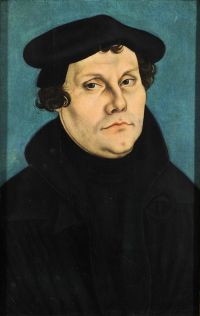 Martin Luther,
Martin Luther's Large Catechism…
“ Therefore, above all things, our young people should have this commandment earnestly enforced upon them, and they should be trained to hold this and the First Commandment in high regard; and whenever they transgress, we must at once be after them with the rod and hold the commandment before them, and constantly inculcate it, so as to bring them up not only with punishment, but also in the reverence and fear of God. ”
Great Speeches of the War/Authors, Great Speeches of the War (1915)
“ You cannot make war with a third or a fourth, and not even with half or two-thirds of a nation, you must have the whole nation to draw upon. In order to secure that you must have the recruiting of men for the new army under the direction and under the guidance of men who in their particular localities command the confidence of every section, every class, every creed, every faith, and every party. ”
Anglo-Saxon Riddles of the Exeter Book… (1963)
“ Christ, the commander, the true lord of victories, ordained me for conflict. I burn the living, unnumbered mortals, over all the earth. I afflict them with pain, yet never I touch them, whenever my lord bids me to battle. ”
Reginald Vere Laurence, The Cambridge Modern History, Volume 2… (1904)
“ They are to take the vows of poverty and chastity, and obedience to the General whom they set over themselves, in all things which concern the observance of their Rule. The power granted to the General is unprecedented in its extent. The right of command belongs to him entirely. ”
Saint Aquinas Thomas, Summa Theologica, Part II-II (Secunda Secundae…
“ The establishment of a religious order for the purpose of soldiering does not imply that the religious can wage war on their own authority; but they can do so only on the authority of the sovereign or of the Church. ”
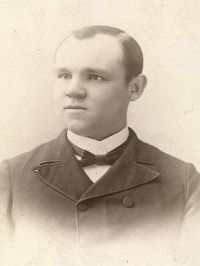 James E. Talmage,
Jesus the Christ — Chapter 31
“ THE GREAT COMMANDMENT. [13] The Pharisees, covertly rejoicing over the discomfiture of their rivals, now summoned courage enough to plan another attack of their own. One of their number, a lawyer, by which title we may understand one of the scribes who was distinctively also a professor of ecclesiastical law, asked: "Which is the first commandment of all?" or, as Matthew states the question: "Master, which is the great commandment in the law?" ”
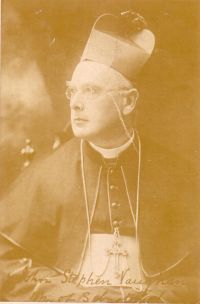 John S. Vaughan,
The Purpose of the Papacy
“ It exists for the express purpose of combating error and repressing evil, in whatever form it may appear; and whether it be instigated by the devil, or the world, or the flesh. But, let us ask, Who ever heard of an army without a chief? An army without a supreme commander is an army without subordination and without law or order; or rather, it is not an army at all, but a rabble, a mob.The supreme head of Christ's army—of Christ's Church upon earth, is our Sovereign Lord the Pope. Some will not accept his rule, and refuse to admit his authority. ”
 Philip Schaff,
Nicene and Post-Nicene Fathers…
(1885)
“ The expressions, “committed unto me,” and “according to the commandment,” show the matter to be worthy of credit, so that no one should think it discreditable, nor be hesitating about it, or discontented. If then it is a commandment, it is not at my disposal. I fulfill what is commanded. For of things to be done, some are in our power, others are not. For what He commands, that is not in our power, what He permits, is left to our choice. For instance, “Whosoever shall say to his brother, Thou fool, shall be in danger of hell fire.” (Matt. v. 22.) This is a commandment. ”
Matthew Henry, Commentary on the Whole Bible… (1700s)
“ That they join themselves to him as subjects to their prince and soldiers to their general, by an oath of fidelity and obedience, to serve him, not occasionally, as one would serve a turn, but to be constantly his servants, entirely subject to his command, and devoted to his interest. ”
 George Orwell,
A Clergyman's Daughter
(1935)
“ It had driven into her a far deeper understanding than she had had before of the great modern commandment—the eleventh commandment which has wiped out all the others: “Thou shalt not lose thy job.” ”
Leo Tolstoy,
My Religion
(1885, 2nd edition, 1889)
“ And the observance of his five commandments will bring peace upon the earth. They all have but one object,—the establishment of peace among men. If men will only believe in the doctrine of Jesus and practise it, the reign of peace will come upon earth,—not that peace which is the work of man, partial, precarious, and at the mercy of chance; but the peace that is all-pervading, inviolable, and eternal. The first commandment tells us to be at peace with every one and to consider none as foolish or unworthy. If peace is violated, we are to seek to re-establish it. ”
Doctrine and Covenants — Section 104
“ History of the Church 2:54-60. 1 Verily I say unto you, my friends, I give unto you counsel, and a commandment, concerning all the properties which belong to the order which I commanded to be organized and established, to be a united order, and an everlasting order for the benefit of my church, and for the salvation of men until I come—2 With promise immutable and unchangeable, that inasmuch as those whom I commanded were faithful they should be blessed with a multiplicity of blessings ”
William Arthur, The Pope, the Kings and the People
“ Great dangers still threaten the Church. Remember that in your regiment you stand, not merely as soldiers marching side by side; you also represent a principle before the world, the principle of the voluntary and disinterested defence of the Holy See. You are the nucleus around which will unite in the hour of danger the prayers, the succours, and the hopes of the Catholic world. Be, then, true soldiers of God. You have not merely duties, you have even a mission, and you will not fulfil it without union, discipline, moral conduct, and military instruction. ”
 Clement of Alexandria,
Ante-Nicene Fathers Vol. II, The Instructor…
(1885)
“ Thus also He who is our great General, the Word, the Commander-in-chief of the universe, by admonishing those who throw off the restraints of His law, that He may effect their release from the slavery, error, and captivity of the adversary, brings them peacefully to the sacred concord of citizenship. ”
The European Concert in the Eastern Question (1885)
“ Wherefore it is regarded as our imperial duty, knowing the benefits of the divine prescience, that we should be always disposed to consecrate our care and solicitude to the shielding and protection of our faithful subjects, who accurately fulfil the duties of obedience and submission to our Sublime Porte, and to provide for them quiet and safety under the life-giving shadow of our power. ”
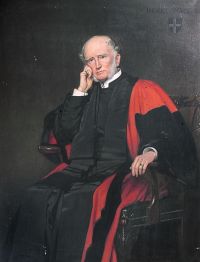 Henry Wace,
The War and the Gospel: Sermons and Addresses During the Present War
“ Of great commanders, moreover, no less than of kings, the words of our Collect are true, that their hearts are in God’s rule and governance, and that He disposes and turns them as it seems best to His godly wisdom. ”
Sutton E. Griggs, Imperium in Imperio: A Study of the Negro Race Problem…
“ They are ready to march. They are waiting for their commanders and the command to move forward. You are the commanders who must give the command. I urge, I exhort, I beseech you, my dear boys, to think not of yourselves. Let your kingdom be within. Lead them as they ought to be led, taking no thought to your own glory. ”
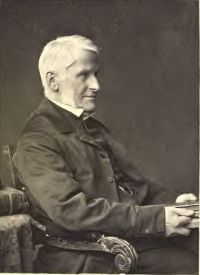 Edward Hoare,
Multiplied Blessings: Eighteen Short Readings
“ They are marked from the world by a clear line of separation. They bear His name; they wear His uniform; they rally round His banner; they are not ashamed of His reproach; and wheresoever He goeth there it is their joy to follow Him. There is no service like His, no commander so perfect, no struggle so noble, no victory so certain and so glorious.If we really be amongst the chosen band of faithful followers, our one standard in life must be the will of our great Commander. We must be watching each signal from Him, and owning no authority but His. ”
Various, The historians' history of the world in twenty-five volumes… (1905)
“ A stranger to political agitation and faithful to my military duties, I shall try to establish order and discipline in the federal troops, to make public and private property respected, to protect the Catholic religion in her ministers, her temples, and her religious establishments—in a word, to do everything to soften the inevitable evils of war. ”
Hubert Foster, Organization: How Armies are Formed for War
“ The Subordinate Commanders are expected to act on their own judgment in furthering the Commander’s purpose, observing the spirit rather than the letter of their Instructions. For, it should be noticed, military obedience in the higher ranks does not lie in literal conformity to Orders, but rather in a true conception of their spirit. ”
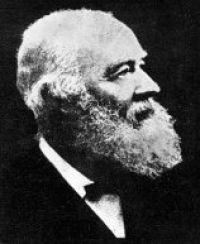 John Ball,
A Treatise of the Covenant of Grace
(1645)
“ For the Commandement is a lamp, and the Law is light, and reproofes of instruction are the way of life. The Commandements leade directly to that life, which deserves the name of life, eternall life. The Traveller takes the next way to his Journeyes end: No wise man will willingly step one foot out of the way to Heaven. If our limmes be crooked, we omit nothing that Art or Exercise can doe to set them strait: and shall not I take care to rectifie my soul, and bring it into right order? ”
“ We see no hope of successful resistance of that temptation apart from the mobilisation of the Christian forces within the Empire into an army committed to the sacred task of making the conscience of the Nation effectively Christian, leading the way in bringing about a closer approximation between the politics of the State and the programme of the Kingdom of God, and proclaiming that Kingdom at hand. ”
 Gilbert Keith Chesterton,
Orthodoxy — V: The Flag of the World
(1909)
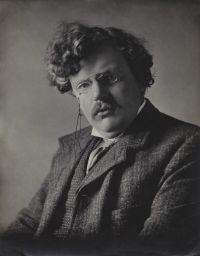
“ The Ten Commandments which have been found substantially common to mankind were merely military commands; a code of regimental orders, issued to protect a certain ark across a certain desert. Anarchy was evil because it endangered the sanctity. And only when they made a holy day for God did they find they had made a holiday for men. ”
Related terms
Authors who wrote about “Fourth Commandment”
 John Nevins AndrewsPhilip P. Wells
 MaimonidesJoseph DeharbeMatthew HenryLeo TolstoyAnonymousMartin LutherCharles CoppensLucy Helen Muriel SoulsbyTamar DavisEdward Lewes CuttsFrançois GuizotJoseph Fielding SmithOrson SpencerJames E. TalmagePhilip SchaffClaire von GlümerGreat Speeches of the War/AuthorsLady Mary Ross
