George Frederic Watts

Definition and stakes

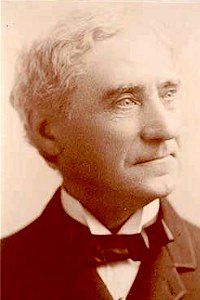
Portrait of Edwin Paxton Hood Edwin Paxton Hood,  Isaac Watts; his life and writings… (1875)

“ From the last years of the reign of Charles II. to the closing years of George II. constitutes the era of Watts. Every age seems eminently important to its actors—sometimes even to spectators—and yet that age stands out with singular distinctness. How different the times of Watts’ birth and those of his death: the infant in the arms of a weeping mother, beneath the bars of the dungeon of the imprisoned Nonconformist, and the old man, that same infant, passing away, with the great Methodist movement rising into activity over the whole nation. ”
Source: Gutenberg

Edwina Stanton Babcock,  Under the Law

“ At last Eleanor spoke: "And then came 'George's Trial.'" Watts saw the terrible effort it was to her to say the words, how she glanced at Pudge at her feet, and then, "George went [Pg 242] and Martin never came to me. Nobody came to me."
Watts sat there, the letter in his hand. "I came to you," he said simply. She flashed him a look of passionate gratitude.
"As Christ might have," she said with equal simplicity.
The lawyer, half irritably, turned away. "I wish you'd drop that Christ idea," he muttered. "I'm a man, I'm not a god. I am a man, and I want a dear woman who doesn't want me."
”
Source: Gutenberg

George Henry Blore,  Victorian Worthies: Sixteen Biographies

“ The career of Watts as a public man began in 1843 when he had reached the age of 26. The British Government, not often guilty of fostering art or literature, may claim at least the credit for having drawn him out of his seclusion at the very moment when his genius was ripening to bear fruit. In 1834 the Palace of Westminster, so long the home of the Houses of Parliament, had been burnt to the ground. ”
Source: Gutenberg

Get perspective with Kwize: daily news enlightened by great literature