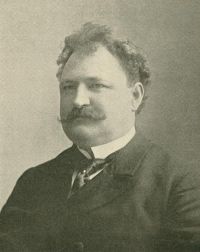
“ PUCCINI, AND THE OPERA IN GENERALA big broad man, with a frank open countenance, dark kindly eyes of a lazy lustrous depth, and a shy retiring manner. Such is Giacomo Puccini, who is operatically the man of the moment.It was behind the scenes during the autumn season of opera at Covent Garden in 1905 that I had the privilege of first meeting and talking with him, and about the last thing I could extract from him was anything about his music. ”
Giacomo Puccini
Definition and stakes
Giacomo Puccini (1858–1924), an Italian composer regarded as Verdi’s successor, embodied the verismo movement through operas such as La Bohème and Madame Butterfly, merging intense emotion with lyrical grace. Scholars like Wakeling Dry highlighted his command of vocal line and dramatic rhythm, while Marion Bauer commended his fusion of orchestral richness and widespread appeal.
Puccini’s compositions, although grounded in realism, surpassed simple tragedy through shared human emotions, establishing his place as a link between Romanticism and modernity. His groundbreaking harmonies and narrative techniques solidified his status as a pivotal figure in 20th-century opera.
Quotes about “Giacomo Puccini”
“ And it is for this reason, therefore, that Puccini stands as the most definitely operatic composer of the moment. He has had great opportunities, it is true, but he has had great struggles. Like Wagner, he is concerned, and ever has been, with just one phase of art. To those that come after may be left the task of deciding as to his exact place in the roll of fame. By the oneness of his endeavour, by the sincerity of his expression, by the spontaneity of his vocal melody, does Puccini stand worthily among the living masters of music. ”
“ One could very well imagine a production, on prevailing lines set upon elaboration of detail, in which Puccini's music, or a great deal of it, was used purely as incidental music. This suggestion, however, must in no way be taken to mean that as a whole the music of this opera lacks continuity of interest or fails to exhibit the close and essential union between speech and song. There are many pages of strong and definite lyrical charm, but somehow the main interest lies in the action which fascinates the spectator, rather, one feels, against his better—or more calm—judgment. ”