“ Think of the mighty task laid upon the Church to keep abreast of such a growth, and at the same time to keep the Faith alive in the mass,—for the great majority of this vast population are attached to the Orthodox Church. And this is the task to which the Greek Church addresses herself, to carry the blessings of Christianity to the farthest Russian outpost, and to keep the flame alive where it has already been kindled. ”
Greek Orthodox Church
Definition and stakes
The Greek Orthodox Church, a religious institution of profound historical and cultural significance, has long served as a central subject for scholars and writers examining its role in upholding faith, identity, and tradition. Authors such as Adrian Henry Timothy Knottesford Fortescue highlight its inheritance from Greek and Roman traditions, while Edwin Pears contrasts its emphasis on orthodoxy with the Roman Church’s focus on catholicity.
Richard Chenevix Trench underscores the symbolic importance of terms like “Orthodox,” emphasizing the Church’s view of itself as a defender of doctrinal purity. These viewpoints collectively portray the Greek Orthodox Church as both a spiritual foundation and a guardian of historical continuity, enduring external pressures while nurturing a unique cultural identity.
Quotes about “Greek Orthodox Church”
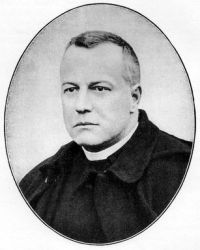 Adrian Henry Timothy Knottesford Fortescue,
The Orthodox Eastern Church
(1907)
“ The Orthodox Church is the heir of all the Greek traditions. The old glories of the free Greek States, vague memories of Marathon and Salamis, the majesty of the Roman Empire, their cause against Persian and Arab, Frank and Turk—it is all gathered together and still lives in the Holy Apostolic Orthodox Catholic Church of the Seven Councils. So one can understand how they feel about a renegade from that Church: he betrays the true faith of Christ, and he betrays the cause of the Fatherland. And one can understand, too, how the Church resents attempts at seducing her children. ”
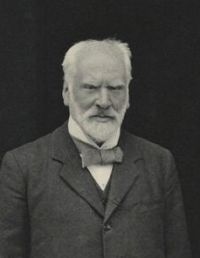 Edwin Pears,
The Destruction of the Greek Empire and the Story of the Capture of Constantinople by the Turks
“ While the Roman Church attached most importance to its Catholicity and to the necessity of propagating the faith, the Greek Church always prided itself rather on its Orthodoxy. If the question were whether the empire was Christian, and if the test of being a Christian nation were the jealous guardianship of every dogma in the precise manner that it had been formulated by the Councils of the Church, then the Orthodox Church, to which the inhabitants of the capital and empire belonged, would take a very high rank among Christian nations. ”
Related terms
Authors who wrote about “Greek Orthodox Church”
Adrian Henry Timothy Knottesford Fortescue Albert Farley Heard
 Theodosius of SkopjeWalter Frederic AdeneyRufus AndersonEdwin PearsVarious
 Gilbert MurrayWilliam MillerAlexander Clarence FlickWilliam J. Irons
 Julia Ward HoweJohn Brownlie
 Charles Thomas NewtonJoseph F. Smith
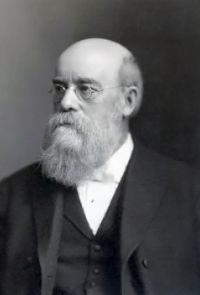 Washington GladdenFrancis A. Baker
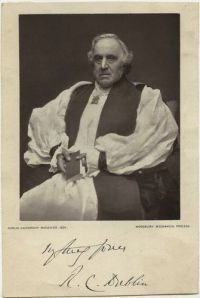 Richard Chenevix Trench
 John RuskinWilliam S. Nelson
