“ A Greek statue has as a rule no ornament at all: a young man racing or praying, an old man thinking, there it stands expressed in a stately and simple convention, true or false, the anatomy and the surfaces right or wrong, aiming at no beauty except the truest. It would probably seem quite dull to the maker of a mediaeval wooden figure of a king which I remember seeing in a town in the east of Europe: a crown blazing with many-coloured glass, a long crimson robe covered with ornaments and beneath them an idiot face, no bones, no muscles, no attitude. That is not what a Greek meant by beauty. ”
Greek statue
Definition and stakes
The theme of “Greek statue” has been addressed by authors such as Ernest Henry Short, J. P. Mahaffy, F. B. Tarbell, Percy Gardner and J. C. Stobart. It is often associated with terms like sculpture, marble, ancient, beauty and Greece.
Quotes about “Greek statue”
 Charles Seignobos,
History of Ancient Civilization
“ Usually in a Greek statue the head is small, the face without emotion and dull. The Greeks did not seek, as we do, the expression of the face; they strove for beauty of line and did not sacrifice the limbs for the head. In a Greek statue it is the whole body that is beautiful. ”
Ernest Henry Short, A History of Sculpture
“ Every Greek statue owes its greatness to the intensity of the artist’s attachment to one or other of these dominating beliefs. The Panathenaic frieze on the Parthenon was, primarily, the result of the first; the great temple statues of Zeus, Hera, Athena and Asclepius represent the fruits of the second; the glorious series of athletic statues by Hellenic sculptors of every period witness to the potency of the third. ”
J. P. Mahaffy, Rambles and Studies in Greece
“ Modern painters are becoming so alive to this, that among the most striking pictures in our Royal Academy in London have been seen, for some years back, scenes from old Egyptian and Assyrian life, in which the rich coloring of the architecture has been quite a prominent feature. But in Greek art—in the perfect symmetry of the Greek temple, in the perfect grace of the Greek statue—we come to think form of such paramount importance, that we look on the beautiful Parian and Pentelic marbles as specially suited for the expression of form apart from color. ”
J. P. Mahaffy, What Have the Greeks Done for Modern Civilisation…
“ The very idea of exceeding the excellence of a great Greek statue hardly enters the mind of the modern sculptor. If he could but approach the work of Praxiteles, or even of the nameless workers who carved the great tomb of Sidon, he would regard it as an astounding achievement.We shall find not a few who attribute this perfection of Greek sculpture to the great opportunities they had of observing the play of limb and muscle in their daily exercises in the palæstra, where men and boys exercised naked. ”
 James Freeman Clarke,
Ten Great Religions: An Essay in Comparative Theology
“ Every part of its exterior was adorned with Phidian sculpture; and within stood the statue of Athênê herself, in ivory and gold, by the same master hand. Another colossal statue of the great goddess stood on the summit of the Acropolis, and her polished brazen helmet and shield, flashing in the sun, could be seen far out at sea by vessels approaching Athens.The Greek sculptors, in creating these wonderful ideals, were always feeling after God; but for God incarnate, God in man. They sought for and represented each divine element in human nature. ”
Ernest Henry Short, A History of Sculpture
“ Nothing can be truer; nor can anything be more certain than that this truth must be realised absolutely by all who would penetrate beyond the outer courts of the temple of Hellenic sculpture. But though we cannot look at a Greek statue with the understanding of a Hellene, though classic sculpture is, as it were, written in an alien tongue, the historian can readily enumerate the influences by which the art was fostered, and the ideals which it sought to embody. ”
 John Addington Symonds,
Studies of the Greek Poets (Vol 1 of 2…
“ A new statue was, in a certain sense, a new deity, although the whole aim of the sculptor must, undoubtedly, have been to render visible the thoughts contained in myths and purified by poetry, and so to pass onward step-wise to a fuller and fuller realization of the spiritual type. It is this unity, combined with difference, that makes the study of Greek sculpture fascinating in itself, and fruitful for the understanding of the Greek religion. ”
Library of the World's Best Literature…
“ The quality of verse that fills the inn album to-day we all know; but Greek life was so compact of form and thought that even this unknown traveler's verse, scrawled with a stylus, still thrills, still rings, as the statue still sounds its ancient note.In this long succession of short poems is delineated the Greek character, not of Athens but of the whole circle of the Mediterranean. The sphered life of the race is in its subjects. Each great Greek victory has its epigrams. In them, statues have an immortal life denied to marble and to bronze. ”
 Jane Ellen Harrison,
Ancient Art and Ritual
“ The material, itself marble, is utterly unlike life, it is perfectly cold and still, it has neither the texture nor the colouring of life. The story of Pygmalion who fell in love with the statue he had himself sculptured is as false as it is tasteless. Greek sculpture is the last form of art to incite physical reaction. It is remote almost to the point of chill abstraction. The statue in the round renounces not only human life itself, but all the natural background and setting of life. The statues of the Greek gods are Olympian in spirit as well as subject. ”
J. P. Mahaffy, Rambles and Studies in Greece
“ To a public accustomed from childhood to such painted, and often richly dressed images, a pure white marble statue must appear utterly cold and lifeless. So it does to us, when we have become accustomed to the mellow tints of old and even weather-stained Greek statues ”
Various, The Atlantic Monthly, Volume 13…
“ But any beginner at a life-school could have pointed out in the same statue endless deficiencies in anatomical detail. The fold was put in, not because it was there, but because to the mind of the Greek artist it meant something. Sculptors of the present day comfort themselves with the belief that their works are more complete and more accurate in the anatomy than the antique. Very likely, for the ancients did not dissect. But this accuracy, if it is founded on no interest beyond accuracy, is after all an impertinence.The Greek ideal is founded on the exclusion of accident. ”
James Augustus St. John, The History of the Manners and Customs of Ancient Greece… (1842)
“ Even in Italy, where in modern times art has taken firmest root and most luxuriantly flourished, the object sought to be attained has lain on a lower level. Among the northern nations the grotesque variously disguised or modified is the spirit of art; among the Italians it is voluptuousness, among the Greeks the beautiful. Hence no Greek statue of the flourishing period of art is indecent. [930] Naked it may be, but like the nakedness of infancy, it is chaste as a mother’s love. ”
F. B. Tarbell, A History of Greek Art
“ In fact, there is only one indisputable case where we possess both a statue and the pedestal belonging to it, the latter inscribed with the name of an artist known to us from literary tradition. (See pages 212-3.) Thirdly, we have the actual remains of Greek sculpture, a constantly accumulating store, yet only an insignificant remnant of what once existed. These works have suffered sad disfigurement. Not one life-sized figure has reached us absolutely intact; but few have escaped serious mutilation. ”
Estelle M. Hurll, Greek Sculpture
“ The statue reproduced in our illustration shows the god in his mildest aspect. He is seated in a meditative attitude, clasping his hands over his upraised knee. His splendidly developed body is relaxed in a posture of repose, the shield is laid aside for a moment, and he rests from his labors. In the best period of Greek sculpture it was entirely contrary to the laws of taste to represent Ares in any warlike action. The gods must always be portrayed in a dignified repose befitting their superiority to mankind. ”
J. C. Stobart, The Glory That Was Greece: a survey of Hellenic culture and civilisation
“ Greek sculptors could not even yet sufficiently detach themselves from convention to copy the round contours of a baby’s face. Critics are divided in their attempts to reconstruct the motive of the raised right shoulder. Evidently the right hand held some object charming to the infant Dionysus, a bunch of grapes, perhaps, or the serpent-wreathed wand proper to Hermes. As it stands in the photograph we can recognise the loveliest statue in existence, but we cannot see the craft with which the surfaces and textures are rendered. ”
J. C. Stobart, The Glory That Was Greece: a survey of Hellenic culture and civilisation
“ Even the potter, though he is still where we left him in the Dipylon and Geometric styles of ornament, begins to depict the heroic mythology, and to evolve types which can be imitated and improved. This fixing of types or motives was essential to the progress of ancient art. The Greek sculptor does not carve a statue, as novel and original as possible, to send to an exhibition of art. He is commissioned to make, we will say, an Athena; in that case he has to express the armour, the ægis, the owl, perhaps the snake. ”
Estelle M. Hurll, Greek Sculpture
“ We have seen that in Greek sculpture the artist was not always left to represent the divinities according to his own imagination. For each one a certain fixed type had been gradually thought out in very early times, and this type was handed down from generation to generation. A statue or bust could always be recognized without any title. No one, for instance, could ever mistake Zeus for Apollo, or confuse Hera and Athena. ”
F. B. Tarbell, A History of Greek Art
“ Sculpture used merely as ornament, and having no sacred or public character. This class belongs mainly, if not wholly, to the latest period of Greek art. It would be going beyond our evidence to say that never, in the great age of Greek sculpture, was a statue or a relief produced merely as an ornament for a private house or the interior of a secular building. But certain it is that the demand for such things before the time of Alexander, if it existed at all, was inconsiderable. It may be neglected in a broad survey of the conditions of artistic production in the great age. ”
 William Smith,
Dictionary of Greek and Roman Geography
(1854)
“ Although the temple itself is nearly perfect, the sculptures hare sustained great injury. The figures in the two pediments have entirely disappeared; and the metopes and the frieze have been greatly mutilated. Enough, however, remains to show that these sculptures belong to the highest style of Grecian art. The relief is bold and salient, approaching to the proportions of the entire statue, the figures in some instances appearing to be only slightly attached to the table of the marble. ”
 Franz von Reber,
History of Ancient Art
“ For centuries cultivated nations have drawn from this inexhaustible fountain, in unconditional admiration,—learning from Greek statues, and acknowledging their matchless perfection. Although it may justly be concluded that a direct reconstruction of the architectural remains, as a whole, were it possible, is not to be recommended, still no one can hesitate to regard the best examples of Hellenic sculpture as a model worthy of direct emulation, the controlling influence of which upon the present age is only to be desired. ”
Percy Gardner, 1911 Encyclopædia Britannica (1911)
“ Of course the pediments and frieze of the Parthenon (q.v.) , whose work soever they may be, stand at the head of all Greek decorative sculpture. Whether we regard the grace of the composition, the exquisite finish of the statues in the round, or the delightful atmosphere of poetry and religion which surrounds these sculptures, they rank among the masterpieces of the world. The Greeks esteemed them far below the statue which the temple was made to shelter ”
J. C. Stobart, The Glory That Was Greece: a survey of Hellenic culture and civilisation
“ No one has found anything else in Greek sculpture which could belong to the same artist, or even to the same phase of art. I name her here only to prove that you cannot fairly close the history of Greek art with Praxiteles or any other named sculptors, seeing that an unnamed artist living two centuries later could produce a statue on the same plane of excellence.One of the most interesting figures among the warriors who followed Alexander was Demetrius, the Besieger of Cities, who gained his title from a celebrated but unsuccessful siege of Rhodes. ”
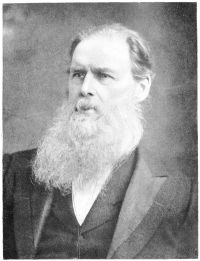 Edward B. Tylor,
Anthropology
(1881)
“ The Egyptian sculptors would not spoil polished granite with paint, but many of their statues were coloured, and there are traces of paint left on the Assyrian sculptures and on Greek statues, so that we are apt to have a wrong idea of a Greek temple, as though its marble gods and goddesses used to be of the glaring whiteness of a modern sculpture-gallery. The Greek terra-cotta statuettes in the British Museum are models of antique female grace in form and costume, only wanting the lost colour restored to make them the prettiest things in the world. ”
John Lord, Beacon Lights of History, Volume 03…
“ Even the comparatively few statues which have survived the wars and violence of two thousand years, convince us that the moderns can only imitate; they can produce no creations equal to those by Athenian artists. "No mechanical copying of Greek statues, however skilful the copyist, can ever secure for modern sculpture the same noble and effective character it possessed among the Greeks, for the simple reason that the imitation, close as may be the resemblance, is but the result of the eye and hand, while the original is the expression of a true and deeply felt sentiment. ”
William Hazlitt, The Collected Works of William Hazlitt…
“ In short, his landscapes are unequalled imitations of nature, released from its subjection to the elements, as if all objects were become a delightful fairy vision, and the eye had rarefied and refined away the other senses.The gusto in the Greek statues is of a very singular kind. The sense of perfect form nearly occupies the whole mind, and hardly suffers it to dwell on any other feeling. It seems enough for them to be, without acting or suffering. ”
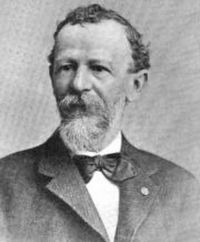 Maxwell Sommerville,
Engraved Gems
“ Many of the oldest Greek statues were accompanied with the names of the subjects represented, which seems to imply that the artist was conscious of his deficiency, both in character and expression. Yet in time they created single figures and groups in fair marble, whose symmetry and exquisite modelling of the human form command the admiration of all. ”
Charles Seignobos,
History of Ancient Civilization
“ There were thousands of statues in Greece, [92] for every city had its own, and the sculptors produced without cessation for five centuries. Of all this multitude there remain to us hardly fifteen complete statues. Not a single example of the masterpieces celebrated among the Greeks has come down to us. Our most famous Greek statues are either copies, like the Venus of Milo, or works of the period of the decadence, like the Apollo of the Belvidere. ”
Ernest Henry Short, A History of Sculpture
“ The sculptor or the painter, with the wings of the wren, must be content to flutter nearer to the flowers.In this truth lies the key which unlocks the mystery of the sculpture of Hellenistic Greece, one of the most elusive problems in the history of art. Before any marble of this age we feel we are face to face with the work of lesser spirits—men who cannot boast of the eagle wings of their brothers of the fourth and fifth centuries. Few can recall the name of a single Greek sculptor of the later age. There is certainly no Scopas, no Praxiteles, no Lysippus. ”
Edward Forbes, The Palace and Park
“ The conception, the anatomy, and beauty of form found in these statues denote a highly cultivated artistic taste and power, to which the peculiar faces, the invariable smile on the mouth, and a certain stiff angularity of treatment, form a marked contrast. We observe in them that turning-point in the history of Greek sculpture, when the conventionalities of an earlier system were receding before that love of nature and extraordinary perception of the Beautiful, which subsequently rendered the Greeks so pre-eminent in art. ”
Ernest Henry Short, A History of Sculpture
“ Athens has practically acknowledged defeat in the struggle for the hegemony of Greece. Instead of the all-pervading pride in citizenship, the Athenian is conscious of an increasing interest in himself as an individual. The old absorption in the ideal citizenship vanishes. For this very reason the sculptor strikes a note more akin to our nature. The cold, almost repellent, beauty of the fifth-century sculpture is replaced by a new and more sensuous grace.What were the historical circumstances which brought about this entire change in the Greek artists’ outlook upon life? ”
Related terms
Authors who wrote about “Greek statue”
Ernest Henry ShortJ. P. MahaffyF. B. TarbellPercy GardnerJ. C. StobartEstelle M. Hurll Walter PaterDorothy MillsCharles SeignobosFranz von Reber
 William Wetmore StoryReginald Stuart Poole, Herbert Appold Grueber and George Francis HillPhilip Sanford MardenVariousF. A. WrightEdward ForbesJohn Addington Symonds
 Oscar WildeSamuel BirchPausanias
Walter PaterDorothy MillsCharles SeignobosFranz von ReberWilliam Wetmore StoryReginald Stuart Poole, Herbert Appold Grueber and George Francis HillPhilip Sanford MardenVariousF. A. WrightEdward ForbesJohn Addington SymondsOscar WildeSamuel BirchPausanias