Hegesippus

Definition and stakes

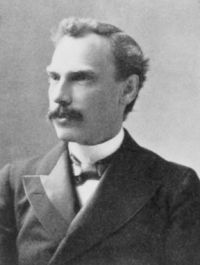
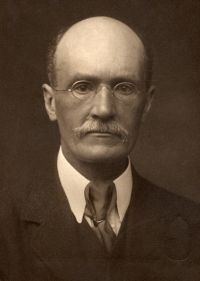
Portrait of W. Sanday W. Sanday,  The Gospels in the Second Century

“ With this conclusion the fragments of the work of Hegesippus that have come down to us agree. The quotations made in them are explained most simply and naturally, on the assumption that our Gospels have been used. The first to which we come is merely an allusion to the narrative of Matt. ii; 'For Domitian feared the coming of the Christ as much as Herod.' Those therefore who take the statement of Eusebius to mean that Hegesippus used only the Gospel according to the Hebrews are compelled to seek for the account of the Massacre of the Innocents in that Gospel. ”
Source: Gutenberg

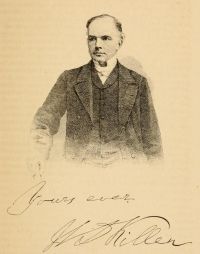
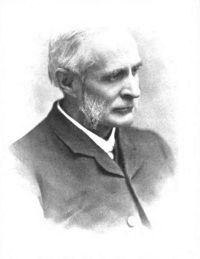
Portrait of Philip Schaff Philip Schaff,  Nicene and Post-Nicene Fathers… (1885)

“ As stated in note 13, the Liberian and Felician Catalogues incorrectly insert the name of Anicetus between those of Hyginus and Pius.↑ Eusebius evidently makes a mistake here. That Hegesippus remained so long in Rome (Anicetus ruled from 154–168 (?) , and Eleutherus from 177–190) is upon the face of it very improbable. And in this case we can see clearly how Eusebius made his mistake. In chap. 22 he quotes a passage from Hegesippus in regard to his stay in Rome, and it was in all probability this passage from which Eusebius drew his conclusion. ”
Source: Wikisource

1911 Encyclopædia Britannica, Volume 13… (1911)

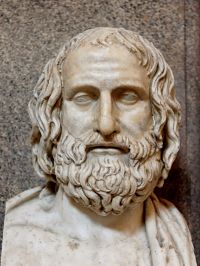
“ HEGESIPPUS, Athenian orator and statesman, nicknamed Κρώβυλος (“knot”) , probably from the way in which he wore his hair. He lived in the time of Demosthenes, of whose anti-Macedonian policy he was an enthusiastic supporter. In 343 B.C. he was one of the ambassadors sent to Macedonia to discuss, amongst other matters, the restoration of the island of Halonnesus, which had been seized by Philip. The mission was unsuccessful, but soon afterwards Philip wrote to Athens, offering to resign possession of the island or to submit to arbitration the question of ownership. ”
Source: Wikisource

Get perspective with Kwize: daily news enlightened by great literature