“ The main divisions of the Hellenistic world at this time were the kingdoms of Macedonia, under the successors of Antigonus Gonatas; of Syria, under the Seleucidæ; and of Egypt, under the Ptolemies; while the chief second-rate powers were Pergamum and Rhodes. These States continued to be the great centres of Hellenism until they were one by one overthrown by the mightier power of Rome, which in its turn continued and perpetuated the Greek spirit, so that it has become an element in the culture and civilization of modern times. ”
Hellenistic world
Definition and stakes
Quotes about “Hellenistic world”
The historians' history of the world in twenty-five volumes…
“ In proportion as the sphere of philosophy in the Hellenistic world narrowed to the consideration of the Useful and the Practicable, the sphere of its influence widened. Alexander’s expedition had thrown the East open to Greek civilisation, and the assiduous and subjective temperament of the youth of the Semitic peoples was drawn to the wisdom of the Greeks. ”
Edwyn Robert Bevan, 1911 Encyclopædia Britannica, Volume 13… (1911)
“ Hellenes, but peoples who had adopted the Greek speech and way of life, Hellenistai. Greek culture had, however, both in “Hellenic” and “Hellenistic” times, a common essence, just as light is light whether in the original luminous body or in a reflection, and to describe this by the term Hellenism seems most natural. But whilst using the term in the larger sense, this article, in deference to the associations which have come to be specially connected with it, will devote its principal attention to Hellenism as it appeared in the world after the Macedonian conquests. ”
J. M. Robertson,
The Evolution of States
“ Such being, in brief, the process of the building up of culture for Greece, it remains to note the causes of the process of retrogression, which also connects broadly with the course of politics. Indeed, the mere expansion of Hellenistic life set up by the empire-making of Alexander might alone account for a complete change in the conditions and phases of Greek civilisation. In the new Hellenistic world wealth and power were to be won with ease and with amenity [345] where of old there was only an alien barbarism, or at least a society which to the cultured Greek was barbaric. ”
The historians' history of the world in twenty-five volumes…
“ Prophecy and apocalypse linked themselves with the poetic oracles of Greece, and the nationalist movement, the leaders of which soon became Hellenistic princes themselves, goes but a little way towards severing the threads of connection. In the early days of the empire, Philo is no less subject than Cicero to the influence of Posidonius and of Plato. The Pharisees of Jerusalem, and, still more, the populations of mixed districts, could not disown the Hellenistic atmosphere they breathed. Without Alexander, without Hellenism, we cannot imagine the Gospels coming into existence. ”
Guy Dickins, Hellenistic Sculpture
“ It is only when romance becomes sentimentality that it meets with just condemnation.The outstanding feature of the history of Greek sculpture during the Hellenistic period is the transference of its vital centres from the mainland to the new kingdoms of the Diadochi on the east and south and to the great new free state of Rhodes. The chief cause was an economic one. Alexander’s campaigns brought about a revival of prosperity and wealth in the Greek world, but among his friends and not among his enemies. Athens was always his enemy and the enemy of his Macedonian successors. ”
J. N. Larned, History for ready reference, Volume 3… (1895)
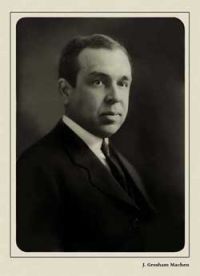
“ But among the best of the Romans Hellenism produced a type seldom excelled in the world's history, a type as superior to the old Roman model as the nobleman is to the burgher in most countries—a type we see in Rutilius Rufus, as compared with the elder Cato. ... It was in this way that Hellenistic philosophy made itself a home in Italy, and acquired pupils who in the next generation became masters in their way, and showed in Cicero and Lucretius no mean rivals of the contemporary Greek. ”
J. Gresham Machen,
The Literature and History of New Testament Times
“ New gods could easily be identified with the old, or else be received along with them without a conflict. The religion of the Greco-Roman world is therefore different from that of ancient Greece. It is a curious mixture of the most diverse beliefs. Nevertheless, the whole deserves to be called Hellenistic, because even the most strikingly non-Grecian elements were usually subjected more or less to the subtle molding of the Greek spirit. ”
J. N. Larned, History for ready reference, Volume 3… (1895)
“ Hellenism and the Romans. "In the Alexandrian age, with all its close study and imitation of the classical models, nothing is more remarkable than the absence of any promise that the Hellenic spirit which animated those masterpieces was destined to have any abiding influence in the world. ... And yet it is true that the vital power of the Hellenic genius was not fully revealed, until, after suffering some temporary eclipse in the superficially Greek civilizations of Asia and Egypt, it emerged in a new quality, as a source of illumination to the literature and the art of Rome. ”
Edwyn Robert Bevan, 1911 Encyclopædia Britannica, Volume 13… (1911)
“ Then the stream began to rise again, first with the influx of the learning of the Spanish Moors, then with the new knowledge of Greek brought from Constantinople in the 14th century. With the Renaissance and the new learning, Hellenism came in again in flood, to form a chief part of that great river on which the modern world is being carried forward into a future, of which one can only say that it must be utterly unlike anything that has gone before. ”
Richard Claverhouse Jebb,
Essays and Addresses
(1907)
“ But the deepest and largest influence of Greece is not to be sought in the modern literature which treats Greek subjects or imitates Greek form; that influence works more characteristically when, having been received into the modern mind, it acts by suggestion and inspiration, breathing a grace and a power of its own into material and form of a different origin. This influence has been all-pervading in the modern world. Yet those who most appreciate the true value of Hellenism will never claim for it that, by itself, it can suffice for the needs of humanity. ”
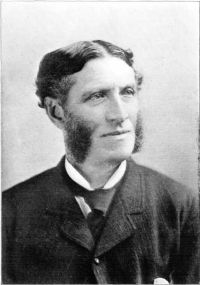
“ Those who disagree with the philosophy will not quarrel with the beauty itself. Hellenism is one of the forces which are continually being buried and re-found, and which, like talismans, have a disturbing power when they fall afresh into human hands. Those who read the literature of the age which rediscovered Greek will see that it brought above all a sense of liberation and expansion. At the Renaissance as in the eighteenth century, Greece found the world in chains, and broke them and threw down the prison walls. ”
Matthew Arnold,
Culture and Anarchy — Chapter IV: Hebraism and Hellenism
(1882)
“ The Renascence, that great re-awakening of Hellenism, that irresistible return of humanity to nature and to seeing things as they are, which in art, in literature, and in physics, produced such splendid fruits, had, like the anterior Hellenism of the Pagan world, a side of moral weakness, and of relaxation or insensibility of the moral fibre, which in Italy showed itself with the most startling plainness, but which in France, England, and other countries was very apparent too. ”
Various, Encyclopaedia Britannica, 11th Edition…
“ In Egypt a Greek aristocracy of office, birth and intellect existed side by side with a distinct native life. But, viewed in its broadest aspect, this new civilization may be called Hellenism. Hellenism (q.v.) means the adoption of Hellenic ways; and it is properly applied to a civilization, generally Hellenic in external things, pervading people not necessarily or exclusively Hellenic by race. What the Hellenic literature was to Hellas, that the Hellenistic literature was to Hellenism. The literature of Hellenism has the Hellenic form without the Hellenic soul. ”
Atlantic Classics, Second Series
“ There is, for example, her moral insistence upon form and beauty. If you could live in her house for a day you would see Hellenism as a diurnal practice. Her taste is flawless; everything she touches turns to beauty and to a tranquillizing order and simplicity. She selects a vase or a baking dish with the æsthetic fastidiousness which beset the artists and artisans of Athens.And, furthermore, she is Greek in her perennial enthusiasm for fresh knowledge. Her enjoyment of life seems to me intense because she is never tired of exploring the world through every kind of human achievement. ”
Henry Noel Brailsford, Shelley, Godwin and Their Circle
“ Hellas is the vision of a mind which touches fact through sense, but makes of sense the gate and avenue into an immortal world of thought. Past and present and future are fused in one glowing symphony. ”
J. N. Larned, History for ready reference, Volume 3… (1895)
“ For the latter was a civilising power, which extended itself to every department of life. {1639} It fashioned in a peculiar manner the organization of the state, legislation, the administration of justice, public arrangements, art and science, trade and industry, and the customs of daily life down to fashion and ornaments, and thus impressed upon every department of life, wherever its influence reached, the stamp of the Greek mind. It is true that Hellenistic is not identical with Hellenic culture. ”
“ Greece realized soon after the Persian war that she had a mission to the world, that Hellenism stood for the higher life of man as against barbarism, for Aretê, or Excellence, as against the mere effortless average. First came the crude patriotism which regarded every Greek as superior to every barbarian; then came reflection, showing that not all Greeks were true bearers of the light, nor all barbarians its enemies ”
D. G. Hogarth,
The Ancient East
“ Among them, as in all societies, there were found temperaments to which transcendental speculation appealed, and these increasing in number, as with the loss of their freedom the city-states ceased to stand for the realization of the highest possible good in this world, made Orphism and other mystic cults prevail ever more and more in Hellas. But when Alexander carried Hellenism to Asia it was still broadly true that the mass of civilized Hellenes regarded anything that could not be apprehended by the intellect through the senses as not only outside their range of interest but non-existent. ”
William Carlos Williams,
Kora in Hell: Improvisations
“ The ferment was always richer in Rome, the dispersive explosion was always nearer, the influence carried further and remained hot longer. Hellenism, especially the modern sort, is too staid, too chilly, too little fecundative to impregnate my world. ”
Mandell Creighton,
Historical Lectures and Addresses
(1903)
“ The great formative power of ancient life was the culture derived from Hellas. Culture after all means an attitude towards life, and the attitude expressed by Hellenic thought was one of clear outlook upon the world, frank acceptance of things as they were, and resoluteness in clothing them with beautiful form. These qualities of the Hellenic mind were to some degree impressed upon the sterner and more practical mind of Rome, which gave them wide dominion. ”
J. A. Cramb,
The Origins and Destiny of Imperial Britain
“ What a heaven of light falls upon the Hellas of the Isles, that period of its history which does not begin, but ends with the Iliad and with the Odyssey—works that sum up an old civilization! Already is born that beauty which, whether in religion, or in art, or in life, Hellas made its own for ever. ”
Friedrich Nietzsche,
Richard Wagner in Bayreuth
(1909)
“ In our time the spirit of Greek culture is scattered broadcast. While forces of all kinds are pressing one upon the other, and the fruits of modern art and science are offering themselves as a means of exchange, the pale outline of Hellenism is beginning to dawn faintly in the distance. The earth which, up to the present, has been more than adequately Orientalised, begins to yearn once more for Hellenism. ”
Various, The Atlantic Monthly, Volume 11…
“ Let it be understood, then, that all that preceded Hellenism in the ancient world was but the vestibule of its magnificent temple, and that the sole function of the Roman Empire, which came afterwards, was to tide the world over from Hellenic realities to the more sublime realities of Christianity. The mighty deeds of Egyptian conquerors, the imperial splendors of Persian dynasties,—these were but miniature gems that gilded the corridors and archways in the propylaea of ancient civilization ”
William Stearns Davis,
A Day in Old Athens; a Picture of Athenian Life
“ Down at the Peiræus there are a few shipmasters, perhaps, who can talk Egyptian, Phœnecian, or Babylonish. They need the knowledge for their trade, but even they will disclaim any cultural value for their accomplishment. The euphonious, expressive, marvelously delicate tongue of Hellas sums up for the Athenian almost all that is valuable in the world’s intellectual and literary life. ”
Various, Encyclopaedia Britannica, 11th Edition…
“ III. Later History.—It remains only to glance at the ultimate destinies of Hellenism in West and East. In the Latin West knowledge of Greek, first-hand acquaintance with the Greek classics, became rarer and rarer as The middle ages. general culture declined, till in the dark ages (after the 5th century) it existed practically nowhere but in Ireland (Sandys, History of Classical Scholarship, i. 438) . In Latin literature, however, a great mass of Hellenistic tradition in a derived form was maintained in currency, wherever, that is, culture of any kind continued to exist. ”
Edwyn Robert Bevan, 1911 Encyclopædia Britannica, Volume 13… (1911)
“ But as Hellenism developed, its social and intellectual life began to exercise a power of attraction. The proud old civilizations of the Euphrates and the Nile might ignore it, but the ruder barbarian peoples in East and West, on whose coasts the Greek colonies had been planted, came in various degrees under its spell. ”
Edwyn Robert Bevan, 1911 Encyclopædia Britannica, Volume 13… (1911)
“ With this long process of political decline from Alexander to Diocletian correspond the inner changes in the temper of the Hellenic and Hellenistic peoples. There were, of course, marked differences between one region and another. But certain general characteristics distinguished at Social changes. once Greek society after the Macedonian conquests from the society of the earlier age. When the vast field of the East was opened to Hellenic enterprise and the bullion of its treasuries flung abroad, fortunes were made on a scale before unparalleled. ”
Owen Jones,
An Apology for the Colouring of the Greek Court in the Crystal Palace
“ It would be important to follow up these vestiges of rudimentary Hellenism, since they might enlighten us on certain phenomena in Hellenic art, which have been up to the present time inexplicable without them. ”
J. N. Larned, History for ready reference, Volume 1…
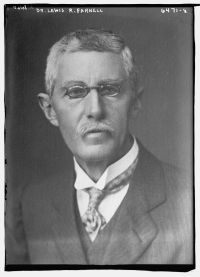
“ It is often observed that the ancient Greeks were more modern than our own ancestors of the Middle Ages. But it is less generally recognized how far more modern than the Greeks of Pericles were the Greeks of Aratus. In very many respects the age of Hellenism and our own age present remarkable similarity. In both there appears a sudden increase in the power over material nature, arising alike from the greater accessibility of all parts of the world and from the rapid development of the sciences which act upon the physical forces of the world. ”
Lewis Richard Farnell,
Outline-history of Greek religion
(1921)
“ And the learning and science of the Hellenistic age stood mainly aloof from the religious forces that moved the masses of the people. Daimonism.—The mystic and theosophic literature of the Hellenistic and Græco-Roman period was markedly ‘daimonistic,’ being infected with the polydaimonism of the East and positing the existence of good and evil ‘daimones’ as a metaphysic dogma. We can trace a corresponding change in the popular Hellenic imagination. ”
Edwyn Robert Bevan, 1911 Encyclopædia Britannica, Volume 13… (1911)
“ The values honoured by the rulers of the world must naturally impress themselves upon the subject multitudes. The Macedonian chiefs found their pride in being champions of Hellenism. Of Alexander there is no need to speak. The courts of his successors in Asia Minor, Syria and Egypt were Greek in language and atmosphere. All kings liked to win the good word of the Greeks by munificence bestowed upon Greek cities and Greek institutions. All of them in some degree patronized Greek art and letters, and some sought fame for themselves as authors. ”