Henri Christophe

Definition and stakes

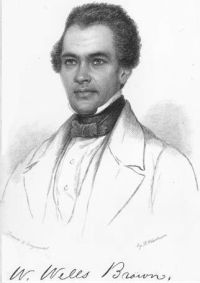
Portrait of William Wells Brown William Wells Brown,  The Black Man (1863)

“ Henri Christophe was a native of the island of New Grenada, where he was born a slave. He went to St. Domingo at the age of eighteen, and was employed as maître d'hôtel in the principal café at Cape François. From strength of natural genius, as well as from his occupying a station in life above the ordinary condition of his race, he acquired considerable knowledge of the prevailing manners and customs of the society of which he was a daily spectator. He was master of the French, English, and Spanish languages, and was thought to be the most polished gentleman of all of Toussaint's generals. ”
Source: Wikisource

Portrait of William Wells Brown William Wells Brown,  The Black Man (1863)

“ Henri Christophe was no more.
Christophe's aims were great, and many of them good. He was not only the patron of the arts, but of industry; and it gave him pleasure to see his country recovering the ground lost in the revolution and the civil wars, and advancing in name and wealth. He promoted industry on the principles laid down by his predecessor, Toussaint. A busy population covered the land with marks of its labors. Rich crops of the most coveted produce of nature annually rewarded the toil of the husbandman. Christophe was also the patron of education
”
Source: Wikisource

The American Cyclopædia — Christophe…

“ When Touissant was seized by the French, Christophe and Dessalines again headed an insurrection, and before the close of 1803 succeeded in driving the French from Hayti. During the brief administration of Dessalines Christophe was general-in-chief of the army, and at his death in 1806 was appointed president for life by an assembly convened at Cape Haytien. The people of the southern portion of the island, however, preferred Pétion, and soon after organized a republic of which he was appointed president. ”
Source: Wikisource

Get perspective with Kwize: daily news enlightened by great literature