Henry II of England

Definition and stakes

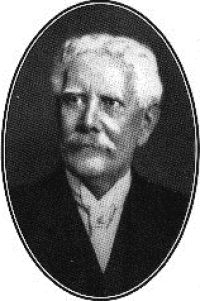
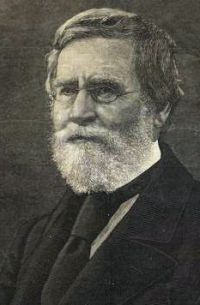
Portrait of Alfred John Church Alfred John Church Henry the Fifth

Henry himself commanded in the centre, a conspicuous object to all eyes. He was not one of the kings who went into a battle disguised. There was doubtless a personal taste for splendour and ornament shown in his dress and accoutrements; but he was also impressed with the belief that a king must be, and show himself to be, the foremost fighter as well as the leader of his army. He wore a surcoat which with its gay blazonry set forth his claim to the double throne, showing as it did the lilies of France and the leopards of England. His helmet was circled with a rich crown of gold.
Source: Gutenberg

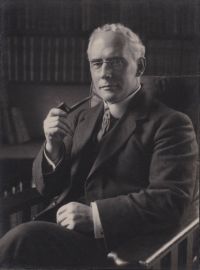
Portrait of Alfred John Church Alfred John Church Henry the Fifth

It would not be possible to find a greater contrast than was presented between France, distracted by factions struggling for the power which a lunatic king dropped from his hands, and England, harmonious and enthusiastic, welcoming back after a brilliant victory its vigorous prince, and united in giving him all the help that he demanded. If the darling scheme of the Plantagenets, the union of the two crowns, had been within the limits of possibility, Henry would certainly have effected it.
Source: Gutenberg

Portrait of Alfred John Church Alfred John Church Henry the Fifth

For some time after William of Normandy seized the English throne the relations of the King of England to the King of France—it might be more correct to say, the king who reigned at Paris—were those of an over-powerful vassal to a weak suzerain. When Henry the Second actually ruled over a larger part of France than the prince who was nominally its sovereign, this reversal of the ordinary state of things, according to which the lord was the superior, the vassal the inferior, was complete.
Source: Gutenberg

Get perspective with Kwize: daily news enlightened by great literature