Highland dress

Definition and stakes

Donald William Stewart,  Old and rare Scottish tartans (1893)

“ The helmet-looking bonnet, now worn, was introduced within the memory of persons still living.
From this simple account of the Highland dress, it will be seen that it has in itself nothing peculiar to one country more than another; as the different improvements upon the manner of girding the loins, and trussing up a blanket, can hardly be called a national costume. The dress of the Romans began in the same manner, and went through nearly the same varieties of form
”
Source: Gutenberg

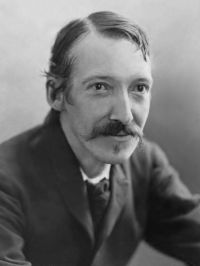
Portrait of Robert Louis Stevenson Robert Louis Stevenson,  Kidnapped (Illustrated)

“ True, I met plenty of people, grubbing in little miserable fields that would not keep a cat, or herding little kine about the bigness of asses. The Highland dress being forbidden by law since the rebellion, and the people condemned to the Lowland habit, which they much disliked, it was strange to see the variety of their array. Some went bare, only for a hanging cloak or great-coat, and carried their trousers on their backs like a useless burthen: some had made an imitation of the tartan with little parti-coloured stripes patched together like an old wife’s quilt ”
Source: Gutenberg

Various,  Notes and Queries, Vol. IV, Number 93…

“ Again—
"As to the plaid, there is no reason to believe it more ancient than the philibeg. In the sixteenth century Fordun (lib. ii. cap. 9.) only mentions the Highland people as 'amictu deformis,' a term conveying the idea of a vague savage dress of skins.
"In the book of dress printed at Paris in 1562, the Highland chief is in the Irish dress wearing a mantle. The woman is dressed in sheep and deer skins. Lesley, in 1570, is the first who mentions the modern Highland dress, but represents the tartan as even then being exclusively confined to the use of people of rank.
”
Source: Gutenberg

Get perspective with Kwize: daily news enlightened by great literature