Hipparion

Definition and stakes

Cassell's Natural History, Vol…

“ Not only are there three toes in each foot, as in Hipparion, but the inner and the outer toes are so large that they must have rested upon the ground. Thus, so far as the limbs are concerned, the Anchitherium is just such a step beyond the Hipparion as the Hipparion is beyond the Horse, in the direction of a less specialised quadruped. The teeth are still more divergent from the Equine type. The incisors are smaller in proportion, and their crowns lack the peculiar pit which characterises those of Equus and Hipparion. ”
Source: Gutenberg

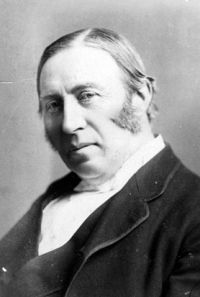
Portrait of Henry Alleyne Nicholson Henry Alleyne Nicholson,  The Ancient Life History of the Earth

“ Remains of the Hipparion have been found in various regions in Europe and in India; and from the immense quantities of their bones found in certain localities, it may be safely inferred that these Middle Tertiary ancestors of the Horses lived, like their modern representatives, in great herds, and in open grassy plains or prairies.
Amongst the Even-toed or Artiodactyle Ungulates, we for the first time meet with examples of the Hippopotamus, with its four-toed feet, its massive body, and huge tusk-like lower canine teeth.
”
Source: Gutenberg

Frank E. Beddard,  Cambridge Natural History Mammalia (1902)

“ It is of course perfectly conceivable that they may have differed among themselves as much as do the existing Zebras and Asses, the separation of which would be hardly possible did we know their bones only. There are, however, extinct genera, undoubtedly related so closely to Equus as to be placed in the same family, though clearly separable as genera. Hipparion is one of these genera; its remains are known from Europe, Asia, and North Africa, from beds of Miocene and Pliocene times. A large number of different species have been described. ”
Source: Wikisource

Get perspective with Kwize: daily news enlightened by great literature