Hippolitus

Definition and stakes

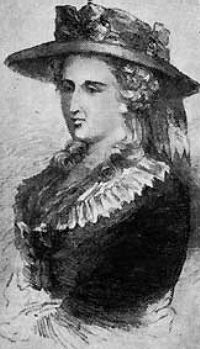
Portrait of Ann Ward Radcliffe Ann Ward Radcliffe,  A Sicilian Romance

“ If before Julia believed that she was loved by Hippolitus, she was now confirmed in the sweet reality. But sleep at length fell upon her senses, and the airy forms of ideal bliss no longer fleeted before her imagination. Morning came, and she arose light and refreshed. How different were her present sensations from those of the preceding day. Her anxiety had now evaporated in joy, and she experienced that airy dance of spirits which accumulates delight from every object; and with a power like the touch of enchantment, can transform a gloomy desert into a smiling Eden. ”

Source: Gutenberg

Portrait of Ann Ward Radcliffe Ann Ward Radcliffe,  A Sicilian Romance

“ But Hippolitus and Ferdinand were now both lost to her—lost, perhaps, for ever—and the uncertainty of their fate gave force to fancy, and poignancy to sorrow.
Towards morning grief yielded to nature, and Julia sunk to repose. She was awakened by the sun, whose rays darting obliquely through the opening in the rock, threw a partial light across the cavern. Her senses were yet bewildered by sleep, and she started in affright on beholding her situation; as recollection gradually stole upon her mind, her sorrows returned, and she sickened at the fatal retrospect.
”
Source: Gutenberg

Portrait of Ann Ward Radcliffe Ann Ward Radcliffe,  A Sicilian Romance

“ He flew to Julia, who now revived, but who for some time could speak only by her tears. The transitions of various and rapid sensations, which her heart experienced, and the strangely mingled emotions of joy and terror that agitated Hippolitus, can only be understood by experience. He raised her from the floor, and endeavoured to soothe her to composure, when she called wildly upon Ferdinand. At his name the count started, and he instantly remembered the dying cavalier, whose countenance the glooms had concealed from his view. ”
Source: Gutenberg

Get perspective with Kwize: daily news enlightened by great literature