Hyrcania

Definition and stakes

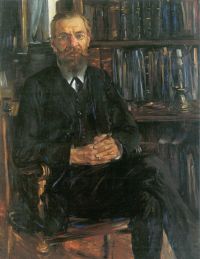
Portrait of Eduard Meyer Eduard Meyer 1911 Encyclopædia Britannica, Volume 12… (1911)

Gotarzes fled to Hyrcania and gathered an army from the Dahan nomads. The war between the two kings was at last ended by a treaty, as both were afraid of the conspiracies of their nobles. Gotarzes returned to Hyrcania. But when Vardanes was assassinated in 45, Gotarzes was acknowledged in the whole empire (Tac. Ann. xi. 9 ff.; Joseph. Antiq. xx. 3, 4, where Gotarzes is called Kotardes) . He now takes on his coins the usual Parthian titles, “king of kings Arsaces the benefactor, the just, the illustrious (Epiphanes) , the friend of the Greeks (Philhellen) ,” without mentioning his proper name.
Source: Wikisource

Portrait of Eduard Meyer Eduard Meyer 1911 Encyclopædia Britannica, Volume 28… (1911)

Soon afterwards the Alani, a great nomadic tribe beyond the Caucasus, invaded Media and Armenia (Joseph. Bell. vii. 7, 4) ; Vologaeses applied in vain for help to Vespasian (Dio Cass. lxvi. 11; Suet. Domitian, 2) . It appears that the Persian losses in the east also could not be repaired; Hyrcania remained an independent kingdom (Joseph. Bell. vii. 7, 4; Aurel. Vict. Epit. 15, 4) .
Source: Wikisource

Neilson Carel Debevoise A Political History of Parthia (1938)

Parthia was never long sympathetic with kings who held their crowns by virtue of Roman support, and the disaffected party probably had strong support from the two nobles who had failed to attend the coronation. Artabanus was discovered in Hyrcania clothed in dirty rags and living by his bow. Naturally he was suspicious of a trap when first approached, but eventually he became convinced of the reality of Parthian dislike for Tiridates if not of the people's love for himself.
Source: Wikisource

Get perspective with Kwize: daily news enlightened by great literature