John Scotus Erigena

Definition and stakes

Various,  Donahoe's Magazine, Volume 15, No…

“ Almost all writers of weight are agreed that John Scotus Erigena was an Irishman. In fact, there is hardly any room for doubt on the subject. If all other evidences of the fact were absent his very name furnishes proof enough that John was a son of the Emerald Isle. John Scotus Erigena simply means John the Irish Scot—Erigena being a corruption of a Greek word, the translation of which is "of the sacred isle," and every school boy knows that Ireland was known at that time throughout the nations of the earth as the "insula sanctorum et doctorum," the "island of saints and sages." ”
Source: Gutenberg

Various,  Encyclopaedia Britannica, 11th Edition…

“ There seems no reason to doubt that Eriugena is connected with Erin, the name for Ireland, and Ierugena suggests the Greek ἱερός, ἱερὸς, νῆσος being a common name for Ireland. On the other hand, William of Malmesbury prefers to read Heruligena, which would make Scotus a Pannonian, while Bale says he was born at St David’s, Dempster connects him with Ayr, and Gale with Eriuven in Hereford. Some early writers thought there were two persons, John Scotus and John Erigena. ”
Source: Gutenberg

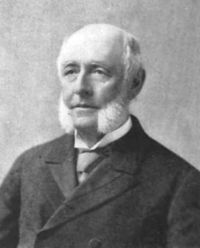
Portrait of George Park Fisher George Park Fisher,  Outlines of Universal History, Designed as a Text-book and for Private Reading

“ STATE OF LEARNING IN THE TENTH CENTURY.—Under Charles the Bald, there were not wanting signs of intellectual activity. John Scotus Erigena,—or John Scot, Erinborn,—who was at the head of his palace-school, was an acute philosopher, who, in his speculations in the vein of New Platonism, tended to pantheistic doctrine. His opinions were condemned at the instance of Hincmar, the eminent archbishop of Rheims. ”
Source: Gutenberg

Get perspective with Kwize: daily news enlightened by great literature