Leicester sheep

Definition and stakes

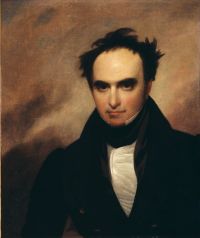
Portrait of Charles Darwin Charles Darwin,  The Variation of Animals and Plants Under Domestication…

“ Different races of sheep, like cattle, present constitutional differences. Thus the improved breeds arrive at maturity at an early age, as has been well shown by Mr. Simonds through their early average period of dentition. The several races have become adapted to different kinds of pasture and climate: for instance, no one can rear Leicester sheep on mountainous regions, where Cheviots flourish. As Youatt has remarked, "in all the different districts of Great Britain we find various breeds of sheep beautifully adapted to the locality which they occupy. ”
Source: Gutenberg

W. H. R. Curtler,  A Short History of English Agriculture

“ At his death he left two distinct breeds of sheep, for he improved on his own new Leicester, so that the improved became the 'New Leicester' and the former the 'Old Leicester.' However, at the time and, afterwards, his sheep were generally called 'New Leicesters', and sometimes the 'Dishley breed'. There was much prejudice among farmers against the new breed ”
Source: Gutenberg

Robert Jennings,  Sheep, Swine, and Poultry

“ The ewes are prolific breeders and good nurses.
The Down is quiet and docile in its habits, and, though an industrious feeder, exhibits but little disposition to rove. Like the Leicester, it is comparatively a short-lived animal, and the fleece continues to decrease in weight after it reaches maturity. It crosses better with short and middle-woolled breeds than the Leicester. A sheep possessing such qualities, must, of necessity, be valuable in upland districts in the vicinity of markets.
”
Source: Gutenberg

Get perspective with Kwize: daily news enlightened by great literature