Maxim Gorky

Definition and stakes

R. L. The Fortnightly Review/Volume 77… (1905)

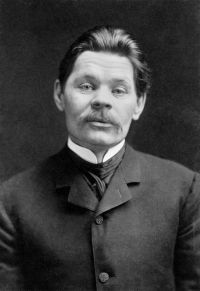
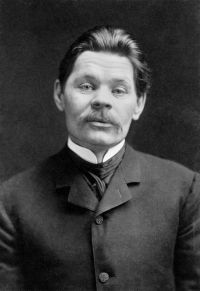
The Maxim Gorky whom I left a week ago among the evergreen woods of Bilderlinghof, on the Baltic coast, is a tall, straight, deep-chested, large-boned man, who towered like a giant over the squat Germans and stunted Lettish peasants who are now struggling for racial dominion on the Livonian coast. In features, he is as far removed from the refined, weak-faced intelligents as from the submissive, apathetic muzhik. The forehead is broad, furrowed deeply when he talks, and surmounted by a mop of dark hair
Source: Wikisource

Various The Little Review, November 1915…

Maxim Gorky is the poorest and most uneven of the Russian writers. He is—or was—a pioneer. He came wailing from lonely roads where the vagrom man sleeps beneath the stars and wonders what there is to life. And his dull, bitter plaints with ferocity as their leit motif soon sounded over the world. When the majority of Russian genius was struggling to “go to the people” Gorky had the advantage of coming from the people.
Source: Gutenberg

R. L. The Fortnightly Review/Volume 77… (1905)

Before the diagnosis of Datchniki is accepted, the obvious question will therefore be asked: To what extent is Maxim Gorky, the romancer, a serious critic of affairs; how far is he qualified to judge a class from which he is alien by birth and sympathies? Many Russians, and I believe many foreigners, would reply that Gorky has none of the necessary qualifications at all. They regard him as an intruder among the intelligents, as lacking the training for the part of social critic, as temperamentally incapable of judging any serious problem outside the domain of imaginative art.
Source: Wikisource

Get perspective with Kwize: daily news enlightened by great literature