Newton's third law of motion

Definition and stakes

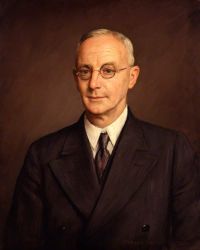
William Bower Taylor Kinetic Theories of Gravitation… (1876)

Our principles do not therefore corroborate Newton's third law of motion, respecting the equality of action and reaction in attracting forces; for by our theory, a body might by the agency of the fluid medium, be impelled toward another, without any reciprocal action ; which is by no means surprising if we consider attraction not to be an inherent or essential property of matter, but merely the action of a third body.
Source: Wikisource

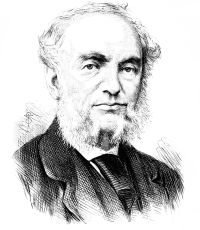
Portrait of William Stanley Jevons William Stanley Jevons The principles of science

On similar grounds we may disprove the existence of any self-moving machine; for if it could once alter its own state of motion or rest, in however small a degree, there is no reason why it should not do the like time after time ad infinitum. Newton’s proof of his third law of motion, in the case of gravity, is of this character. For he remarks that if two gravitating bodies do not exert exactly equal forces in opposite directions, the one exerting the strongest pull will carry both away, and the two bodies will move off into space together with velocity increasing ad infinitum.
Source: Gutenberg

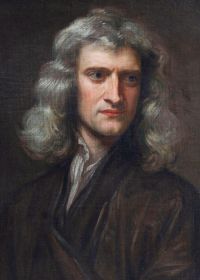
Portrait of Isaac Newton Isaac Newton The Mathematical Principles of Natural Philosophy…

If two bodies attracting each other with any kind of forces, and not otherwise agitated or obstructed, are moved in any manner whatsoever; those motion: will he the same, as if they did not at all attract each other mutually, but were both attracted with the same forces by a third body placed in their common centre of gravity; and the law of the attracting forces will be the same in respect of the distance of the bodies from the the common centre, as in respect of the distance between the two bodies.
Source: Wikisource

Get perspective with Kwize: daily news enlightened by great literature