“ But in a way, we are all the trustees of idealism, and the problem of the Nobel Prize Trustees is more or less the problem of all of us. We are interested as well as they in trying to find out how to recognize and reward men of genius. ”
Nobel Prize
Definition and stakes
The Nobel Prize, established in 1895 by Alfred Nobel, is an annual international award honoring individuals or organizations that advance humanity through pioneering contributions in physics, chemistry, medicine, literature, peace, and economics. Initially designed to recognize achievements in five fields, it expanded to six in 1968. Authors like Gerald Stanley Lee have reflected on the Trustees’ challenge of identifying genius, while Frank Koester critiqued its symbolic worth, and H.G.
Wells noted its paradoxical effect on peace advocacy. U.G. Krishnamurti emphasized its global influence, highlighting its role as both a standard of excellence and a spark for discussion. The Prize remains a testament to Nobel’s vision, balancing scientific precision with moral contemplation, as its evolving standards continue to influence cultural and intellectual conversation.
Quotes about “Nobel Prize”
Frank Koester, Under the desert stars (1923)
“ Yes, and the ones who fostered the idea should get an iron cross pinned on them, or, they should at least receive the Nobel Prize as a reward for taking away the personal liberties of a people and making a crowd of hypocritical law breakers of them. ”
“ I may not be right in anticipating the eventual opinion of Allen Upward's book; but even if I am wrong, it will have helped perhaps to call attention to the essential failure of the Nobel Prize Trustees to side with the darers and experimenters in literature, to take a serious part in those great creative, centrifugal movements in the souls of men in which new worlds and the sense of new worlds are swept in upon us. For the Sciences, which are more matter of fact and tangible, the Nobel Prize is functioning more or less as Mr. ”
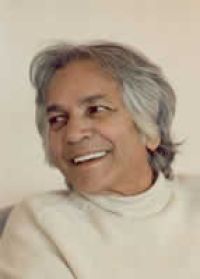 U. G. Krishnamurti,
No Way Out — Chapter 5
U. G. Krishnamurti,
No Way Out — Chapter 5
“ In England one in two in the eighty-year group, altogether six hundred thousand people, are affected, and out of that there are two Nobel Prize winners. Hundreds and thousands of people around the globe are affected. ”
Various, Popular Science Monthly (1912)
“ It is doubtless the case that obtaining a Nobel prize is a game in which to win skill and chance must be combined. We have native born investigators who deserve as high honors as MM. Sabattier and Grignard, between whom the prize in chemistry has this year been divided, or Mr. Dalen, of the Stockholm gas works, to whom the prize in physics has been given. Still it should give us pause to reflect that no obvious injustice has been done by the failure to award a Nobel prize in medicine, physics or chemistry to a native American ”
“ I must hasten to admit also that, judging from their own point of view, the Nobel Prize Trustees have so far done quite well. They have attained a kind of triumph of doing safe things—things that they could not be criticised for ”
Edwin E. Slosson, Major Prophets of To-Day
“ Notwithstanding the fact that he has carried on researches in pure science which have obtained for him the Nobel prize, he has not disdained to print letters to painters on the use of pigments and to lecture to housewives on the chemistry of cooking, as well as to bring his knowledge of science to bear upon the educational, social, and religious questions discussed in the periodicals of the day.When we inquire why no American chemist has yet been honored by a Nobel medal, we are apt to be told that laboratory facilities in this country are too inadequate. ”
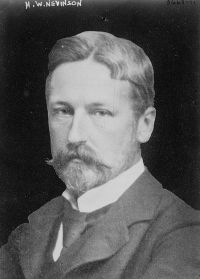 Henry Woodd Nevinson,
Essays in Rebellion
Henry Woodd Nevinson,
Essays in Rebellion
“ They bring us suddenly face to face with a little book which will leave its mark, not only on the mind, but, perhaps, on the actual and external history of man. In my opinion, the next Nobel prize should be shared equally between Mr. ”
Virgil M. Harris, Ancient, Curious, and Famous Wills
“ The value of each prize is about $38,000; the right to make nominations is bestowed upon members of corresponding academies of other countries, professors holding proper chairs in Scandinavian and foreign universities, recipients of Nobel prizes, and other persons of distinction. The plan of award is that the prizes shall go to those persons who shall have contributed most materially to benefit mankind during the year immediately preceding. ”
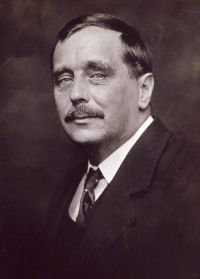 H. G. Wells,
The Passionate Friends
H. G. Wells,
The Passionate Friends
“ I had been greatly impeded and irritated in London by the manœuvres of a number of people who were anxious to make capital out of the crisis, self-advertising people who wanted at any cost to be lifted into a position of unique protest.... You see, that unfortunate Nobel prize has turned the advocacy of peace into a highly speculative profession; the qualification for the winner is so vaguely defined that a vast multitude of voluntary idealists has been created and a still greater number diverted from the unendowed pursuit of human welfare in other directions. ”
Dorothy Dudley Leal, ../../ (1913)
“ In place of one person, the honor may be bestowed upon a society; or it may be kept back entirely, but each prize must be given once in every five years. Besides the cash prize, each winner receives a diploma and a gold medal bearing a portrait of Alfred Nobel. The prizes are a real factor in increasing the dignity of a scientific career, and in encouraging such work. The money value is large, but the fame attached to the honor is all but priceless. ”
Edwin E. Slosson, Six Major Prophets
“ The Nobel prizes have failed to carry out the intention of their founder, which was to place $100,000 or so immediately into the hands of a man who had made a signal contribution to science, literature, or peace. ”
 Barack Obama,
REMARKS BY THE PRESIDENT ON WINNING THE NOBEL PEACE PRIZE
(2009)
Barack Obama,
REMARKS BY THE PRESIDENT ON WINNING THE NOBEL PEACE PRIZE
(2009)
“ But I also know that this prize reflects the kind of world that those men and women, and all Americans, want to build -- a world that gives life to the promise of our founding documents. And I know that throughout history, the Nobel Peace Prize has not just been used to honor specific achievement ”
Various, Popular Science Monthly (1907)
“ The prizes have been given to men of eminence, most of whom accomplished their important work long ago. It would certainly be difficult to select each year the work most beneficial to mankind, and mistakes would undoubtedly be made; but the effort to make such a selection and to award the prize without regard to nationality, age or eminence would be a great stimulus to research, far greater probably than the methods adopted. But the question is not which method is the better, but for what purposes Nobel made his bequest. ”
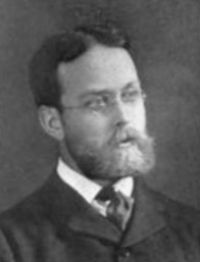 Lawrence Joseph Henderson,
The Harvard Classics Vol. 51
(1914)
Lawrence Joseph Henderson,
The Harvard Classics Vol. 51
(1914)
“ Accordingly professorships have multiplied, societies have become more numerous, journals are endowed, institutes of research established, the Nobel prizes founded, and a livelihood is provided for large number of workers. ”
“ What Alfred Nobel had in mind, I think, with his little forty thousand dollars, was that it should be given a chance to become an intimate part of some man's genius; that it should become perhaps at last a Great Book—that great foundry of men's souls, where the moulds of History are patterned out, and where the hopes of nations and the prayers of women and children and of great men are, and where the ideals of men—those huge drive-wheels of the world—are cast in a strange light and silence. ”
U. G. Krishnamurti,
No Way Out — Chapter 5
“ It is not percolating to the level of the common man. Why are we so tremendously impressed by our scientific research? We can give them Nobel Prizes. We can give them prestigious awards. But how is it [this research] going to affect the common man? ”
Various, Popular Science Monthly (1905)
“ It must unfortunately be acknowledged that no American deserves the prizes in science on the lines followed by the administrators of the trust. Nobel himself laid special stress on an invention benefiting mankind, and Dr. ”
“ Not unnaturally, of course, I turned to see what had already been done by the more powerful men the planet had produced, in the way of arranging for the necessary seers and geniuses to run the world with, and I soon found that by far the most intelligent and far-seeing attempt that had been made yet in this direction had been made by an inspired, or semi-inspired, millionaire in Sweden, named Alfred Nobel, an idealist, who had made a large but unhappy fortune out of an explosive to stop war with. ”
“ It was Nobel's object to reward and help the pure man of science, too much absorbed in his researches to think of drawing any industrial or pecuniary advantages from his scientific discoveries. "I would not leave anything to a man of action or industrial enterprise," he said to a friend with whom he was discussing the project of his will; "the sudden acquisition of a fortune would probably only damp the energy and weaken the spirit of enterprise of such a man. I want to aid the dreamer, the scientific enthusiast, who forgets everything in the pursuit of his ideas." ”
“ Alfred Nobel was the inventor of an explosive, a rearranger of things assumed and things unbedded, and it was this same expansive, half-terrible, half-sublime power in other men and other men's books he wanted to endow—the power to free and mobilize the elements in a world, make it budge over a little toward a new one. He wanted to spend forty thousand dollars a year on the man in literature who had the pent-up power in him to crash the world's mind open once more every year like a Seed, and send groping up out of it once more its hidden thought. ”
 James Anthony Froude,
Short Studies on Great Subjects
James Anthony Froude,
Short Studies on Great Subjects
“ However we may pretend to estimate men according to the wrong things which they have done, or abstained from doing, we in fact follow the example of Nobel, the king of the beasts: we give them their places among us according to the service-ableness and capability which they display. We might mention not a few eminent public servants, whom the world delights to honour—ministers, statesmen, lawyers, men of science, artists, poets, soldiers, who, if they were tried by the negative test, would show but a poor figure ”
William Rounseville Alger, The Destiny of the Soul: A Critical History of the Doctrine of a Future Life
“ What a striking and painful contrast is afforded by the generous encouragement given to the students of science by the annual bestowment of rewards by the scientific societies such as the Cuvier Prize, the Royal Medal, the Rumford Medal and the jealous contempt and assaults visited by the sectarian authorities upon those earnest students of theology who venture to propose any innovating improvement! ”
 Bill Clinton,
Proclamation 7304
Bill Clinton,
Proclamation 7304
“ For generations, the world's brightest scientists have come to our country to study and conduct research, and many choose to remain here permanently. From Albert Einstein to four of this year's Nobel laureates, foreign-born scientists in America have made extraordinary contributions to science and technology and have played a vital role in the unprecedented prosperity and economic growth we have experienced in recent years. ”
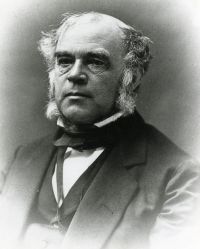 John William Draper,
Popular Science Monthly
(1877)
John William Draper,
Popular Science Monthly
(1877)
“ I would not say one word in disparagement of gifts to colleges and universities, for it is indeed a noble purpose; but endowments for the promotion of a knowledge of Nature conferred on scientific societies for the good of all men, no matter what their country or color, no matter what their religious profession or political condition, are still nobler. The one is a local and transitory benefaction, the other an enduring and universal benevolence. In our own special science, chemistry, all that has been done has only served to extend the boundary of what remains. ”
“ Alfred Nobel, the disciple of John Ericsson, has not only the glory of having invented one of the most useful helpers of mechanic and industrial progress, but also that of having set aside his vast fortune, amounting to something like $12,500,000, for public purposes. ”
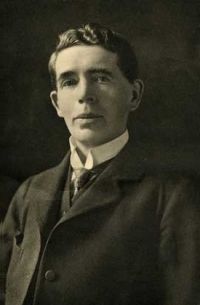 J. B. Bury,
The Idea of Progress: An Inquiry into Its Origin and Growth
J. B. Bury,
The Idea of Progress: An Inquiry into Its Origin and Growth
“ To diminish our fanatical proclivities, it would be useful if the Government were to establish an annual prize, to be awarded by the Academy of Sciences, for the best explanation, by natural laws, of the extraordinary effects of imagination, of the prodigies related in Greek and Latin literature, and of the pretended miracles told by Protestants, Schismatics, and Mohammedans. ”
William T. Jeans, Lives of the electricians (1887)
“ To render to genius the homage which is its due, without regard to country or origin, is to honour one’s self. The Paris Academy of Sciences, always sympathising with English science, did not hesitate, during the troubled time of the wars of the Empire, to decree a grand prix to Sir Humphry Davy. ”
Richard Roberts, The Unfinished Programme of Democracy
“ We have tested the power and the range of those endowments of which we are already aware; and the triumphs of art and science show how nobly and richly our nature is equipped. Nevertheless, all that art and science have yet accomplished are but the promise of that glory that is still to be. ”
Various, Popular Science Monthly (1901)
“ Any attempt to divert the funds to the encouragement of local institutions or to the education of inferior men should be carefully guarded against. Nobel's will explicitly ordered that the money be awarded in prizes for eminence and without any consideration of nationality. ”
Popular Science Monthly (1874)
“ Both awards refer to the same experiments, and are substantially for the same great step in natural philosophy. You are all aware that a great principle has been added to the sum of human knowledge—one fruitful in consequences in a thousand ways, and which, being accepted among undisputed truths, is now embodied, without question, alike in the most wide-ranging speculations and the most matter-of-fact practice. The award of two medals for the same researches is an exceedingly rare proceeding in our society, and rightly so. ”
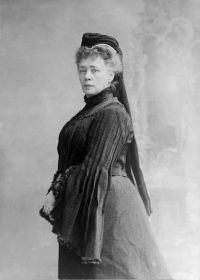 Bertha von Suttner,
Memoirs of Bertha von Suttner: The Records of an Eventful Life…
Bertha von Suttner,
Memoirs of Bertha von Suttner: The Records of an Eventful Life…
“ A. Nobel My appeal in the Neue Freie Presse of September 9, 1891, was partially reproduced in the Paris newspapers, and editorially commented on. Nobel wrote to me regarding this:My dear Friend: Delighted I am to see that your eloquent pleading against that horror of horrors—war—has found its way into the French Press. But I fear that out of French readers ninety-nine in a hundred are chauvinistically mad. The government here are almost in their senses; the people, on the contrary, are getting success- and vanity-drunken. ”
John Morgan, A Discourse upon the Institution of Medical Schools in America (1765)
“ Was there no difficulty remaining, you would have less scope for a genius of investigation; less honour in being barely followers of others. Both science and honour offer one fate to their votaries. They reward the courage of the brave and of the steady, and repell the faint hearted and irresolute. You have an ample field before you to cultivate. Inspired by a love of science, your diligent inquiry into natural causes and effects must produce discoveries; and these discoveries prompt you with fresh alacrity to new researches; an employment as delightful and honourable as it is advantageous. ”
 Theodore Parker,
The Collected Works of Theodore Parker
(1864)
Theodore Parker,
The Collected Works of Theodore Parker
(1864)
“ Not withstanding this, the scientific scholars of America, both the home-born and the adopted sons, have manfully paid for their culture, and done honour to the land. This is true of men in all departments of science, from that which searches the deeps of the sky to that which explores the shallows of the sea. Individuals, States, and the nation, have all done themselves honour by the scientists researches and discoveries that have been made. ”
 Francis Bacon,
Novum Organum — Book I
(1620)
Francis Bacon,
Novum Organum — Book I
(1620)
“ And even should the odium I have alluded to be avoided, yet it is sufficient to repress the increase of science that such attempts and industry was unrewarded. For the cultivation of science and its reward belong not to the same individual. The advancement of science is the work of a powerful genius, the prize and reward belong to the vulgar or to princes, who (with a few exceptions) are scarcely moderately well informed. ”
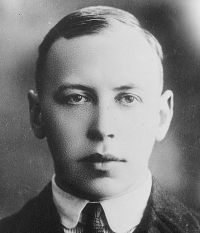 Alfred Noyes,
Watchers of the Sky
Alfred Noyes,
Watchers of the Sky
“ The story of scientific discovery has its own epic unity—a unity of purpose and endeavour—the single torch passing from hand to hand through the centuries; and the great moments of science when, after long labour, the pioneers saw their accumulated facts falling into a significant order—sometimes in the form of a law that revolutionised the whole world of thought—have an intense human interest, and belong essentially to the creative imagination of poetry. ”
Henry Davenport Northrop, New Century Speaker and Writer… (1901)
“ Is it nothing to have, in less than a half-century, exceedingly improved the sciences of political economy, of law, and of medicine, with all their auxiliary branches; to have enriched human knowledge by the accumulation of a great mass of useful facts and observations, and to have augmented the power and the comforts of civilized man, by miracles of mechanical invention? Is it nothing to have given the world examples of disinterested patriotism, of political wisdom, of public virtue; of learning, eloquence, and valor, never exerted save for some praiseworthy end? ”
Related terms
Authors who wrote about “Nobel Prize”
Dorothy Dudley LealGerald Stanley LeeVariousU. G. KrishnamurtiEdwin E. SlossonJames Anthony FroudeHenry Woodd NevinsonFrank KoesterH. G. WellsVirgil M. HarrisBarack ObamaLawrence Joseph HendersonWilliam Rounseville AlgerBill ClintonVictor Alfred NilssonJ. B. BuryBertha von SuttnerFrancis Bacon Benjamin Franklin
 Ralph Waldo Emerson
U. G. KrishnamurtiEdwin E. SlossonJames Anthony FroudeHenry Woodd NevinsonFrank KoesterH. G. WellsVirgil M. HarrisBarack ObamaLawrence Joseph HendersonWilliam Rounseville AlgerBill ClintonVictor Alfred NilssonJ. B. BuryBertha von SuttnerFrancis BaconBenjamin FranklinRalph Waldo Emerson