“ Now Parliament Street in its turn is effaced, swallowed up in an extended Whitehall. King Street has been completely swept away, as one sweeps a row of crumbs from a cloth, but the part it played in the ancient history of Westminster is not yet forgotten. Undoubtedly the change could be justified: the thoroughfare is an important one, the view as now seen from the direction of Charing Cross one of the finest in the world; yet to gain it we have had to give, and one wonders sometimes whether the gain counterbalances the loss. ”
Parliament Street
Definition and stakes
Quotes about “Parliament Street”
Max Schlesinger, Saunterings in and about London
“ Parliament-street is indeed a crowded thoroughfare; the crowds meet and contend in the crossing which leads to Westminster Bridge; carriages rattle along from morning till late at night; above a million and a half of horses go that way annually into Lambeth; but the Abbey stands at a convenient distance from the public road, amidst green grass-plots, shady trees, and broad grave-stones, and near it you feel as calm and peaceful as in the shadow of a village-church. Narrow foot-paths lead to its walls; fat sheep crop the grass ”
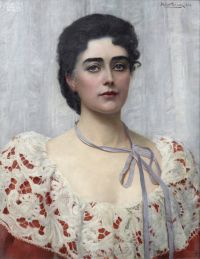
Mrs. Alec-Tweedie,
Thirteen Years of a Busy Woman's Life
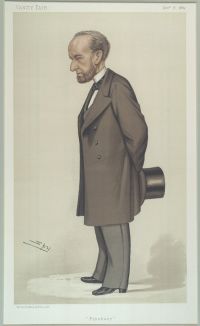
“ Farquharson I chanced to have tea at the House of Lords with Viscount Templetown. In this case, one drives up to the Peers’ Entrance, which is rather farther from Parliament Street, and alights beneath the fine portico, where officials in gorgeous uniform enquire one’s business, until the kindly peer, who is waiting in the hall, steps forward to claim his guest.Passing, as on my visit to the House of Commons, through sundry cheerless passages and more horrible stone staircases, we stepped out upon the Terrace, this time at the end furthest from the Speaker’s House. ”
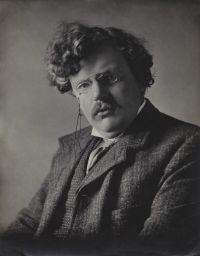
Gilbert Keith Chesterton,
Tremendous Trifles
(1909)
“ The street again is the Frenchman's Parliament, for France has never taken its Chamber of Deputies so seriously as we take our House of Commons, and the quibbles of mere elected nonentities in an official room seem feeble to a people whose fathers have heard the voice of Desmoulins like a trumpet under open heaven, or Victor Hugo shouting from his carriage amid the wreck of the second Republic. And as the Frenchman drinks in the street and dines in the street so also he fights in the street and dies in the street, so that the street can never be commonplace to him. ”
Henry Scadding, Toronto of Old
“ On the knoll to the right, after crossing Goodwin's creek, was Isaac Pilkington's lowly abode, a little group of white buildings in a grove of pines and acacias.Parliament Street, which enters near here from the north, is a memorial of the olden time, when, as we have seen, the Parliament Buildings of Upper Canada were situated in this neighbourhood. ”
Joe Miller's Jests, with Copious Additions
“ After the fire of London, there was an act of parliament to regulate the buildings of the city; every house was to be three stories high. A Gloucestershire gentleman, a man of great wit and humour, just after this act passed, going along the street, and seeing a little crooked gentlewoman on the other side of the way, ran over to her in great haste ”
Robert Chambers, Illustrations of the Author of Waverley (1884)
“ Crosbie flourished, all the advocates and judges of the day dwelt in those obscure wynds or alleys leading down{34} from the High Street, which, since the erection of the New Town, have been chiefly inhabited by the lower classes of society. The greater part, for the sake of convenience, lived in the lanes nearest to the Parliament House—such as the Advocate’s Close, Writer’s Court, Lady Stair’s Close, the West Bow, the Back Stairs, the President’s Stairs in the Parliament Close, and the tenements around the Mealmarket. ”
Harry Graham,
The Mother of Parliaments
“ It is therefore only natural that the interest in parliamentary affairs should be more widely disseminated to-day than ever. It does not confine itself to actual or potential members of both Houses, but is to be found in the bosom of the humblest constituent, and even of that shadowy individual vaguely referred to as the Man in the Street. Though, however, the interest in Parliament is widespread, a knowledge of parliamentary forms, of the actual conduct of [vi] business in either House, of the working of the parliamentary machine, is less universal. ”
Sir Charles G. D. Roberts, Barbara Ladd
“ With all the country seething as it was, nowhere else, perhaps, save in New York, would it have been possible to keep up so long the pretence of harmony between opposing factions. New York was full of "Moderates," men no less determined to resist the tyranny of Parliament than to retain the supremacy of the Crown. Extremes were thus held in check; and men met in apparent social harmony whose opinions, once put in practice, would have hurled them at one another's throats. But to the little company resorting at the old Dutch house on State Street there entered now a new element of disruption. ”
William Prideaux Courtney, Dictionary of National Biography… (1892)
“ He obtained in 1772 an act of parliament for alienating from the see, in consideration of the payment of 6,500l. and an annuity of 200l., the ancient palace in Holborn, and for purchasing, at a cost of 5,800l., the freehold of a house in Dover Street, Piccadilly, London. ”
Harry Graham,
The Mother of Parliaments
“ Meanwhile a busy scene is being enacted in the House of Commons. From the earliest hours before the dawn members have been gradually assembling at Westminster. At the gates of Palace Yard a respectful crowd collects to watch the arrival of the nation's lawmakers. Motor-cars, carriages, and the more humble public conveyances flow in a ceaseless stream through the Commons' gates. The traffic at the corner of Whitehall is perpetually held up to allow some member to cross the street in safety, much to the annoyance of travellers who desire to catch a train at Waterloo Station. ”
Earl of Beaconsfield Benjamin Disraeli, Tancred; Or, The New Crusade
“ It is Parliament to whom we are indebted for your Gloucester Places, and Baker Streets, and Harley Streets, and Wimpole Streets, and all those flat, dull, spiritless streets, resembling each other like a large family of plain children, with Portland Place and Portman Square for their respectable parents. The influence of our Parliamentary Government upon the fine arts is a subject worth pursuing. ”
Thomas Carlyle, Latter-Day Pamphlets
“ Parliaments, I think, have proved too well, in late years, that they are not the remedy. It is not Parliaments, reformed or other, that will ever send Herculean men to Downing Street, to reform Downing Street for us; to diffuse therefrom a light of Heavenly Order, instead of the murk of Stygian Anarchy, over this sad world of ours. That function does not lie in the capacities of Parliment. That is the function of a King,—if we could get such a priceless entity, which we cannot just now! ”
Parliament of the United Kingdom, Street Offences Act 1959 (1959)
“ Where a woman is cautioned by a constable, in respect of her conduct in a street or public place, that if she persists in such conduct it may result in her being charged with an offence under section one of this Act, she may not later than fourteen clear days afterwards apply to a magistrates’ court for an order directing that there is to be no entry made in respect of that caution in any record maintained by the police of those so cautioned and that any such entry already made is to be expunged ”
Elizabeth Robins Pennell,
Our House and London out of Our Windows
“ Of old, if the postman, the milkman, a messenger boy, and one or two stray dogs and children lingered in our street, we thought it a crowd; since the coming of the Suffragettes, I have seen the same street packed solid with a horde of the most degenerate creatures in London summoned by them "to rush the House of Commons." They have ground their hurdy-gurdies at our door, Heaven knows to what end; vans covered with their posters have obstructed our crossing; motor-cars adorned with their flags have missed fire and exploded in our street ”
Thomas Street, Thoughts on the Proposed Inclosure of Waltham…
“ WHEN I took the liberty of addressing you, in January last, on the subject of the projected inclosure of these Forests, I could not foresee that the plan I submitted to general consideration would have been adopted by the Commissioners of Woods and Forests, which it appears, by the Heads of the Bill, they now propose bringing into Parliament has been done ”
T. W. H. Crosland, The Egregious English
“ Park Lane has become a Ghetto; my lord's house parties reek of gentlemen with noses, and names ending in "baum"; and the English Houses of Parliament, the finest club in Europe, the mother of parliaments, the most dignified assemblage under the sun, is just a branch of the Stock Exchange. ”
“ If I were an Englishman I would rather be elected to walk up and down Oxford Street and read what I saw there than to be elected to a seat in the House of Commons, and I could accomplish more and learn more for a nation, with three blocks of Oxford Street, with what I could gather up and read there, and with what I could resent and believe there, than I could with three years of the House of Commons. ”
Michael MacDonagh,
The pageant of Parliament, vol…
(1921)
“ But, as a general proposition, there is much force in Disraeli’s saying. Old men find the fountain of youth in the halls of Westminster. It is all nonsense what one sometimes reads about the weary and trying round of parliamentary life. There are men in the House of Commons who, after twenty, thirty, forty years of service, show no symptoms of physical exhaustion, and who will tell you that Parliament is the most interesting and most entertaining place in the world. ”
Walter Besant,
The History of London
“ You have seen how the people of London had their Folks' Mote, their Ward Mote, and their Hustings. From the first of these has sprung the Common Council, which rules over the City of London within the old boundaries. The Folks' Mote was a Parliament of the People—a rude and tumultuous assembly, no doubt, but a free assembly. When the City grew great such a Parliament became impossible. It therefore became an elective Parliament. The election was—and is still—conducted at the Ward Motes, each Ward returning so many members in proportion to its population, for the Common Council. ”
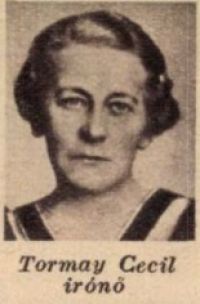
Cécile Tormay,
An outlaw's diary: revolution
(1923)
“ Everything is lost in a mist. Round the square the houses showed their many-eyed faces through a haze. Below, the rain-covered asphalt pavement shone, reflecting the people who stood upon it. In the windows of the houses, on the stone steps of the House of Parliament, between two stone lions, more people. ”
Charles Duke Yonge, The Constitutional History of England from 1760 to 1860
“ For what purpose, then, are arguments drawn from a distinction in which there is no real difference of a virtual and an actual representation? A member of Parliament chosen for any borough represents not only the constituents and inhabitants of that particular place, but he represents the inhabitants of every other borough in Great Britain. He represents the City of London and all the other Commons of the land, and the inhabitants of all the colonies and dominions of Great Britain, and is in duty and conscience bound to take care of their interests. ”
Nathaniel Hawthorne,
Passages from the English Notebooks…
“ At Westminster Bridge we had a good view of the river-front of the two Houses of Parliament, which look very noble from this point,—a long and massive extent, with a delightful promenade for the legislative people exactly above the margin of the river. This is certainly a magnificent edifice, and yet I doubt whether it is so impressive as it might and ought to have been made, considering its immensity. It makes no more impression than you can well account to yourself for, and you rather wonder that it does not make more. ”
Charles Hindley, A History of the Cries of London…
“ In the days of Elizabeth, they declare by act of common council, that in ancient times the open streets and lanes of the city have been used, and ought to be used, as the common highway only, and not for hucksters, pedlars, and hagglers, to stand or sit to sell their wares in, and to pass from street to street hawking and offering their wares. ”
John Lord, Beacon Lights of History, Volume 10…
“ In consequence of the passing of the municipal reform act, through the powerful advocacy of Lord John Russell, the government of the town passed to its own citizens, and became more or less democratic, not materially differing from the government of cities in the United States. Under able popular leaders, the towns not only became a new political power in Parliament, but enjoyed the privilege of electing their own magistrates and regulating their domestic affairs,--such as the police, schools, the lighting of streets, and public improvements generally. ”
Reginald Berkeley, Unparliamentary papers and other diversions (1924)
“ A couple of anxious-looking people walking up and down, looking intense and making speeches about Ghirlandajo or Cimabue to an audience of yokels that doesn’t know either from cream cheese; and the remainder of London seems to use the portico as a convenient meeting-place, and never goes inside at all.Broke my rule against large parties last night in order to go and stare at the women Members of Parliament, who allowed themselves to be shown off by old Lady Paramount Nectar at Ambrosia House. Never again. The rooms are big enough Heaven knows ”
William John Robertson, Public School History of England and Canada (1892)
“ If the land-owner was in need of money, he sold the right to the seat to some man who wished to be a member of Parliament, and these “nomination” boroughs soon came to have a regular market value. In other boroughs, the voters were so few that a rich candidate could easily buy their votes. So it can easily be seen that the British Parliament did not really represent the British people. ”
John T. Emmett, The Ethics of Urban Leaseholds (1879)
“ Instead of carefully anticipating the advance of building work round London, and providing broad and leading thoroughfares in all directions, everything is left to chance, or to the smallest and most selfish interests; and the Board, with all its peddling and expensive works, is falling year by year more distantly behind the public need. They even fail to guard the public rights which Parliament a century ago had granted. ”
Various, Punch, or the London Charivari…
“ But let us have no cheap mockery of the Houses of Parliament, because there is a lot to be said for them. They are much the best houses for hide-and-seek I know. The parts which are dear to the public, the cathedral parts, are no good for that, but behind them and under them and all round them there are miles and miles of superb secret passages and back staircases, the very place for a wet afternoon. They are decorated like second-class waiting-rooms and lead to a lot of rooms like third-class waiting-rooms; and at every corner there is a policeman ”
Victor Hugo,
The Man Who Laughs: A Romance of English History
“ The Commons, who are the people, when ordered to the bar of the Lords, humbly present themselves bareheaded before the peers, who remain covered. The Commons send up their bills by forty members, who present the bill with three low bows. The Lords send their bills to the Commons by a mere clerk. In case of disagreement, the two Houses confer in the Painted Chamber, the Peers seated and covered, the Commons standing and bareheaded. "Peers go to parliament in their coaches in file; the Commons do not. Some peers go to Westminster in open four-wheeled chariots. ”
Harry Graham,
The Mother of Parliaments
“ In these democratic days a seat in either House of Parliament is no longer the monopoly of a single privileged class: it lies within the reach of all who can afford the luxury of representing either themselves or their fellows at Westminster. ”
Thomas Street, Thoughts on the Proposed Inclosure of Waltham…
“ If a bill were brought into Parliament for inclosing such proportion only as the Commissioners should deem the Crown entitled to, or to allot a certain proportion to be specified in the Act, it could be productive of no advantage whatever to the parish of Woodford to have 100 acres of land inclosed for the growth of timber, nor would it answer p. 12the purpose of the Crown to have an inclosure of a similar, or, in many instances, a much less quantity allotted in different parishes for that purpose ”
Gilbert Abbott À Beckett,
The Comic History of Rome
“ If the interpretation of an act of Parliament is sometimes difficult, we may conceive the utter hopelessness of the effort to understand the laws, if they were to consist of a body of resolutions pouring in constantly from Exeter Hall, or Freemasons' Tavern, and, occasionally, from a lamp-post in Trafalgar Square, or a cart on Kennington Common. ”