Protista

Definition and stakes

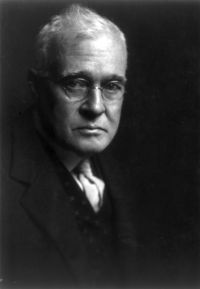
Portrait of Ernst Haeckel Ernst Haeckel,  The History of Creation, Vol. 2…

“ All Protista have a soul—that is to say, are “animate”—as well as all animals and all plants. The soul’s activity in the Protista manifests itself in their irritability, that is, in the movements and other changes which take place in consequence of mechanical, 69 electrical, and chemical irritation of their contractile protoplasm. Consciousness and the capability of will and thought are probably wanting in all Protista. ”
Source: Gutenberg

1911 Encyclopædia Britannica, Volume 22… (1911)

“ Partly because the term represented an interpretation rather than an objective set of facts, the word Protista has not been generally accepted for use in classification, and, whilst recognizing that the limits of the animal and plant kingdoms are not sharply defined, modern systematists refrain from associating these doubtfully placed organisms simply because of the dubiety of their position. ”
Source: Wikisource

Portrait of Ernst Haeckel Ernst Haeckel,  The History of Creation, Vol. 2…

“ The imperishable remains of dead Protista, for instance, the flinty shells of the Diatomeæ and Radiolaria and the calcareous shells of the Acyttaria, often form large rock masses.
In regard to their vital phenomena, especially those of nutrition and propagation, some Protista are more allied to plants, others more to animals. Both in their mode of taking food and in the chemical changes of their living substance, they sometimes more resemble the lower animals, at others the lower plants. Free locomotion is possessed by many Protista, while others are without it
”
Source: Gutenberg

Get perspective with Kwize: daily news enlightened by great literature