
“ Dick looked at her with a touch of covert contempt; clever people could convince the intellect, but there were instincts of honour, of loyalty, and of fidelity which no arguments should be able to blunt or to turn. Here was the thing which, vaguely felt, had so puzzled him in regard to May Quisanté; he had not doubted that she would see the thing as he had seen it—as Quisanté had professed himself unable to see it. That evening Quisanté brought home to dinner the gentleman whom Dick Benyon called old Foster the maltster, and who had been Mayor of Henstead three several times. ”
Quisanté
Definition and stakes
The theme of “Quisanté” has been addressed by authors such as Anthony Hope. It is often associated with terms like happiness, virtue, conscience, pleasure and moral.
Quotes about “Quisanté”
“ She gave it with what heartiness she could, and laughed only in her sleeve. Surely a man facing death could have forgotten all this? Not Alexander Quisanté. He could die, and die bravely; but the world must stand by his bedside. So till the end, whenever that most uncertainly dated end might come, the old mixture promised to go on, the great and small, the mean and grand, the call for tears and throbs of the heart alternating with the obstinate curling or curving of lips swift to respond to the vision of the contemptible or the ludicrous. ”
“ It was certainly true enough that he and May got no nearer to one another; if the break referred to existed somewhere, its effect was very plain; how could it display itself more strikingly than in making the lady prefer Quisanté's weaselly flirtation to the accomplished and enviable homage of Weston Marchmont? And preferred it she had, for one hour of life at least. Fanny felt the anger which we suffer when another shows indifference towards what we should consider great good fortune. ”
“ Martyrs don't giggle half the time." Had Marchmont heard her, the word "giggle" would have stirred him to real indignation; it was so inappropriate to that low reluctant mirth-laden laugh of hers, which seemed to reveal the feeling that it mocked and extorted the pity that it could not but deride. It sounded again as she stood looking at old Foster the maltster's picture there on the mantelpiece where Quisanté did not like to see it. For what was the meaning of it to her, declared by her perverse determination to keep it there and plain enough to her husband's quick wit? ”
 Thomas De Quincey,
Confessions of an English Opium-Eater
Thomas De Quincey,
Confessions of an English Opium-Eater
“ Doubtless, a powerful understanding, or unusual goodness of nature, will preserve a man from such weakness, but in general the truth of my representation will be acknowledged; pride, if not of deeper root in such families, appears at least more upon the surface of their manners. ”
 Victor Cousin,
Lectures on the true, the beautiful and the good
Victor Cousin,
Lectures on the true, the beautiful and the good
“ We have distinguished that particular sensibility, which is stirred in us in the train of reason itself, from physical sensibility, which needs an impression made upon the organs in order to enter into exercise.All our moral judgments are accompanied by sentiments that respond to them. The sight of an action which we judge to be good gives us pleasure,—the consciousness of having performed an obligatory act, and of having performed it freely, is also a pleasure; the judgment of merit and demerit makes our hearts beat by taking the form of sympathy and benevolence. ”
Victor Cousin,
Lectures on the true, the beautiful and the good
“ The charm of the pleasures of conscience comes from the very fact that we are forgetful of self in the action that has produced them. So if nature has joined to sympathy and benevolence a true enjoy{260}ment, it is on condition that these sentiments remain as they are, pure and disinterested; you must only think of the object of your sympathy and benevolence in order that benevolence and sympathy may receive their recompense in the pleasure which they give. Otherwise, this pleasure no longer has its reason for existence, and it is wanting as soon as it sought for itself. ”
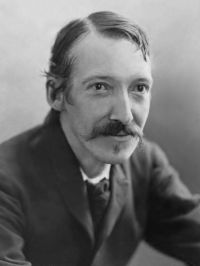 Robert Louis Stevenson,
Virginibus Puerisque and Other Papers
(1881)
Robert Louis Stevenson,
Virginibus Puerisque and Other Papers
(1881)
“ To sit still and contemplate,—to remember the faces of women without desire, to be pleased by the great deeds of men without envy, to be everything and everywhere in sympathy, and yet content to remain where and what you are—is not this to know both wisdom and virtue, and to dwell with happiness? ”
Thomas De Quincey,
Theological Essays and Other Papers…
“ We speak not of any physical sensibilities, but of those which are purely moral—sensibilities to poetic emotions, to ambition, to social gaiety. Accordingly it is amongst the young men and women of this body that the most afflicting cases under this type occur. ”
“ It was insisted on, relied on, made a trump card of, flung full in young Terence's audacious face. May sat by her husband in that strange mixed mood that he roused in her, half pride, half humiliation; scorning him because he would not bow before the truth, exulting in the audacity, the dash, and the daring of him, at the spirit that caught victory out of danger and turned mistake into an occasion of triumph. For triumph it was that night. Who could doubt his sincerity, who question the injured honour that rang like a trumpet through his words? ”
Thomas De Quincey,
Confessions of an English Opium-Eater
(1823)
“ Reader, he was one of those anomalous practitioners in lower departments of the law, who—what shall I say?—who, on prudential reasons, or from necessity, deny themselves all indulgence in the luxury of too delicate a conscience: (a periphrasis which might be abridged considerably, but that I leave to the reader's taste:) in many walks of life, a conscience is a more expensive encumbrance, than a wife or a carriage ”
Victor Cousin,
Lectures on the true, the beautiful and the good
“ The only penalty that is brought upon us by the counsels of prudence, comprehended more or less well, followed more or less well, is, in the final account, more or less happiness or unhappiness. Now I pray you, am I obligated to be happy? ”
 Miguel de Cervantes,
Don Quixote — Volume 1, Chapter XI
(1885)
Miguel de Cervantes,
Don Quixote — Volume 1, Chapter XI
(1885)
“ Lures to faith are they, those glimpses, And to faith in thee I hold; Kindness cannot make it stronger, Coldness cannot make it cold. If it be that love is gentle, In thy gentleness I see Something holding out assurance To the hope of winning thee. ”
Victor Cousin,
Lectures on the true, the beautiful and the good
“ Neither is it confounded with the joy of satisfied personal interest,—we are not moved in the same manner, in thinking that we have succeeded, and in thinking that we have been honest. The pleasure attached to the testimony of a good conscience is pure; other pleasures are much alloyed. ”
Carlo Giuseppe Quadrupani, Light and Peace
“ How, we say, is it possible to have for all men indiscriminately that extreme sensibility we feel for everything that touches us individually, that constant solicitude for our spiritual or temporal interests, that delicacy of feeling that we reserve for ourselves and for certain objects specially dear to us?—And yet it is literally au pied de la lettre, that our Lord’s precept should be observed. ”
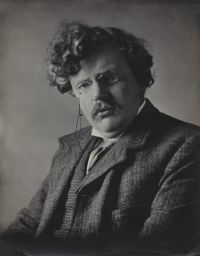 Gilbert Keith Chesterton,
The Defendant
(1904 [second impression])
Gilbert Keith Chesterton,
The Defendant
(1904 [second impression])
“ Their top-heavy dignity is more touching than any humility; their solemnity gives us more hope for all things than a thousand carnivals of optimism; their large and lustrous eyes seem to hold all the stars in their astonishment ”
 George William Curtis,
From the Easy Chair, Volume 2
George William Curtis,
From the Easy Chair, Volume 2
“ The mingled strength and simplicity and sweetness of his nature, the lofty sense of justice, the tranquil and complete devotion to duty, the large and humane sympathy, not lost in vague philanthropic feeling, but mindful of every detail of relief—the sound and steady judgment, the noble independence of thought and perfect courage of conviction, the blended manliness and modesty of a life which was unstained, and of a character which seemed without a flaw, all belonged to what we call the ideal man. ”
 Voltairine De Cleyre,
The Dominant Idea
Voltairine De Cleyre,
The Dominant Idea
“ Take a good look into yourself, and if you love Things and the power and the plenitude of Things better than you love your own dignity, human dignity, Oh, say so, say so! Say it to yourself, and abide by it. ”
 Robert W. Chambers,
The Streets of Ascalon: Episodes in the Unfinished Career of Richard Quarren…
Robert W. Chambers,
The Streets of Ascalon: Episodes in the Unfinished Career of Richard Quarren…
“ With every instinct inherent and self-inculcated, instincts of modesty, of reticence, of self-control, of pride, she quivered under this fierce humiliation born of self-knowledge—knowledge scornfully admitted and defied with every breath—but no longer denied. ”
 John Stuart Mill,
Autobiography (Mill) — Chapter V. 1826-1832
(1874)
John Stuart Mill,
Autobiography (Mill) — Chapter V. 1826-1832
(1874)
“ All those to whom I looked up, were of opinion that the pleasure of sympathy with human beings, and the feelings which made the good of others, and especially of mankind on a large scale, the object of existence, were the greatest and surest sources of happiness. ”
Victor Cousin,
Lectures on the true, the beautiful and the good
“ And we who have some time grovelled upon this earth, thinking only of ourselves, seeking only pleasure and a pitiable happiness, what sufferings nobly borne for justice, what generous efforts to maintain and develop the dignity of our soul, what virtuous affections for other souls, can we offer to the Father of humanity as titles to his merciful justice? ”
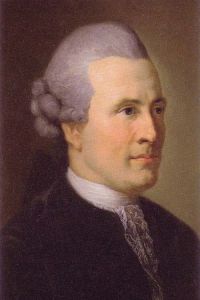 Johann Georg Zimmermann,
Solitude
Johann Georg Zimmermann,
Solitude
“ How “low, flat, stale, and unprofitable, seem all the uses of this world,” when the mind, boldly soaring beyond this lower sphere, indulges the idea that the pleasures which result from a life of innocence and virtue may be faintly analogous to the felicities of heaven! ”
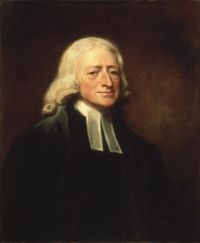 John Wesley,
The works of the Rev. John Wesley…
(1771)
John Wesley,
The works of the Rev. John Wesley…
(1771)
“ When your conscience once bears you witness, that you are stedfast, immoveable, and always abounding in the work of the Lord, you will find that your reward is already begun, and that you could not be less devout, less holy, less charitable, or less humble, without lessening the most substantial pleasure that ever you felt in your life. So that to be content with any lower attainments in piety, is to rob ourselves of a present happiness, which nothing else can give us. ”
The World English Bible — James
“ Let him show by his good conduct that his deeds are done in gentleness of wisdom. 14 But if you have bitter jealousy and selfish ambition in your heart, don't boast and don't lie against the truth. 15 This wisdom is not that which comes down from above, but is earthly, sensual, and demonic. 16 For where jealousy and selfish ambition are, there is confusion and every evil deed. 17 But the wisdom that is from above is first pure, then peaceful, gentle, reasonable, full of mercy and good fruits, without partiality, and without hypocrisy. ”
 James Mill,
Analysis of the Phenomena of the Human Mind
James Mill,
Analysis of the Phenomena of the Human Mind
“ When they are considered as our own acts; in other words, when we consider our own Prudence, Bravery, Justice, and Beneficence, we have associations with them of the following kind. With our own acts of Prudence and Bravery, we associate good to ourselves; that is, either Pleasure, or the cause of Pleasure, as the immediate consequent. ”
 Alexander Maclaren,
Expositions of Holy Scripture: Psalms
Alexander Maclaren,
Expositions of Holy Scripture: Psalms
“ This is the purest, highest form of religious emotion—when we can say, 'Whom have I but Thee? possessing Thee I desire none beside.' And this glad longing for God is the cure for all the feverish unrest of desires unfulfilled, as well as for the ague fear of loss and sorrow. Quietness fills the soul which delights in the Lord, and its hunger is as blessed and as peaceful as its satisfaction. ”
 John Gregory,
A Father's Legacy to his Daughters…
(1808)
John Gregory,
A Father's Legacy to his Daughters…
(1808)
“ If you have any sensibility or imagination, this will establish such an intercourse between you and the Supreme Being, as will be of infinite consequence to you in life. It will communicate an habitual cheerfulness to your tempers, give a firmness and steadiness to your virtue, and enable you to go through all the vicissitudes of human life with propriety and dignity. ”
Victor Cousin,
Lectures on the true, the beautiful and the good
“ On the contrary, in the doctrine of duty, I am always sure of obtaining the last end that I propose to myself, moral good. I risk my life to save my fellow; if, through mischance, I miss this end, there is another which does not, which cannot, escape me,—I have aimed at the good, I have been successful. ”
 John Greenleaf Whittier,
The Works of John Greenleaf Whittier…
John Greenleaf Whittier,
The Works of John Greenleaf Whittier…
“ Shall we, in view of these things, call back young, generous spirits just entering upon the perilous pathway? God forbid! Welcome, thrice welcome, rather. Let them go forward, not unwarned of the dangers nor unreminded of the pleasures which belong to the service of humanity. Great is the consciousness of right. Sweet is the answer of a good conscience. ”
 Jean-Baptiste Massillon,
Sermons
(1879)
Jean-Baptiste Massillon,
Sermons
(1879)
“ Nevertheless, it is in the midst of all these vexations that happiness must be at least professed. Every thing attributed to you, either by truth or vanity, is called in question: your birth, your talents, your reputation, your services, your success, your prudence, and even your honour. ”
 John Aikin,
Miscellaneous Pieces, in Prose
John Aikin,
Miscellaneous Pieces, in Prose
“ We see, therefore, from this view of our internal feelings, that no scenes of misery ought to be exhibited which are not connected with the display of some moral excellence, or agreeable quality. If fortitude, power, and strength of mind are called forth, they produce the sublime feelings of wonder and admiration: if the softer qualities of gentleness, grace, and beauty, they inspire love and pity. The management of these latter emotions is our present object. ”
Jean-Baptiste Massillon,
Sermons
(1879)
“ What happiness to have created innocent and tranquil pleasures for ourselves in these younger years, to have accustomed the heart to be contented with them, not to have contracted the sad necessity of being unable to do without violent and criminal gratifications, and not to have rendered insupportable, by a long habit of warm and tumultuous passions, the gentleness and the tranquillity of virtue and innocence! ”
Thomas De Quincey,
The Posthumous Works of Thomas De Quincey…
“ But what tenderness or pathetic [Pg 43] breathings of spirituality could that man have, who had no time beyond a few stray quarters of an hour for thinking of his own supreme relations to heaven, or to his flock on behalf of heaven? How could that man cherish or deepen the motions of religious truth within himself, whose thoughts were habitually turned to the wool market? Ninety and odd years he lived on earth labouring like a bargeman or a miner. ”
 Jonathan Swift,
The Works of the Rev. Jonathan Swift
(1801)
Jonathan Swift,
The Works of the Rev. Jonathan Swift
(1801)
“ The most sincere would be what I desire for myself whilst I continue in this world, which is health and quietness. This I pray God grant you in the largest portion, and life as long as you shall desire it! ”
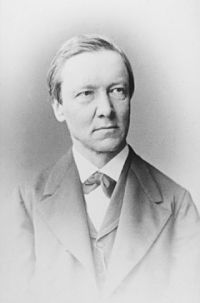 Julius Köstlin,
Life of Luther
Julius Köstlin,
Life of Luther
“ Thus he wrote to him in 1534 as follows: 'A merry heart and good courage, in honour and discipline, are the best medicine for a young man—aye, for all men. I, who have spent my life in sorrow and weariness, now seek for pleasure and take it wherever I can.... Pleasure in sin is the devil, but pleasure shared with good people in the fear of God, in discipline and honour, is well-pleasing to God. ”
Thomas De Quincey,
The Uncollected Writings of Thomas de Quincey…
“ I had reason to think myself popular amongst the very slender circle of my acquaintance; and finally, which perhaps was the crowning grace to all these elements of happiness, I suffered not from the presence of ennui; nor ever feared to suffer: for my temperament was constitutionally ardent; I had a powerful animal sensibility; and I knew the one great secret for maintaining its equipoise, viz. by powerful daily exercise; and thus I lived in the light and presence, or (if I should not be suspected of seeking rhetorical expressions, I would say) —in one eternal solstice, of unclouded hope. ”
Victor Cousin,
Lectures on the true, the beautiful and the good
“ Other philosophers have assigned the same part to sympathy or benevolence.For these the sign and measure of the good is in the sentiments of affection and benevolence which we feel for a moral agent. Does a man excite in us by such or such an action a more or less vivid disposition to wish him well, a desire to see and even make him happy? we may say that this action is good. If, by a series of actions of the same kind, he makes this disposition and this desire permanent in us, we judge that he is a virtuous man. Does he excite an opposite desire, an opposite disposition? ”
Thomas De Quincey,
The Uncollected Writings of Thomas de Quincey…
“ From my very earliest years,—that is the earliest years in which I had any sense of what belongs to true dignity of mind,—I declare to you that I have considered the interest which men, grown men, take in the personal appearance of each other as one of the meanest aspects under which human curiosity commonly presents itself. ”
Anonymous, The Young Lady's Mentor
“ Have I in any degree succeeded in reconciling you to the unvaryingly-accompanying penalties necessary to qualify the glad consciousness of possessing intellectual powers, a warm heart, and a strong mind? Your high position will indeed afford you far less happiness than that which may belong to the lower ranks in the scale of humanity; but the noble mind will soon be disciplined into dispensing with happiness;—it will find instead—blessedness. ”
