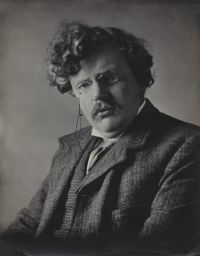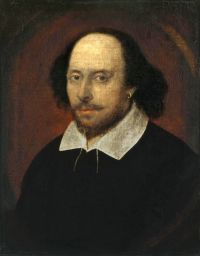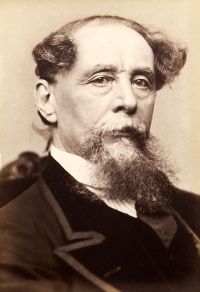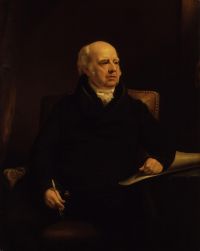
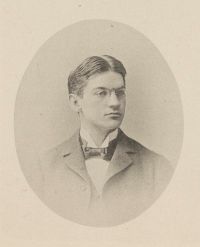
Richard William Hunt Browning

Definition and stakes

Portrait of William Sharp William Sharp,  Life of Robert Browning

“ In art, Sir Henry Raeburn, William Blake, Flaxman, Canova, Thorwaldsen, Crome, Sir Thomas Lawrence, Constable, Sir David Wilkie, and Turner were in the exercise of their happiest faculties: as were, in the usage of theirs, Beethoven, Weber, Schubert, Spohr, Donizetti, and Bellini.
It is not inadvisedly that I make this specification of great names, of men who were born coincidentally with, or were in the broader sense contemporaries of Robert Browning. There is no such thing as a fortuitous birth.
”
Source: Gutenberg

Portrait of William Sharp William Sharp,  Life of Robert Browning

“ No man, no poet assuredly, could love as Browning loved, and fail to be aware, often with vague anger and bitterness, no doubt, of this insuperable isolation even when spirit seemed to leap to spirit, in the touch of a kiss, in the evanishing sigh of some one or other exquisite moment. The poem tells us how the lovers, straying hand in hand one May day across the Campagna, sat down among the seeding grasses, content at first in the idle watching of a spider spinning her gossamer threads from yellowing fennel to other vagrant weeds. ”
Source: Gutenberg

Helen A. Clarke,  Browning's England: A Study in English Influences in Browning

“ William Wordsworth
17 Enthusiasm for liberal views comes out again and again in the poetry of Browning.
His fullest treatment of the cause of political liberty is in "Strafford," to be considered in the third chapter, but many are the hints strewn about his verse that bring home with no uncertain touch the fact that Browning lived man's "lover" and never man's "hater." Take as an example "The Englishman in Italy," where the sarcastic turn he gives to the last stanza shows clearly where his sympathies lie:
—"Such trifles!"
”
Source: Gutenberg

Get perspective with Kwize: daily news enlightened by great literature