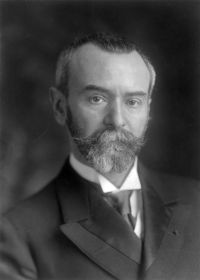
Robert Greene

Definition and stakes

W. W. Greg,  Pastoral Poetry & Pastoral Drama

“ No one not utterly callous to the pathos of human life, or warped by some ethical twist beyond the semblance of a man, has ever been able to pass unmoved by the figure of Robert Greene. We see him, the poet of all that is truest and tenderest in human affection, abandoning his young wife and child, drawn by the power of some fatal fascination into the whirlpool of low life in London, and then, as if inspired by a sudden revelation of objective vision, penning the throbbing lines of the forsaken mother's song ”
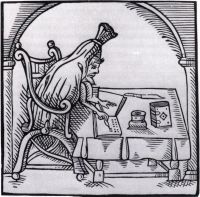
Source: Gutenberg

Alsager Richard Vian,  Dictionary of National Biography… (1890)

“ GREENE, ROBERT (1678?–1730) , philosopher, the son of Robert Greene, a mercer of Tamworth, Staffordshire, by his wife Mary Pretty of Fazeley, was born about 1678. His father, who according to the son was a repository of all the Christian virtues, died while Greene was a boy, and it was through the generosity of his uncle, John Pretty, rector of Farley, Hampshire, that he was sent to Clare Hall, Cambridge. He graduated B.A. 1699, and M.A. 1703. He became a fellow and tutor of his college and took orders. ”
Source: Wikisource

E. K. Chambers,  The Elizabethan Stage, Vol. 3 (1923)

“ One of the charges against Nashe was his friendship with, and in the Harveian view aping of, Robert Greene, with whom, according to Gabriel’s Four Letters (Works, i. 170) , Nashe took part in the fatal banquet of pickled herrings and Rhenish which brought him to his end. Nashe repudiated the charge of imitation, and spoke of [451] Greene in Have With You to Saffron Walden (iii. 132) , as ‘subscribing to mee in anything but plotting Plaies, wherein he was his crafts master’. Unless Dido is early work, no play written by Nashe before Greene’s death on 3 Sept. 1592 is known to us. ”
Source: Gutenberg

Get perspective with Kwize: daily news enlightened by great literature