Roman drama

Definition and stakes

1911 Encyclopædia Britannica, Volume 8… (1911)

“ In its most productive age, as well as in the times of its decline and decay, the Roman drama exhibits the continued coexistence of native forms by the side of those imported from Greece—either kind being necessarily often subject to the influence of the other. Italy (with Sicily) has ever been the native land of acting and of scenic representation; and, though Roman dramatic literature at its height is but a faint reflex of Greek examples, there is perhaps no branch of Roman literary art more congenial than this to the soil whence it sprang. ”
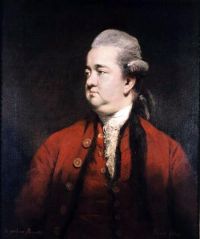
Source: Wikisource

John Colin Dunlop,  History of Roman Literature from its Earliest Period to the Augustan Age…

“ That one actor should have recited, and another performed the corresponding gestures in the scenes of a tragedy, and that, too, in parts of the highest excitement, and in which theatric illusion should have been rendered most complete, certainly appears the most incongruous and inexplicable circumstance in the history of the Roman Drama. ”
Source: Gutenberg

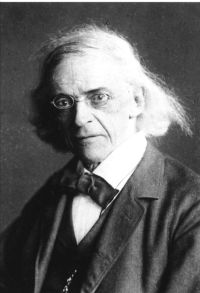
Portrait of Theodor Mommsen Theodor Mommsen,  The History of Rome (Volumes 1-5…

“ Under such circumstances, where art worked for daily wages and the artist instead of receiving due honour was subjected to disgrace, the new national theatre of the Romans could not present any development either original or even at all artistic; and, while the noble rivalry of the noblest Athenians had called into life the Attic drama, the Roman drama taken as a whole could be nothing but a spoiled copy of its predecessor, in which the only wonder is that it has been able to display so much grace and wit in the details. ”
Source: Gutenberg

Get perspective with Kwize: daily news enlightened by great literature