Ralph Waldo Emerson,
Essays — Second Series
“ We permit all things to ourselves, and that which we call sin in others is experiment for us. ”
The concept of "Si" involves a multifaceted examination of human nature, morality, and existence, as seen in the works of various thinkers. From Ralph Waldo Emerson's claim that sin in others becomes personal experimentation to Julian of Norwich's portrayal of sin as a divine test, the theme runs through philosophical, theological, and sociological viewpoints.
Georg Simmel connects secrecy to existential in-betweenness, while Alexander Sutherland Neill promotes the acceptance of both virtuous and flawed aspects of the self. These viewpoints together present "Si" as a conflict between moral contrasts and the human experience, highlighting its influence on ethical and psychological identity.
Ralph Waldo Emerson,
Essays — Second Series
“ We permit all things to ourselves, and that which we call sin in others is experiment for us. ”
 Alexander Sutherland Neill,
A Dominie in Doubt
“ I have a theory that each of us has a definite amount of human nature, some of it high, some of it low, or, to phrase it differently, some of it animal, some of it spiritual. We can repress one part, and then we become either a saint or a sinner; the better way is to be both saint and sinner, to look life straight in the face, condemning no one, judging no one. ”
 Julian of Norwich,
Revelations of Divine Love
(1907)
“ SIN is the sharpest scourge that any chosen soul may be smitten with: which scourge thoroughly beateth [1] man and woman, and maketh him hateful in his own sight, so far forth that afterwhile [2] he thinketh himself he is not worthy but as to sink in hell,—till [that time] when contrition taketh him by touching of the Holy Ghost, and turneth the bitterness into hopes of God's mercy. ”
 Georg Simmel,
The American Journal of Sociology…
“ Secrecy is thus, so to speak, a transition stadium between being and not-being. ”
 Dora Sigerson Shorter,
What We Must Do
(1893)
“ I ask, O World, a wider sight For men, that they to see be strong— Your little wrongs that are not wrong, Your little rights that are not right. There’s not so much sin here below As petty fashions make believe; Yet so the world’s sad eyes deceive— Sin is much greater than they know. ”
 Clarence Day,
This Simian World
“ As to modesty and decency, if we are simians we have done well, considering: but if we are something else—fallen angels—we have indeed fallen far. ”
Charles Kenny, Half-Hours With The Saints and Servants of God (1882)
“ Shall I dare, in the presence of Thy glance so infinitely pure, commit deeds which I dare not even show to man? Shall I dare to sin in Thy presence, knowing that sin and the sinner is hated by Thee, and to condemn the sinner Thou hast no wish? ”
Georg Simmel,
The American Journal of Sociology…
“ At the other extreme, we may refer to the Lebenslüge of the individual, so often in need of illusion as to his powers and even as to his feelings, of superstition with reference to God as well as men, in order to sustain himself in his being and in his potentialities. In this psycho-biological respect error is co-ordinated with truth. The utilities of the external, as of the subjective, life provide that we get from the one as well as from the other precisely that which constitutes the basis of the conduct which is essential for us. ”
 Charles Kingsley,
All Saints' Day and Other Sermons
“ Ask yourselves with Epictetus, Am I discontented with things which are in my own power, or with things which are not in my own power?—that is, discontented with myself, or with things which are not myself? Am I discontented with myself, or with things about me, and outside of me? Consider this last question well, if you wish to be true Christians, true philosophers, and, indeed, true men and women. ”
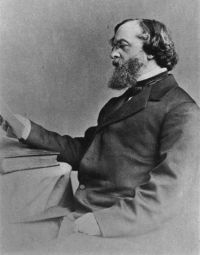 James Freeman Clarke,
Orthodoxy: Its Truths And Errors
“ But the question recurs, Is there only one kind of sin,—namely, voluntary and conscious transgression of God's law, originating with the individual himself, and in the moment of committing it, by means of his free will, which is its only seat? or is there sin which is a tendency in man's nature, something permanent, involuntary, of which he is not conscious, and which has its seat not merely in the will, but in the desires and affections. ”
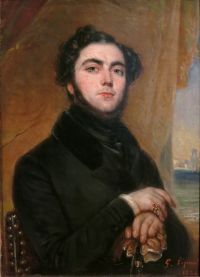 Eugène Sue,
A Romance of the West Indies
“ Pardon me, sir, to some consciences, at once scrupulous and timid, certain confidences, or rather certain confessions, have the same effect as the poisoned shoulder-knot in the play of that name; the aforesaid consciences think only of getting rid of the secret to a neighboring conscience in order to protect themselves from all responsibility. ”
Sinclair Lewis, Main Street (1920)
“ What are these unheard-of sins you condemn so much—and like so well?” ”
Matthew Henry, Commentary on the Whole Bible… (1700s)
“ If thou have reason to think that thy silence will be deemed an evidence of the weakness of thy cause, or of thy own weakness, in such a case answer him, and let it be an answer ad hominem—to the man, beat him at his own weapons, and that will be an answer ad rem—to the point, or as good as one. ”
 John Cowper Powys,
Suspended Judgments: Essays on Books and Sensations
“ There may be something irritating to the pagan mind about this arbitrary introduction of the idea of "sin" as the cause of the lamentable misery of the world. Among modern writers the idea of "sin" is ridiculed, and the notion of its supernaturalism scouted. ”
 Elias Hicks,
Journal of the Life and Religious Labours of Elias Hicks
“ In the latter meeting I was concerned to show the dangerous and hurtful tendency of our submitting to be led and governed [Pg 157] by the customs and manners of others, without a strict and careful examination thereof; and bringing them to the test of the light in our own conscience. For although the frequency of a thing, and an habitual conformity to that which is not right, often blunts the edge of conviction, and reconciles us to that which is contrary to truth, and derogatory to our true interest; yet the custom of sinning will not lessen its guilt. ”
Matilda Charlotte Houston, Sink or swim? vol. 2/3 (1868)
“ I have done so from a conviction that in judging others we not only see but often suspect little of the latent causes of the sins which seem to us, and which in truth are, so flagrant and so disastrous. ”
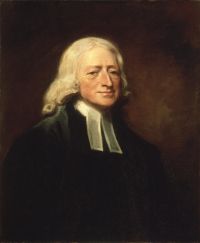 John Wesley,
The works of the Rev. John Wesley…
“ But abstracting from these cases, wandering thoughts, in the latter sense of the word, that is, thoughts wherein our understanding wanders, from the point it has in view, are no more sinful than the motion of the blood in our veins, or of the spirits in our brain. If they arise from an infirm constitution, or from some accidental weakness or distemper, they are as innocent as it is to have a weak constitution, or a distempered body. ”
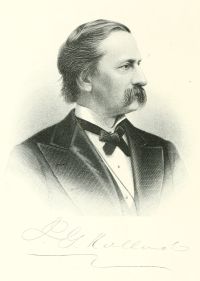 J. G. Holland,
Lessons in Life; A Series of Familiar Essays
“ If a sturdy fact comes along, and asks admission, we turn to our creed to see if we can safely entertain it. If the creed says "No," we say "No," and the fact is turned out of doors, and misrepresented after it is gone. Our creeds are our dwellings. They come next to us, and nothing can come to us, or go out from us, without going through our creeds. ”
 Josiah Royce,
The Conception of God
(1897)
“ Here, what I want is known to me by virtue of its contrast with what another wants, and this contrast, rendering relatively clear my consciousness of my own intent, tends, by its very existence, and by reason of the blindness of my passion, to inflame the opposition. In a more benign, but also, as I judge, in even a more primitive form, appears the simple contrast of ego and non-ego in all my imitative, or explicitly plastic and socially submissive, states of consciousness. ”
 Boris Sidis,
Nervous Ills, Their Cause and Cure
“ The mind is in a state of tension, in a state of anxiety, in restless, uneasy discord, due to the fear instinct, the companion of the impulse of self-preservation. The contesting mental set, charged with intense fear emotion, presses into the foreground of consciousness, and a contest, a discord, ensues in [147] the mind of the individual, a contest, a discord, a conflict which keeps the person in a state of indecision and lack of will power. ”
 Adam Smith,
The Theory of Moral Sentiments
(1777)
“ We may judge of the propriety or impropriety of the sentiments of another person by their correspondence or disagreement with our own, upon two different occasions; either, first, when the objects which excite them are considered without any peculiar relation, either to themselves or to the person whose sentiments we judge of; or, secondly, when they are considered as peculiarly affecting one or other of us. ”
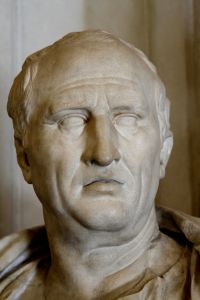 Marcus Tullius Cicero,
For Sextus Roscius of Ameria — 80 BC
“ In what point do I stand in the way of your advantage? In what do I hinder you? If you wish to slay the man for the sake of his spoils, you have despoiled him. What do you want more? If you want to slay him out of enmity, what enmity have you against him whose farms you took possession of before you knew himself? If you fear him, can you fear anything from him who you see is unable to ward off so atrocious an injury from himself? ”
 Ralph Waldo Trine,
What All The World's A-Seeking
“ Do I not recognize the fact that the moment I judge my fellow-man, by that very act I judge myself? One of two things, I either judge myself or hypocritically profess that never once in my entire life have I committed a sin, an error of any kind, never have I stumbled, never fallen, and by that very profession I pronounce myself at once either a fool or a knave, or both. ”
Shirley Carter Hughson, The Warfare of the Soul: Practical Studies in the Life of Temptation
“ Similarly must we guard the particular faculty that we find has led us into sin. Is it pride of intellect, the desire to show what little we know, the instinctive tendency to monopolize conversation, or to instruct and correct others? Or is it a weakness that has its seat in our affections, a tendency to condone sin in those we love, or a critical spirit against those for whom we have no natural affinity? ”
William James, The Varieties of Religious Experience…
“ Now with most of us the sense of our present wrongness is a far more distinct piece of our consciousness than is the imagination of any positive ideal we can aim at. In a majority of cases, indeed, the “sin” almost exclusively engrosses the attention, so that conversion is “a process of struggling away from sin rather than of striving towards righteousness.”113 A man's conscious wit and will, so far as they strain towards the ideal, are aiming at something only dimly and inaccurately imagined. ”
 George Adam Smith,
The Expositor's Bible: The Book of Isaiah…
“ These words were in answer to an instinct, that must have often sprung up in our hearts when we have been struggling for at least moral hope—the instinct which will be all that is sometimes left to a man's soul when unbelief lowers, and under its blackness a flood of temptations rushes in, and character and conduct feel impossible to his strength—the instinct that springs from the thought, "Well, here I am, not responsible for being here, but so set by some One else, and the responsibility of the life, which is too great for me, is His." ”
 Zhuang Zi,
Chuang Tzŭ
(1889)
“ And if a sinner like myself were to say to God, 'Make of me a man, make of me a man;' I think he too would reject me as uncanny. The universe is the smelting-pot, and God is the caster. I shall go whithersoever I am sent, to wake unconscious of the past, as a man wakes from a dreamless sleep. ”
 Oscar Wilde,
De Profundis
(1905)
“ What the paradox was to me in the sphere of thought, perversity became to me in the sphere of passion. Desire, at the end, was a malady, or a madness, or both. ”
James Kerr, The Covenants And The Covenanters
“ To them that object out of conscience, these poor resolutions may afford some relief, if not satisfaction; or, if these slender endeavours fall short of my design, and the reader's desires herein, I shall send them to their labours, who have taken more able and fruitful pains in this subject. To them that object out of a spirit of bitterness and malignity, nothing will suffice. He that is resolved to err, is satisfied with nothing but that which strengthens his error. ”
Georg Simmel,
The American Journal of Sociology…
“ In the latter case life rests upon a thousand presuppositions which the individual can never trace back to their origins, and verify; but which he must accept upon faith and belief. ”
Matthew Henry, Matthew Henry's Commentary on the Whole Bible… (1700s)
“ The threatening is addressed to the sinner himself, for the awakening of his conscience, if he have any left: "Consider what shall be given unto thee, and what shall be done unto thee, by the righteous Judge of heaven and earth, thou false tongue." ”
 John of the Cross,
Ascent of Mount Carmel
“ But of the voluntary desires, which, though they be for very small things, are, as I have said, intentional venial sins, any one that is not conquered suffices to impede union. [4] I mean, if this habit be not mortified; for sometimes certain acts of different desires have not as much power when the habits are mortified. Still, the soul will attain to the stage of not having even these, for they likewise proceed from a habit of imperfection. ”
George Adam Smith,
The Expositor's Bible: The Book of Isaiah…
“ Thus the word holy appeals in turn to each of the three great faculties of man's nature, by which he can be religiously exercised—his conscience, his affections, his reason; it covers the impressions which God makes on man as a sinner, on man as a worshipper, on man as a thinker. The Holy One is not only the Sinless and Sin-abhorring, but the Sublime and the Absolute too. ”
Marcus Tullius Cicero,
The Academic Questions, Treatise De Finibus…
“ Therefore, if I did not think it foolish in such a discussion to do what, when one is discussing affairs of state, is sometimes done, I would swear by Jupiter and my household gods, that I am inflamed with a desire of discovering the truth, and that I do truly feel what I say. For how can I avoid wishing to discover the truth, when I rejoice if I have discovered anything resembling the truth? ”
 Alexander Maclaren,
Expositions of Holy Scripture: Romans Corinthians…
“ And so, two people, sitting side by side here now, may start from the same level, and by the operation of the one principle the one may rise, and rise, and rise, till he is lost in God, and so finds himself, and the other sink, and sink, and sink, into the obscurity of woe and evil that lies beneath every human life as a possibility. ”
Marcus Tullius Cicero,
The Academic Questions, Treatise De Finibus…
“ Now who, that is acquainted with these instances, can doubt that this motion of the mind is altogether in opinion and voluntary? for who can doubt that disorders of the mind, such as covetousness, and a desire of glory, arise from a great estimation of those things, by which the mind is disordered? from whence we may understand, that every perturbation of the mind is founded in opinion. ”
Ralph Waldo Emerson,
Essays — Second Series
“ When we see an eager assailant of one of these wrongs, a special reformer, we feel like asking him, What right have you, sir, to your one virtue? ”
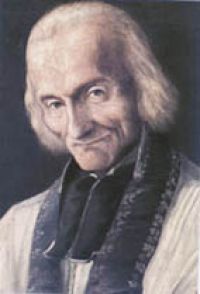 Jean-Marie-Baptiste Vianney,
Sermons of the Curé of Ars
(1960)
“ Do you not see them, one as much as the other, seeking to charm one another by their airs and graces and all sorts of tricks and wiles? Count up, unfortunate sinner, if you can, the number of your bad thoughts, of your evil desires and your sinful actions. ”
“ And this change—this conversion, if you will—comes sometimes, it may be, despite ourselves, but comes—remember this—comes most often in answer to some act of obedience, to some surrender of self-will on our part. We may complain; we may demur; we may distrust. We have toiled all the night, and have taken nothing; but we recognise the authority of the Divine voice, and we force ourselves into compliance—"nevertheless, at Thy word." ”
George Adam Smith,
Four Psalms XXIII. XXXVI. LII. CXXI
“ Whether the blame be outside yourselves, in the littleness of many of the prevailing aspects of religious life, and the crowding of our religious arenas with the pettiest of interests, or within yourselves, in your own mean and slovenly views of life, your indolence to extricate details and discriminate the large eternal issues among them—there is for you but one way back to faith. ”
“ You interest me, Heard. If you deny the susceptibility of a temperament like his, you deny the whole operation of externals upon character and action. You deny, for example, the success of the Roman Catholic Church which relies, for its moral effects, upon such optic appeals to the senses, and upon the ease with which transitory feelings can be transmuted into axioms of conduct. ”
Adam Yule, The Loss of the Australia
“ And can we be safe, in such circumstances, to live in unpreparedness for that which may meet us the next moment, and must meet us ere long? Or ought we to feel satisfied, in any circumstances, if we be living in a state of enmity with God? What can the sinner do, and whither shall he flee, when judgments overtake him? ”
Isaac Barrow, Sermons on Evil-Speaking
“ Even private persons in due season, with discretion and temper, may reprove others, whom they observe to commit sin, or follow bad courses, out of charitable design, and with hope to reclaim them. ”
George Adam Smith,
The Expositor's Bible: The Book of Isaiah…
“ Not by fits and starts of a benevolence similar to that of our own foolish and inconsistent hearts does He work. Consistency, reason and law are the methods of His action; and they apply closely, irretrievably, to all of our life. Hath He promised evil? Then evil will proceed. Let us believe that God keeps His word; that He is thoroughly attentive to all we do; that His will concerns the whole of our life. ”
Boris Sidis,
The Foundations of Normal and Abnormal Psychology…
(1914
| notes)
“ For it must be clearly understood that there is no special controlling agency somewhere in the mind sending out orders, mandates, inhibitions, like a despotically ruling autocrat, like a psycho-analytic censor, or like an omniscient, omnipotent, omnipresent, invisible deity. ”