
“ But though we do not now inflict so much evil on those who think differently from us, as it was formerly our custom to do, it may be that we do ourselves as much evil as ever by our treatment of them. Socrates was put to death, but the Socratic philosophy rose like the sun in heaven, and spread its illumination over the whole intellectual firmament. Christians were cast to the lions, but the Christian church grew up a stately and spreading tree, overtopping the older and less vigorous growths, and stifling them by its shade. ”
Socratic philosophy
Definition and stakes
The theme of “Socratic philosophy” has been addressed by authors such as Albert Schwegler, John Stuart Blackie, James Frederick Ferrier, Henry Jackson and Plato. It is often associated with terms like Socrates, virtue, knowledge, ethics and dialectic.
Quotes about “Socratic philosophy”
1911 Encyclopædia Britannica, Volume 21… (1911)
“ What is unjust? What is government? What is it to be a ruler of men?” In this form of question, however simple, the originality of Socrates is typified; and by means of it he laid the first stone, not only of the fabric of ethical philosophy, but of scientific method, at least in ethics, logic and psychology. Socrates never doubted that if men once knew what was best, they would also do it. They erred, he thought, from not seeing the good, and not because they would not follow it if seen. This is expressed in the Socratic dicta: “Vice is ignorance,” “Virtue is knowledge.” ”
 John Stuart Blackie,
Four Phases of Morals: Socrates…
“ Another well-known dogma of the Socratic philosophy is, that not only is Science as the product of Reason the supreme legislative authority in all questions of morals, but in point of fact also, that to know what is right is to do what is good, for no man with his eyes open will perpetrate an act which demonstrably leads to his own destruction. ”
Albert Schwegler, A History of Philosophy in Epitome
“ Their Relation to the Socratic Philosophy.—The death of Socrates gave to his life an ideal perfection, and this became an animating principle which had its working in many directions. The apprehension of him as an ideal type forms the common character of the immediate Socratic schools. The fundamental thought, that men should have one universal and essentially true aim, they all received from Socrates ”
Joseph Haven, Mental Philosophy: Including the Intellect…
“ Defect in the Socratic Philosophy.—This was the capital defect in the ethical system of Socrates, who held that men always pursue what they think to be good, and, therefore, always do what they think is right, since the good and the right are identical; sometimes, indeed, mistaking an apparent good for a real one, but always doing as well as they know how ”
 James Frederick Ferrier,
Philosophical Works of the Late James Frederick Ferrier
(1888)
“ But, without insisting on that point, what I wish you to observe is, that my reason for going at such length into the moral philosophy of Socrates is because I conceive that by laying down thought, or, more strictly, the free act of self-consciousness, as the groundwork of ethics, it supplies the truest of all foundations for a system of absolute morality, and contains the germ of all the ethical speculations, whether polemical or positive, which have been unfolded since his time. ”
Petronius Arbiter, The Satyricon — Complete
“ If each and all were to pursue such evil courses, the race of human beings would become extinct on earth. And here comes in that wonderful Socratic argument, whereby the minds of boys, as yet unable to reason clearly, are deceived, for a ripe intellect could not be misled. These followers of Socrates pretend to love the soul alone, and, being ashamed to profess love for the person, call themselves lovers of virtue, whereat I have often been moved to laughter. ”
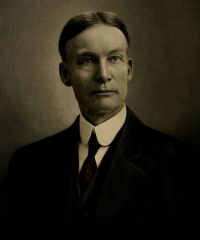 Frank W. Blackmar,
History of Human Society
“ With an irony in manner and thought, Socrates introduced the problem of self-knowledge; he hastened the study of man and reason; he instituted the doctrine of true manhood as an essential part in the philosophy of life. Conscience was enthroned, and the moral life of man began with Socrates. ”
Henry Jackson, 1911 Encyclopædia Britannica, Volume 25… (1911)
“ Thus, whereas in the earlier theory of ideas the ethical universals of Socrates had been held to have a first claim to hypostatization in the world of ideas, they are now peremptorily excluded, whilst the idealism which reconciles plurality and unity gives an entirely new significance to so much of the Socratic element as is still retained. ”
Julian, Letter to Themistius the philosopher (1913)
“ Many indeed you might find whom those conquests enriched, but not one whom they made wiser or more temperate than he was by nature, if indeed they have not made him more insolent and arrogant. Whereas all who now find their salvation in philosophy owe it to Socrates. ”
Albert Schwegler, A History of Philosophy in Epitome
“ But in Socrates, the human mind, for the first time, turned itself in upon itself, upon its own being, and that too in the most immediate manner, by conceiving itself as active, moral spirit. The positive philosophizing of Socrates, is exclusively of an ethical character, exclusively an inquiry into the nature of virtue, so exclusively, and so onesidedly, that, as is wont to be the case upon the appearance of a new principle, it even expressed a contempt for the striving of the entire previous period, with its natural philosophy, and its mathematics. ”
Franklin K. Lane, The Letters of Franklin K. Lane…
“ Often I had said to myself that I should summon to my mind when this moment came, some words that would be somewhat a synthesis of my philosophy. Socrates said to those who stood by, after he had drunk the hemlock, "No evil can befall a good man, whether he be alive or dead." ”
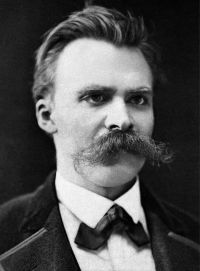 Friedrich Wilhelm Nietzsche,
The Birth of Tragedy; or, Hellenism and Pessimism
“ To penetrate into the depths of the nature of things, and to separate true perception from error and illusion, appeared to the Socratic man the noblest and even the only truly human calling: just as from the time of Socrates onwards the mechanism of concepts, judgments, and inferences was prized above all other capacities as the highest activity and the most admirable gift of nature. ”
Henry Herbert Williams, 1911 Encyclopædia Britannica (1911)
“ Nor can it be seriously maintained that the problem of freedom in the form in which it is presented to the modern mind ever became the subject of debate in the philosophy of Socrates, Plato or Aristotle. It is true that Socrates brought into prominence the moral importance of rational and intelligent conduct as opposed to action which is the result of unintelligent caprice. ”
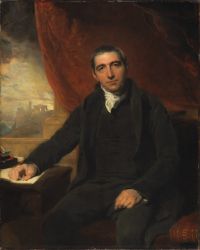 Thomas Taylor,
Introduction to the Philosophy and Writings of Plato
“ Hence Socrates, in the Republic, speaking of the power of dialectic, says that it surrounds all disciplines like a defensive enclosure, and elevates those that use it to the good itself, and the first unities; that it purifies the eye of the soul; establishes itself in true beings, and, the one principle of all things, and ends at last in that which is no longer hypothetical. ”
John Stuart Blackie,
Four Phases of Morals: Socrates…
“ In all moral questions, therefore, the motive powers must be supposed {32} as a fact; they belong to the nature of a moral being as steam belongs to a steam-engine; and therefore Socrates, whose whole teaching breathes the earnest conviction of the great truth that moral philosophy has no meaning as a theory, but exists only as a fact, is everywhere exhibited as a great lover of men. Love of his kind, indeed, was the main inspiration of his life, as in fact it must be that of all men who aspire to the noble position of social reformation in any shape ”
Albert Schwegler, A History of Philosophy in Epitome
“ But every thinking individual has the consciousness that what he holds as right, as duty, as good or evil, does not appear as such to him alone but [Pg 52] to every rational being, and that consequently his thinking has the character of universality, of universal validity, in a word—of objectivity. This then in opposition to the Sophistic philosophy is the standpoint of Socrates, and therefore with him the philosophy of objective thought begins. ”
Various, The Journal of Abnormal Psychology…
“ In a word, the Socratic method presents two striking tendencies; one destructive, the other constructive; the former annihilates erroneous conceptions, and the latter aids the building up of a healthy mental world, in which men may find pleasure. ”
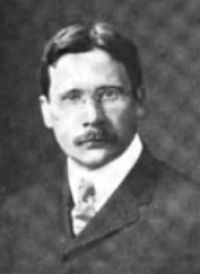 Clifford Herschel Moore,
The Religious Thought of the Greeks…
“ It is quite true that this was also Socrates’ position, but his mind and common sense took so large a view of the relations of man that he never fell into the narrow exclusiveness of the Cynics. With them philosophy was not speculative, but became the art of virtuous living ”
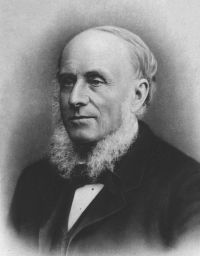 Alexander Bain,
Moral Science; a Compendium of Ethics
“ That lie has within him by birthright something out of which conscience is developed, I firmly believe; and what this is I shall endeavour by-and-by to show when I come to speak of Sokrates and his philosophy as opposed to the doctrines of the Sophists. But that the man is furnished by nature with a conscience ready-made, just as he is furnished with a ready-made sensational apparatus, this is a doctrine in which I have no faith, and which I regard as altogether erroneous. It arises out of the disposition to attribute more to the natural man than properly belongs to him. ”
P. V. N. Myers, History as past ethics; an introduction to the history of morals (1913)
“ But neither Socrates nor the Greek philosophers in general recognized that this self-knowledge comes through right living rather than through right thinking. As Goethe discerningly observes, man comes to know himself not through reflection but through conduct: “Do your duty and thou wilt know what thou art.”500And for the common moral life of the world there is a profound teaching in this Socratic doctrine which makes knowledge the spring of virtue.501 There is in knowledge, in insight, in the clear recognition of the relation of man’s highest good to virtue, an impelling force and authority. ”
Friedrich Wilhelm Nietzsche,
The Twilight of the Idols; or, How to Philosophize with the Hammer…
“ Is the Socratic irony an expression of revolt, of mob resentment? Does Socrates, as a creature suffering under oppression, enjoy his innate ferocity in the knife-thrusts of the syllogism? Does he wreak his revenge on the noblemen he fascinates?—As a dialectician a man has a merciless instrument to wield ”
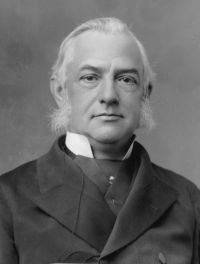 F. Max Müller,
Chips from a German Workshop, Volume 3
“ But to Socrates it seemed more practical to remain in prison, and to die as the first witness and martyr of the liberty of conscience, and to rise from the sublime height of his theory to the seats of the immortals. Thus it is the want of the individual which decides on the practical value of an act or of a thought, and this want depends on the nature of the human soul. ”
“ Characteristic also of the temper of the Socratic enquiry is, (4) the proposal to discuss the teachableness of virtue under an hypothesis, after the manner of the mathematicians; and (5) the repetition of the favourite doctrine which occurs so frequently in the earlier and more Socratic Dialogues, and gives a colour to all of them—that mankind only desire evil through ignorance ”
Freiherr von Friedrich Hügel, The Mystical Element of Religion…
“ Dialectics are here still chiefly a Method, and hardly as yet a Metaphysic as well. The soul here is as yet but simply one, and virtue is also simply one, and simply and directly identical with knowledge, and hence directly teachable: the very possibility that the will may not or indeed cannot follow, necessarily, automatically, the clear perception of what is really good for it, is one quite foreign to the mind of Socrates, indeed to all Greek thinkers up to the very end of the classical philosophy. ”
Albert Schwegler, A History of Philosophy in Epitome
“ But whilst the Sophists made it their object, through subjective reflection to confuse and to break up all stable convictions, to make all rules relating to outward conduct impossible, Socrates had recognized thinking as the activity of the universal principle, free, objective thought as the measure of all things, and, therefore, instead of referring moral duties, and all moral action to the fancy and caprice of the individual, had rather referred all to true knowledge, to the essence of spirit. ”
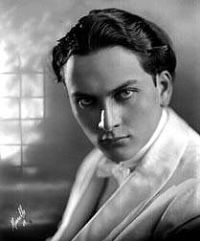 Manly Palmer Hall,
The Secret Teachings of All Ages…
(1928)
“ He held that the soul existed before the body and, prior to immersion therein, was endowed with all knowledge; that when the soul entered into the material form it became stupefied, but that by discourses upon sensible objects it was caused to reawaken and to recover its original knowledge. On these premises was based his attempt to stimulate the soul-power through irony and inductive reasoning. It has been said of Socrates that the sole subject of his philosophy was man. ”
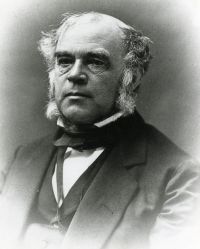 John William Draper,
History of the Intellectual Development of Europe…
“ From such a statement of the philosophy of Socrates, we cannot fail to remark how superficial it must have been; it perpetually mistakes differences of words for distinctions of things; it also possessed little novelty. The enforcement of morality cannot be regarded as anything new, since probably there has never been an age in which good men were not to be found, who observed, as their rule of life, the maxims taught by Socrates ”
Friedrich Wilhelm Nietzsche,
The Twilight of the Idols; or, How to Philosophize with the Hammer…
“ I try to understand the idiosyncrasy from which the Socratic equation:—Reason = Virtue = Happiness, could have arisen: the weirdest equation ever seen, and one which was essentially opposed to all the instincts of the older Hellenes.5With Socrates Greek taste veers round in favour of dialectics: what actually occurs? In the first place a noble taste is vanquished: with dialectics the mob comes to the top. Before Socrates’ time, dialectical manners were avoided in good society: they were regarded as bad manners, they were compromising. Young men were cautioned against them. ”
 James Hutchins Baker,
Education and life
(1900)
“ If no Socrates shall walk the streets proclaiming his wisdom on the corners, at imminent risk from cable cars and policemen, there will be a philosophy, disseminated through the press of the coming century, which will still strive to reach beyond the processes of nature to the unknown cause, will reëxamine those conceptions of the Absolute, which are thought to stand the test when applied to explain the problems of human life. ”
T. J. Haarhoff, Schools of Gaul in the last century of the Western Empire (1920)
“ Socrates long ago saw the difficulty of having a body which fills us with ‘passions and desires and fears and all sorts of fancies and foolishness’, and makes it impossible for us to be single-minded in our pursuit of the truth. ”
W. T. Stace, A critical history of Greek philosophy
“ When the Sophists came upon the scene, they brought reason and thought to bear upon what had hitherto been accepted as a matter of course, namely law, custom, and authority. The first encroachment of reason upon simple faith is always destructive, and hence the Sophists undermined all ideals of goodness and truth. Socrates is the restorer of these ideals, but with him they are no longer the ideals of simple faith; they are the ideals of reason. They are based upon reason. Socrates substituted comprehending belief for unintelligent assent. ”
 Josiah Royce,
The Conception of God
(1897)
“ As to our old friend, Socrates the moral individual, he is and can be metaphysically differentiated and individuated only by the fact, if it be a fact, that the Absolute finds in him the fulfilment of an exclusive interest, such as, in this individual world, nobody else can, or, from God’s point of view, nobody else shall fulfil. ”
John Stuart Blackie,
Four Phases of Morals: Socrates…
“ The complacent conceit of this passage to a man who really knows the ancient moralists, {306} is only less ludicrous than the benign self-satisfaction which inspires the well-known overture to the Deontology of Bentham. And the conceit becomes the more ludicrous when, in searching for this new principle which is to redeem ethics from fancifulness and transport it into certainty, we find nothing but the old Socratic formula:— Reason + sentiment = virtue = happiness. ”
Archibald B. D. Alexander, Christianity and Ethics: A Handbook of Christian Ethics
“ It was Socrates, however, who, as it was said, first called philosophy from heaven to the sphere of this earth, and diverted men's minds from the consideration of natural things to the affairs of human life. He was indeed the first moral philosopher, inasmuch as that, while the Sophists merely talked at large about justice and virtue, he asked what these terms really meant. Living in an age when the old guides of life—law and custom—were losing their hold upon men, he was compelled to find a substitute for them by reflection upon the meaning and object of existence. ”
Friedrich Wilhelm Nietzsche,
The Birth of Tragedy; or, Hellenism and Pessimism
“ From this point onwards, Socrates believed that he was called upon to, correct existence; and, with an air of disregard and superiority, as the precursor of an altogether different culture, art, and morality, he enters single-handed into a world, of which, if we reverently touched the hem, we should count it our greatest happiness. ”
Related terms
Authors who wrote about “Socratic philosophy”
Albert SchweglerJohn Stuart BlackieJames Frederick FerrierHenry Jackson PlatoFriedrich Wilhelm NietzscheW. T. StaceManly Palmer HallA. B. DrachmannJames Hutchins BakerJohn William Draper
 Clement of AlexandriaClifford Herschel MooreVarious
 Friedrich NietzscheJohn LordJulianFrank W. Blackmar
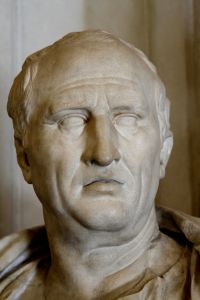 Marcus Tullius CiceroArchibald B. D. Alexander
John Stuart BlackieJames Frederick FerrierHenry JacksonPlatoFriedrich Wilhelm NietzscheW. T. StaceManly Palmer HallA. B. DrachmannJames Hutchins BakerJohn William DraperClement of AlexandriaClifford Herschel MooreVariousFriedrich NietzscheJohn LordJulianFrank W. BlackmarMarcus Tullius CiceroArchibald B. D. Alexander