“ The Swedish language seems to be based chiefly upon the dialect of Sœdermanland, with influences from other dialects. Among the Scandinavian languages, Swedish ranks next to the Icelandic in point of purity, and is the foremost of them all in point of beauty.The Swedes are a hardworking, industrious and intelligent race, not fully conscious of their own rich endowment and slow to push their individual claims. In moments of danger and distress, this people give evidence of an active heroism, which offers a great contrast to their usual quiet and peaceful demeanor. ”
Swedish language
Definition and stakes
The Swedish language, a North Germanic tongue, has been studied by scholars and writers for its linguistic purity, historical development, and cultural significance. Victor Alfred Nilsson admired its beauty and its ties to the Sœdermanland dialect, while Adolf Noreen focused on its phonetic innovations. Georg Brandes connected Swedish literature to the vitality of its rural population and folklore, and August Strindberg pointed out its Germanic heritage.
E. C. Otté examined its evolution from Old Swedish during the reign of Gustav Vasa, emphasizing political and societal changes. These viewpoints together highlight the language’s dynamic balance between tradition and change, reflecting Sweden’s identity through centuries of literary and linguistic growth.
Quotes about “Swedish language”
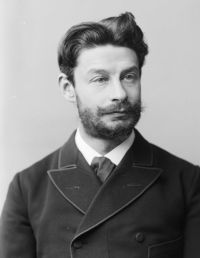
Georg Brandes,
Eminent Authors of the Nineteenth Century…
“ If we take a retrospective view of the development of this nature in whose rich soil the germs of genius and insanity lay as close together as in a double nut, we shall see the vigorous and cheerful temperament burst forth like a spark of fire from the flint-like ground of the Swedish peasantry. He draws nourishment from the natural beauties of Sweden and from the old sagas of Scandinavia. He raves about deeds of valor and combat, and expresses his enthusiasm in language of flame-gilded imagery. ”
Adolf Gotthard Noreen, Encyclopædia Britannica, Ninth Edition (1886)
“ A vigorous reform, slowly but firmly carried on almost uniformly during all periods of the Swedish language, is the throwing back of the principal accent to the beginning of the word in cases where previously it stood nearer the end, a tendency that is characteristic of all the Scandinavian languages, but no doubt especially of Swedish. ”
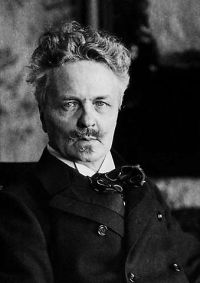
August Strindberg,
The Red Room
“ Sweden, as everybody knows, was originally a German colony, and the Swedish language, which has been preserved fairly pure to our days, is neither more nor less than Low-German and its twelve dialects. ”
William Jennings Bryan,
The Old World and Its Ways
“ The Swedish language contains so many words that resemble the English that the Swedish newspaper looks much more familiar than the Greek or the Russian, but it is not always safe to rely upon the similarity in spelling. ”
Adolf Gotthard Noreen, Encyclopædia Britannica, Ninth Edition (1886)
“ His principal work, Ordbok öfver Svenska medeltidsspråket (1884 sq.) , now in course of publication, gives the list of words in the later Old Swedish language, and—taken along with the Ordbok till samlingen af Sveriges gamla lagar (1877) , by C. J. Schlyter, the well-known editor of Old Swedish texts, which contains the vocabulary of the oldest literature—it worthily meets the demand for an Old Swedish dictionary. An Old Swedish grammar, answering the requirements of modern philology, is still needed. ”
1911 Encyclopædia Britannica, Volume 24… (1911)
“ It is not until the middle of the 17th century that Swedish literature adequately exemplifies the language, for at that period literature first began to be cultivated as a fine art, and its principal representatives, such as Stiernhielm, Columbus and Spegel, were in reality the first to study it as a means of expression and to develop its resources. ”
E. C. Otté, A Simplified Grammar of the Swedish Language (1902)
“ The Forn-Svenskan, or Old Swedish, can scarcely be said to have lost its status as the spoken tongue of the people till the beginning of the sixteenth century, when, with the emancipation of Sweden from the dominion of Denmark, and its political and social regeneration under Gustaf Vasa, a new era began in the language, as well as in the political and national life of the people. ”
“ Great and powerful nations have left behind a good deal less in modern languages, the Vandals three [Pg 48] words, the Burgundians four or five, the Herulians one. Although the Swedes in Russia had no literature in their ancestral language, they have left behind more words than the majority of Teutonic tribes founding states and nations. The Old Swedish equivalents to some of the most important proper names which meet us in early Russian history are as follows: Rurik—Hrœrekr, Sineus—Signjótr, Truvor—Tryggve, Oleg—Helge, Olga—Helga, Igor—Inge, Ingvar. ”
Various, Harper's Young People, August 10…
“ Now try if you can put it into German."To work went our hero, with a look as solemn as any professor on his little round face. Once or twice he stopped as if at a loss for a word; but he got through at last, and having finished the German, began upon the Swedish."What? do you know Swedish too?" cried his new friend. "Why, man, you're a perfect dictionary!""My mother was a Swede," answered Osterman, "and she taught me her own language; and my father was a German, and he taught me his.""You're a lucky fellow!" said the Russian, with a sigh. ”
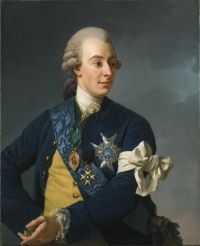
Gustav III of Sweden,
Select orations, and other important papers…
(1792)
“ From writers thus eminent, the Swedish language may expect a new and glorious æra. The object which we have in view, is not unworthy the attention of those, who have sacrificed the whole of their time to the highest offices of the state. Nor am I destitute of other arguments, to justify an institution, which in itself possesses the utmost utility. ”
M. E. W. Sherwood,
The Art of Entertaining
“ If a housekeeper gets a number of German servants in training and thinks them perfect, she need not be astonished if some fine morning she rises and finds them gone off to parts unknown. 208The Swedes are more reliable up to a certain point; they are never stupid, they are rather fantastic, and very eccentric. They are also full of poetry, and indulge in sublime longings. The Swedish language is made up of eloquence and poetry as soft as the Italian ”
E. C. Otté, A Simplified Grammar of the Swedish Language (1902)
“ And if Forn-Svenskan has comparatively little importance from a merely literary point of view, a study of its grammatical structure, and of numerous survivals in the later forms of Swedish, will be found to throw considerable light on the process of development through which many English as well as Scandinavian words have passed, showing that notwithstanding their actual differences they have had one common origin. ”
H. G. Wells,
The Salvaging of Civilization
“ French, or Swedish in relation to his German, then he has the key in his hands for almost any language he may want. If he has not the language in his head, he has it very conveniently on call—he needs but a sensible conversation dictionary and in a little while he can possess himself of it. ”
E. C. Otté, A Simplified Grammar of the Swedish Language (1902)
“ In modern Swedish, great dialectic differences of inflection and pronunciation are still to be met with even among the educated classes, although it cannot be denied that the present generation is showing a constantly increasing inclination to level provincialisms towards a more general standard, and thus to create a fixed form of cultivated spoken speech. ”
1911 Encyclopædia Britannica, Volume 24… (1911)
“ Thus, for instance, we find in some manuscripts (as the above-mentioned legendary Olafssaga) that the vowels e, o, ø and long a, æ are followed in terminations by e, o; i, u, y, and short a, æ, on the other hand, by i, u—as in bøner, prayers, konor, women; but tiðir, times, tungur, tongues. The same fact occurs in certain Old Swedish manuscripts. When Norway had been united later with Sweden under one crown (1319) we meet pure Suecisms in the Norwegian literary language. ”
Herman Hofberg,
Swedish Fairy Tales
(1888)
“ An interest in the Swedish people, their language, their literature and history; the important part the traditions of a people play in their history, character and domestic life, and that the traditions of the world play in its history and that of mankind, and that I would, if possible, add to the growing interest in that far-away, beautiful country, and that generous, hospitable people, have been the incentives to the labor involved in this translation; a labor not unmixed with pleasure, and not a little of that pleasure coming from the encouragement of my Swedish acquaintances. ”
Otto Jespersen,
Language: Its Nature, Development and Origin
“ Here Swedish has for many centuries been the language of the ruling minority, and it was only in the course of the nineteenth century that Finnish attained to the dignity of a literary language. The sound systems of Swedish and Finnish are extremely unlike: Finnish lacks many of the Swedish sounds, such as b, d (what is written d is either mute or else a kind of weak r) , g and f. No word can begin with more than one consonant, consequently Swedish strand and skräddare, ‘tailor,’ are represented in the form of the loan-words ranta and räätäli. ”
Frederik Winkel Horn, History of the Literature of the Scandinavian North (1884)
“ Educated Danes and Swedes, for instance, mutually understand each other more easily than they do one of their own countrymen in the narrower sense of the word, who speaks a popular dialect of the same language, and the difficulties that a Dane has to overcome in order to be able to appropriate the treasures of Swedish literature, or the obstacles that stand in the way of the Swede in reference to Danish books, are very slight indeed. With the language spoken in Iceland the case is a very different one. ”
“ He was not a brilliant genius, but a typical prince of the Renaissance epoch, never afraid of taking action in instances without a precedence, or of the consequences of his actions. His letters and addresses evince an unusual degree of common sense, clothed in a language of manly vigor, terseness and humor, and are fine specimens of the modern Swedish, such as it meets us in this its period of rejuvenation, brought about by the spirit of the Reformation. ”
M. E. W. Sherwood,
The Art of Entertaining
“ They have a great talent for arguing with gentleness and courtesy, and of protesting with politeness, and they learn our language with singular ease. I once had a Swedish maid who argued me out of my desire to have the dining-room swept, in better language than I could use myself. One must, in hiring servants, take into account all these national characteristics. The Swedes are full of talent, they can do your work if they wish to, but ten chances to one they do not wish to. ”
Otto Jespersen,
Language: Its Nature, Development and Origin
“ Now, in spite of the fact that most Swedish-speaking people have probably spoken Finnish as children and have had Finnish servants and playfellows to teach them the language, none of these peculiarities have influenced their Swedish: what makes them recognizable as hailing from Finland (‘finska brytningen’) is not simplification of consonant groups or substitution of p for b, etc., but such small things as the omission of the ‘compound tone,’ the tendency to lengthen the second consonant in groups like ns, and European (‘back’) u instead of the Swedish mixed vowel. ”
E. C. Otté, A Simplified Grammar of the Swedish Language (1902)
“ The conversion of adverbs and prepositions into conjunctions, and the post-position of prepositions, of both of which we subjoin a few additional examples, constitute peculiar features of Swedish, specially worthy of attention owing to the light which they throw on the origin of various idiomatic expressions in English. ”
E. C. Otté, A Simplified Grammar of the Swedish Language (1902)
“ In Forn-Svenskan we have, therefore, the earliest intermediate link between the Swedish of our own times and the Old Northern, which was the common tongue of all the Scandinavian peoples before their separation into distinct nations as Swedes, Norwegians, and Danes. This remnant of ancient Scandinavian consequently possesses an interest second only to that of its sister-form of speech the Icelandic, or Forn-Norskan of the ninth century, whose earliest literary remains are admitted to be the most perfect representatives extant of the so-called Old Northern. ”
H. L. Mencken,
The American Language — Swedish
(1919)
“ Many of these borrowings are adapted to Swedish spelling, and so sidewalk becomes sajdoak, street becomes strit, fight becomes fajt, business becomes bissness, and housecleaning becomes husklining. But even more important is the influence that American English has upon the vocabulary that remains genuinely Swedish; when words are not borrowed bodily they often change the form of familiar Swedish words. ”
Svenska Tribunen-Nyheter — The Indifference of Our People (1931)
“ Those who think it is possible and desirable to establish a second Sweden herein America are greatly mistaken. But we Swedish-Americans should try to preserve the best of what we brought with us from the old country, especially the language, and we are doing just that. ”
Charles Norton Edgcumbe Eliot, 1911 Encyclopædia Britannica (1911)
“ There is a considerable admixture of Swedish blood; the language is full of Swedish words; Christianity is universal; and the upper classes and townspeople are mainly Swedish in their habits and speech, though of late a persistent attempt has been made to Russify the country. The Finns have much the same mental and moral characteristics as the other allied tribes, but have reached a far higher intellectual and literary stage. ”
The Circle of Knowledge: A Classified…
“ The chief articles of export are timber, butter, iron, steel, wood pulp, paper, matches, stone, iron and zinc ores, etc.People.—The Swedes are a Germanic people, tall and strong, but with more variety of characteristics than the Norwegians. The Swedish language, allied closely to Norse and Danish, appears in very many dialects. It has had, especially since the sixteenth century, an extensive literature.Almost the whole population is Protestant, adhering to the Lutheran Church, members of which alone are permitted to hold public offices. ”
Leon Dominian,
The Frontiers of Language and Nationality in Europe
“ Sweden formally renounced its rights over Finland and the duchy became part of Russia.Today Finland is a country with three languages. Russian is the channel of official activity. Finnish, through a literary revival, has won its right to be the language of the land and this is a symbol of the Finns’ desire for independent national existence. Swedish remains as the age-old medium through which Christianity and western culture were conveyed. It is also to a large extent the business language of the province, especially for communication with western Europe. ”
Adolf Gotthard Noreen, Encyclopædia Britannica, Ninth Edition (1886)
“ To these archaistic tendencies of certain authors at the end of the 17th century we owe the great number of Old Swedish and Icelandic borrowed words then introduced into the language,—as fager, fair, härja, to ravage, later, manners, snille, genius, tarna, girl, tima, to happen, &c. ”
The Wit and Humor of America, Volume I.…
“ Here was probably the quintessence of five advertisements. Out of the mountain crept a mouse, and quite a little mouse, too!"Talar ni svensk?" proved to be nothing more outrageous than "Do you speak Swedish?" My astute little wife discovered this intuitively. I left them together, my mental excuse being that women understand each other and that a man is unnecessary, under the circum [Pg 36] stances. I had some misgivings on the subject of Letitia and svensk, but the universal language of femininity is not without its uses. ”
E. C. Otté, A Simplified Grammar of the Swedish Language (1902)
“ Henry Sweet, who is one of the highest authorities on the sounds and intonation of spoken Swedish, there is in every word a simple and a compound tone. The simple tone he characterizes as "a rising modulation, as in asking a question in English," while in the compound tone he recognizes "a falling tone (as in answering a question) on the stress-syllable with an upward leap of the voice, together with a slight secondary stress on a succeeding syllable. ”
Martin Farquhar Tupper,
My Life as an Author
“ She it was who voluntarily translated into Swedish my two first series of [Pg 361] "Proverbial Philosophy," and many of my lyrics in "Cithara;" and naturally I was willing to answer her in kind (for the Baroness is an excellent and well-known poetess in her own land) , but, as unfortunately the Swedish tongue is not among my few accomplishments, I was glad to turn to a diligent and authorial eldest daughter of mine, who learnt the language for me, and responded to our unseen friend with many of her poems rendered into English verse, as she had similarly favoured mine in Swedish. ”
E. C. Otté, A Simplified Grammar of the Swedish Language (1902)
“ The Swedes rejected the use of Gothic characters three hundred years ago, and since then they have employed the ordinary Latin letters, adding merely certain marks to indicate special vowel-sounds peculiar to the northern tongues. ”
E. C. Otté, A Simplified Grammar of the Swedish Language (1902)
“ There is a tendency in modern Swedish to transfer verbs of the fourth or strong form of conjugation to the first or second weak form. Similarly, modern usage tends to reject the harder radical vowels in favour of their softer derivatives, taking ä for å, ö for u, etc.; while for the same considerations of euphony the j is frequently dropped, as in böd, originally bjöd, imperf. indicative of bjuda, 'to bid;' söng, originally sjöng, imp. ind. of sjunga, 'to sing.' Contractions are of frequent occurrence even among the best speakers and writers ”