“ Perhaps the best single passage on music is that describing Phil's playing of the flute. "It is like walking in the woods, amongst wild flowers, just before you go into some vast cathedral. For the flute seems to me to be peculiarly the woods-instrument: it speaks the gloss of green leaves or the pathos of bare branches; it calls up the strange mosses that are under dead leaves; it breathes of wild plants that hide and oak fragrances that vanish; it expresses to me the natural magic of music. ”
The Magic Flute
Definition and stakes
The Magic Flute (German: Die Zauberflöte), composed by Wolfgang Amadeus Mozart in 1791, is a Singspiel—a German opera combining singing and spoken dialogue—that remains a cornerstone of the repertoire. Its libretto, by Emanuel Schikaneder, weaves Masonic symbolism, fairy-tale motifs, and moral allegory into a story of initiation, love, and enlightenment.
Authors such as Edwin Mims have highlighted the flute’s “natural magic,” while Herbert Peyser refuted myths about the opera’s disjointed narrative, stressing its theatrical unity. Scholars like Ebenezer Cobham Brewer linked its enchanted instrument to dualities of love and truth, reflecting its complex symbolism. The work’s enduring appeal lies in its synthesis of whimsy and depth, blending Enlightenment ideals with folkloric charm.
Quotes about “The Magic Flute”
Herbert F. Peyser, Wolfgang Amadeus Mozart
“ Let us at this stage dispose of a few legends that, in the course of 160 years, have accumulated about the work. One is that the play is a farrago of childish nonsense, made tolerable only by the variety and grandeur of Mozart’s music; another, that the plot was altered at a late hour because another manager was about to produce a work similar in its story; a third, that the piece was a failure. As a matter of fact, the book of The Magic Flute happens to be one of the best librettos in existence from the point of view of good theater. ”
Various, Punch, or the London Charivari…
“ I suppose it is hopeless to expect that the makers of "Grand" Opera (whose sense of humour is seldom their strong point) will consent to allow the trivialities of ordinary speech in everyday life ("How do you do?" "Thank you, I am not feeling my best," and so on) to be said—if they must find expression of some sort—and not sung.By way of contrast to the modern realism which makes so unlikely a material for serious opera, the fantastic irresponsibility of The Magic Flute came as a great relief. ”



Related terms
Authors who wrote about “The Magic Flute”
Victor Mahillon, Kathleen Schlesinger…Hermann Smith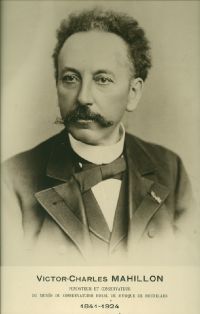 Victor-Charles Mahillon
 H. D.
H. D. James Branch Cabell
 Charles Turner Dazey
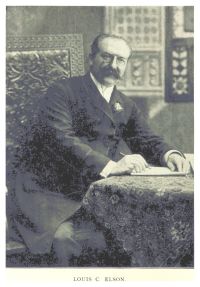 Louis Charles Elsonof Naucratis AthenaeusMichael StrangeEdwin Mims
 Rabindranath TagoreVarious
 Charles DickensEsther Singleton
 Aristotle
 James Lane Allen
 Sidney Lanier
 Plutarch
 Plato
Plato D. H. Lawrence
Victor-Charles MahillonH. D.James Branch CabellCharles Turner DazeyLouis Charles Elsonof Naucratis AthenaeusMichael StrangeEdwin MimsRabindranath TagoreVariousCharles DickensEsther SingletonAristotleJames Lane AllenSidney LanierPlutarchPlatoD. H. Lawrence