“ But this enthusiastic conception of the Nation's grandeur, this lofty Unionism constantly appearing as the inspiration of his public conduct, gave to his policies, as they stood forth in the glow of his eloquence, a peculiarly potent charm. ”
Unionism
Definition and stakes
Unionism, the collective effort of workers to advocate for their rights and interests through organized solidarity, has been a pivotal theme in labor and political discourse. From Carl Schurz’s portrayal of Unionism as a unifying force in national policy to Clarence Budington Kelland’s vision of it as a revolutionary means for global labor unity, the concept has been explored through diverse lenses.
Sidney Webb and Beatrice Webb chronicled its development as a democratic counterforce within the state, while Jay Fox critiqued divided unionism and promoted industrial solidarity. Bertrand Russell emphasized the importance of industrial unionism in reshaping economic systems. These perspectives collectively reveal Unionism as both a practical approach and a transformative ideal, linking local struggles with broader societal change.
Quotes about “Unionism”
Clarence Budington Kelland, Youth Challenges
“ Now there are strong unions and weak unions—both arrayed against a capital better organized and stronger than ever before in the world's history. Unionism is primary instruction in revolution. We must teach labor its power, and it is slow to learn. We must prepare, prepare, prepare, and when all is ready we shall rise. Not one union, not the unions of a state, of a country, but the unions of the world...hundreds of millions of men who have been ground down by aristocracies and wealth for generations. ”
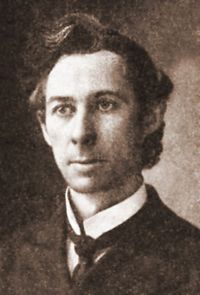 Jay Fox,
Amalgamation
(1923)
Jay Fox,
Amalgamation
(1923)
“ The painful spectacle of unions going down to defeat before the onslaughts of combined capital, while allied unions stand by with seeming indifference and give their fallen brothers no helping hand, will be a thing of the past, Such preposterous unionism will be buried so deep it will never be revived except in scornful memory. It will then be difficult to imagine that the workers ever had such short-visioned, narrow-minded, self-centered unionism, as our present system. ”
by Sidney Webb and Beatrice Webb, The History of Trade Unionism (1920)
“ The history of Trade Unionism is the history of a State within our State, and one so jealously democratic that to know it well is to know the English working man as no reader of middle- class histories can know him. ”
by Sidney Webb and Beatrice Webb, The History of Trade Unionism (1920)
“ Had he stood alone, he would have added little to the strength of Trade Unionism ; as the loyal adherent of the great officials and their popular mouth- piece to the working-class world, Unionist and non-Unionist alike, he gave the movement a wider basis, and attracted into its ranks every ardent reformer belonging to the artisan class. ”
by Sidney Webb and Beatrice Webb, The History of Trade Unionism (1920)
“ But in tracing the causes of the New Unionism of 1889-90, and the transformation of the Trade Union Movement from an Individualist to a Collectivist influence in the political world, we venture to ascribe a large share to the superior attractiveness of this buoyant faith over anything offered by the almost cynical fatalism of the old school. ”
Beatrice Webb, The History of Trade Unionism
“ The object and purpose of the New Unionism of 1913-19—not without analogy with that of 1830-34, but with a significant difference—cannot be attained without the transformation of British politics, and the supersession, in one occupation after another, of the capitalist profit-maker as the governor and director of industry. ”
Jay Fox,
Amalgamation
(1923)
“ In the great fights that have since occurred the industrial form of our union has stood us in good stead, Had we been so organized that one part of the working force remained at work while the rest were striking, we would have been defeated and our organization broken up long ago. Speaking from experience, we heartily recommend industrial unionism to the labor movement as a whole, and we pledge ourselves to do whatever we can to bring it about. ”
Beatrice Webb, The History of Trade Unionism
“ Ostracised by their fellows, a spirit of revenge alone often prompts men to oppose or remain indifferent to Unionism, when if the Unions were wiser and more conciliatory, support would have been forthcoming where now jealousy and discontent prevails.” [544] Even among the skilled workers, the younger artisans, if they had joined their Unions at all, were discontented with the exclusive and apathetic policy of the older members. ”
 Bertrand Russell,
Roads to freedom
(1918)
Bertrand Russell,
Roads to freedom
(1918)
“ It is clear, I think, that the adoption of industrial rather than craft unionism is absolutely necessary if Trade Unionism is to succeed in playing that part in altering the economic structure of society which its advocates claim for it rather than for the political parties. ”
by Sidney Webb and Beatrice Webb, The History of Trade Unionism (1920)
“ We may, in fact, not unfairly say that Trade Unionism has, in 1920, won its recognition by Parliament and the Govern- ment, by law and by custom, as a separate element in the community, entitled to distinct' recognition as part of the social machinery of the State, its members being thus allowed to give like the clergy in Convocation not only their votes as citizens, but also their concurrence as an order or estate. ”
Beatrice Webb, The History of Trade Unionism
“ Unionism” remind the student, not of the mystic rites and skeleton mummery of the Owenite movement, but rather of the restless energy and political ingenuity of the Junta or the Trades Union Congress Parliamentary Committee in those early days when the old Trade Unionists were fighting for legislative reforms with a faith which was as wise as it was fervent and sincere. ”
James Bonar, 1911 Encyclopædia Britannica (1911)
“ When unionism embraced unskilled labourers, and at the same time pressed on the federation of all trades societies and their joint action, when, too, in the trade union congresses the intervention of the state was repeatedly claimed as essential to the success not only of an eight hours' day but of such socialistic measures as nationalization of the land, it was manifest that there was a new leaven working. ”
“ The man who inaugurated unionism was a great philanthropist. The unions began well; that is because their leaders were honest, and because there was no wolf in the fold to recognize the extent of power. ”
by Sidney Webb and Beatrice Webb, The History of Trade Unionism (1920)
“ Throughout the country the organised constituents of the Grand National fell back upon their local trade clubs. The records of the rise and fall of the " New Unionism " of 1830-4 leave us conscious' of a vast enlargement in the ideas of the workers, without any corresponding alteration in their tactics in the field. In council they are idealists, dreaming of a new heaven and a new earth; humanitarians, educationalists, socialists, moralists : in battle they are still the struggling, half -emancipated serfs of 1825, armed only with the rude weapons of the strike and boycott ”
 Carl Schurz,
Condition of the South
(1865)
Carl Schurz,
Condition of the South
(1865)
“ I feel warranted in saying that Unionism absolutely untinctured by any connexion with, or at least acquiescence in the rebellion, would have but little chance of political preferment anywhere, unless favored by very extraordinary circumstances ”
Selig Perlman, A History of Trade Unionism in the United States
“ This opportunist unionism, now at last triumphant over the idealistic unionism induced by America's spiritual tradition, soon was obliged to fight against a revolutionary unionism which, like itself, was an offshoot of the socialism of the seventies. ”
Educational Bureau of the Industrial Workers of the World, Historical Catechism of American Unionism (ca. 1923)
“ Beginning with the Mechanics' Union of Trade Societies in Philadelphia up to the Knights of Labor, politics killed every promising union movement. 197. What other factor helped to kill unionism? Cooperative enterprises. Many of the attempts of the earliest American unions were co-operative, and either through a lack of business capacity, or the dishonesty of those directing them, they invariably had the effect of losing out and ruining the economic organizations that relied upon them. ”
Jay Fox,
Amalgamation
(1923)
“ For instance; the individual is not permitted to make his own terms with the boss. Why? Because the union can make better terms for the individual than he can make for himself. Were he so permitted the whole theory of unionism would be undermined and the union might as well dissolve. ”
Walter Lyon Blease, A Short History of English Liberalism… (1913)
“ Frederic Harrison, "is, as Adam Smith says, 'as ignorant of the subject as of human nature.' Unionism, above all, aims at making regular, even, and safe the workman's life. No one who had not specially studied it would conceive the vast array of grievances against which Unionism and strikes are directed. If we looked only to that side of the question, we should come to fancy that from the whole field of labour there went up one universal protest against injustice. There is a 'miserable monotony' of wrong and suffering in it. ”
by Sidney Webb and Beatrice Webb, The History of Trade Unionism (1920)
“ The Union leaders, therefore, wisely left this part of their case in the background. They avoided arguing whether Trade Unionism was, in principle, useful or detri- mental, right or wrong. They insisted only on the right of every Englishman to bargain for the sale of his labour in the manner he thought most conducive to his own interests. What they demanded was perfect freedom for a workman to substitute collective for individual, bargaining, if he imagined such a course to be for his own advantage. ”
Gregory Casparian, An Anglo-American Alliance: A Serio-Comic Romance and Forecast of the Future
“ Every new movement, be it religious, political or economic, has its birth like a volcano, and unionism was no exception to this rule. The labor unions at first had their violent agitators who, possessing greater physical than mental calibre, laid the crude foundation of a [42] force in an arbitrary manner that consequently had its gradual evolution of development. ”
by Sidney Webb and Beatrice Webb, The History of Trade Unionism (1920)
“ The Society's circulars of 1838 record the abolition, by vote of the members, of all initiation ceremonies, in view of the Parliamentary Inquiry about to be held into Trade Unionism. But even the simplified form of 1838 retains, in its reference to the workmen as " the real producers of all wealth," an unmistakable trace of the Owenite spirit of the Builders' Union of 1832. ”
Industrial Workers of the World, One Big Union of All the Workers… (1919)
“ When now and then advocates of a better system of society refer to the new unionism they do it, in most cases, without knowing fully the distinction between the old kind of unionism and the unionism that advocates—One Big Union for the Entire Working Class the World Over! ”
 Eugene V. Debs,
Debs: His Life, Writings and Speeches…
Eugene V. Debs,
Debs: His Life, Writings and Speeches…
“ It is interesting to note the spirit evinced by the pioneers of unionism, the causes that impelled them and the reasons they assigned for banding themselves together in defense of their common interests. ”
Arundel Cotter, United States Steel: A Corporation with a Soul
“ The evil of unchecked growth of unionism is illustrated by what is happening in England at the present writing. The Corporation saved this country from similar evils. By its stand it established the right of every worker to earn a livelihood whether or not he belongs to a union. ”
 William Z. Foster,
The Bankruptcy of the American Labor Movement
(1922)
William Z. Foster,
The Bankruptcy of the American Labor Movement
(1922)
“ For many years practically all the radical papers and revolutionary leaders in this country were deeply tinged with dual unionism, In their program the ideas of secessionism and progressive unionism were welded into one. The consequence was that as fast as the active workers in the trade unions became acquainted with the principles of revolutionary unionism they also absorbed the idea of dualism. ”
Beatrice Webb, The History of Trade Unionism
“ Hammond, Professor Graham Wallas, Mr. Mark Hovell, and Mr. M. Beer, have enabled us both to verify and to amplify our statements at certain points. For the recent history of Trade Unionism we have found most useful the collections and knowledge of the Labour Research Department, established in 1913 ”
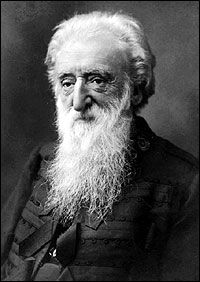 William Booth,
In Darkest England, and the Way Out
William Booth,
In Darkest England, and the Way Out
“ The most experienced Trades Unionists will be the first to admit that any scheme which could deal adequately with the out-of-works and others who hang on to their skirts and form the recruiting ground of blacklegs and embarrass them in ever way, would be, of all others that which would be most beneficial to Trades Unionism. ”
Beatrice Webb, The History of Trade Unionism
“ We can all give a little, and each one may encourage his neighbour to follow his example. The conflict may be a severe one. It is for freedom and liberty to unite as we have done. We have reaped some of the advantages of our Unions; we must assist them to establish theirs, and not allow the ray of hope that now shines across the path of our patient but determined fellow-toilers to be darkened by the blind folly of their employers, who, being in a measure slaves to the powers above them, would, if they could, even at their own loss, consign all below them to perpetual bondage. ”
Beatrice Webb, The History of Trade Unionism
“ For this reason they were constantly accused of apathy by those hotter spirits whose idea of successful Trade Unionism was a series of general strikes for advances or against reductions. The Junta were really looking in another direction for the emancipation of the worker. ”
 Emma Goldman,
Anarchism and Other Essays
(1910)
Emma Goldman,
Anarchism and Other Essays
(1910)
“ The germ of such an organization can be found in that form of trades unionism which has done away with centralization, bureaucracy, and discipline, and which favors independent and direct action on the part of its members. ”
Jay Fox,
Amalgamation
(1923)
“ Compared with this modern system of organization the present craft. unions, each going its separate way and duplicating the union work of the industries as many as thirty times, is confusion worse confounded. The departmentalized union will be like an army, with its separate branches of artillery, cavalry, infantry, etc., but all welded together into one powerful machine. Under the industrial system of unionism the workers will obtain tremendous power compared with the craft or federated form. Unity of action will at all times be obtainable. ”
Beatrice Webb, The History of Trade Unionism
“ From the early years of the eighteenth century down to the present day, Democracy, Freedom of Association, Laisser-faire, Regulation of the Hours and Wages of Labour, Co-operative Production, Free Trade, Protection, and many other distinct and often contradictory political ideals, have from time to time seized the imagination of the organised wage-earners and made their mark on the course of the Trade Union movement. And, since 1867 at least, wherever the ideals have left their mark on Trade Unionism, Trade Unionism has left its mark on politics. ”
by Sidney Webb and Beatrice Webb, The History of Trade Unionism (1920)
“ At special crises in the annals of Trade Unionism we see one or other of these types taking the lead, and becoming the " New Unionism " of that particular period. Both trade society and friendly society with trade objects were common \ in the eighteenth century. ”
 Lewis L. Lorwin,
Syndicalism in France
Lewis L. Lorwin,
Syndicalism in France
“ The comparative weakness of sectional unionism in England and of the unskilled elements in the American labor movement has been brought home to the workers themselves and has determined their change of tactics. ”
Eugene V. Debs,
Class Unionism
(1909)
“ What is the condition there today? You have innumerable unions represented there, but no unity. You have this great body of workers parceled out among scores of petty and purposeless unions, which are in ceaseless conflict with each other, jealous to preserve their craft identity. As long as this great army of workers is scattered among so many craft unions, it will be impossible for them to unite and act in harmony together. ”
Eugene V. Debs,
Debs: His Life, Writings and Speeches…
“ You begin to understand your true and vital relation to your fellow-workers. In the Industrial Workers you are correlated to all other workers in the plant, and thus you develop the embryonic structure of the co-operative commonwealth. (Applause.) The old unionism would have you contented. We Industrial Workers are doing what we can to increase your discontent. We would have you rise in revolt against wage-slavery. The working man who is contented today is truly a pitiable object. ”
by Sidney Webb and Beatrice Webb, The History of Trade Unionism (1920)
“ It is now taken for granted that Trade Unionism must be distinctively and effectually represented, usually by men or women of its own informal nomination, on all Royal Commissions and Departmental Committees, whether or not these inquiries are concerned specifically with " Labour Questions " ex- cepting only such as are so exclusively financial or profes- sional that the representatives of Labour do not seek or desire representation upon them. ”
by Sidney Webb and Beatrice Webb, The History of Trade Unionism (1920)
“ Craft " Unionism has been strengthene< since about 1911 by the aspirations of those who saw ii Trade Unionism something more than an organisation fo raising wages and shortening the working day. If thi wage-earners were ever to obtain, through their own volun tary associations, the control of their own working lives and to obtain a steadily increasing participation in th direction of industry ; if a Vocational Democracy were t< be superimposed on a Democracy based on geographica constituencies ”
 George Henry Soule,
Recent Developments in Trade Unionism
(1921)
George Henry Soule,
Recent Developments in Trade Unionism
(1921)
“ Both Transport Workers and Miners, although they are called "federations", are now practically single unions. Not one of these bodies, however, sprang up in a night, but they were the result of years of growth, in which the organization of the unskilled and semi-skilled, and the processes of amalgamation and federation of separate unions, all helped. ”
Related terms
Authors who wrote about “Unionism”
Jay FoxEugene V. DebsSelig PerlmanWilliam Z. FosterEducational Bureau of the Industrial Workers of the Worldby Sidney Webb and Beatrice WebbBeatrice WebbCarl SchurzBertrand RussellJames BonarClarence Budington KellandWalter Lyon Blease Harold MacGrathIndustrial Workers of the WorldGregory CasparianArundel CotterWilliam BoothEmma GoldmanLewis L. Lorwin
 Theodore Roosevelt