“ The Viking Age—Ansgar, the Apostle of Sweden“In the North there is a great ocean, and in this ocean there is a large island called Scandza, out of whose loins our race burst forth like a swarm of bees and spread over Europe.” These were the words the Gothic historian Jordanes put on parchment, inspired by the popular traditions of a Teutonic migration from the North. Historic evidence is lacking to prove or disprove the truth of these words. But they may be applied to the phenomenon which has given its name to the Viking Age. ”
Viking Age
Definition and stakes
The Viking Age (c. 800–1050 CE) represents a crucial period in European history, characterized by the extensive activities of Norse seafarers, including raids, commerce, settlement, and cultural interaction across Europe and beyond. During this time, Scandinavians established communities from the British Isles to North America, while their homeland experienced political consolidation. Scholars such as Victor Alfred Nilsson view it as an era of migration from Scandza, whereas A. Mawer emphasizes the evolving nature of Scandinavian societies, merging basic elements with sophisticated practices in warfare and trade.
Laurence Marcellus Larson focuses on cultural diffusion, pointing out Celtic and Anglo-Saxon influences in Norse literature, and H. Munro Chadwick highlights the poetic heritage of the period. Joseph Anderson connects Viking craftsmanship to Scandinavian settlements in Scotland and Ireland, demonstrating their lasting influence. The Viking Age therefore emerges as a multifaceted period of discovery, confrontation, and cultural fusion, reinterpreted through historical accounts and archaeological findings.
Quotes about “Viking Age”
“ At the beginning of the Viking age the Scandinavian peoples were in a transitional stage of development; on the one hand there was still much, both in their theory and in their practice of life, that savoured of primitive barbarism, while on the other, in the development of certain phases of human activity, more especially in those of war, trade, and social organisation, they were considerably ahead of many of their European neighbours. ”
Laurence Marcellus Larson, Canute the Great, 995 (circa)-1035…
“ Serious study of the viking age in its broader aspects began about fifty years ago with the researches of Gudbrand Vigfusson, a young Icelandic scholar, much of whose work was carried on in England. Vigfusson's work was parallelled by the far more thorough researches of the eminent Norwegian philologist, Sophus Bugge. These investigators both came to the same general conclusion: that Old Norse culture, especially on the literary side, shows permeating traces of Celtic and Anglo-Saxon elements ”

Related terms
Authors who wrote about “Viking Age”
Laurence Marcellus LarsonJohn Bowling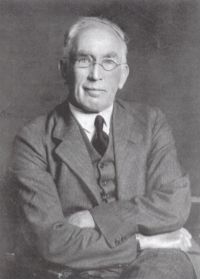 A. Mawer
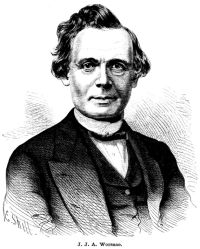 Jens Jacob Asmussen Worsaae
 Hjalmar Hjorth BoyesenVictor Alfred NilssonHutton WebsterPaul B. Du ChailluJoseph AndersonVarious
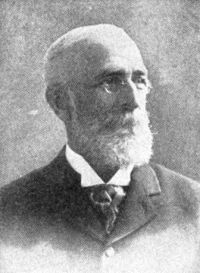 Elbridge S. BrooksH. A. GuerberW. S. C. Russell
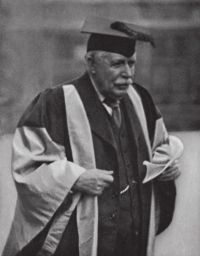 H. Munro ChadwickJennie HallNigel MacNeillThomas William Shore
 Norman AngellArthur Middleton ReevesMargaret Ellen Henry-Ruffin
A. MawerJens Jacob Asmussen WorsaaeHjalmar Hjorth BoyesenVictor Alfred NilssonHutton WebsterPaul B. Du ChailluJoseph AndersonVariousElbridge S. BrooksH. A. GuerberW. S. C. RussellH. Munro ChadwickJennie HallNigel MacNeillThomas William ShoreNorman AngellArthur Middleton ReevesMargaret Ellen Henry-Ruffin