Waltham Abbey

Definition and stakes

Gordon Home,  What to See in England

“ When the king asked the Abbot of Cluny to intercede for her soul, he said, "We loved her tenderly in her lifetime; we do not cease to love her in death."
A little way to the left of Waltham Cross, now a gateway to the park of Theobalds, stands Temple Bar, stone for stone intact as it was in the days when traitors' heads were raised above it in Fleet Street, although the original wooden gates have gone. A portion of the richly-carved top of the gate is still in existence in London. Waltham Abbey is probably close to that part of the river Lea where King Alfred defeated the Danes.
”
Source: Gutenberg

Various,  Encyclopaedia Britannica, 11th Edition…

“ Essex was rich in monastic foundations, though the greater number have left but meagre ruins behind. The Benedictines had an abbey at Saffron Walden, nunneries at Barking and Wickes, and priories at Earl’s or Monk’s Colne and Castle Hedingham; the Augustinian canons had an abbey at Waltham (see Waltham Abbey; the portion remaining shows Norman work of the finest character) , priories at Thoby, Blackmore, Bicknacre, Little Leighs, Little Dunmow and St Osyth (see Brightlingsea) ; there were Cistercian abbeys at Coggeshall, Stratford and Tilty ”
Source: Gutenberg

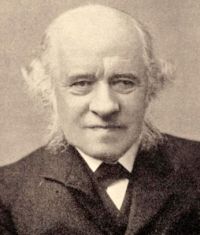
Portrait of George Grove George Grove,  A Dictionary of Music and Musicians (1900)

“ He became organist of Waltham Abbey, which appointment he retained until the dissolution of the abbey in 1540, when he was dismissed with 20s. for wages and 20s. for reward. [1] It is probable that he soon after that event obtained the place of a Gentleman of the Chapel Royal. His celebrated Preces, Responses and Litany, and his Service in the Dorian mode, were most probably composed soon after the second Prayer Book of Edward VI. was issued in 1552. ”
Source: Wikisource

Get perspective with Kwize: daily news enlightened by great literature