Zhou dynasty

Definition and stakes

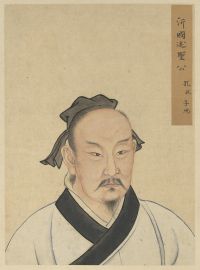
Luo Guanzhong,  Translation:Romance of the Three Kingdoms…

“ At the end of the Zhou Dynasty, seven kingdoms vied for supremacy, and became part of the Qin Dynasty. Similarly, after the Qin Dynasty was destroyed, Chu and Han vied for supremacy, and became a part of the Han Dynasty. The Han Dynasty had ruled over a unified empire ever since Emperor Gaozu chopped a white serpent in half. [2] Later on, Emperor Guangwu reestablished control of the country. [3] After that, control of the empire was maintained through the generations until the time of Emperor Xian, whereupon the empire divided into three kingdoms. ”
Source: Wikisource

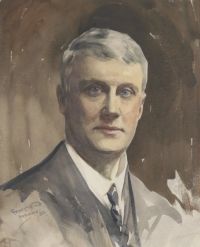
Portrait of James Hudson Maurer James Hudson Maurer,  The Far East (1912)

“ General Li Yuen-heng, the rebel leader at Hankow, who was appointed vice-president of the Republic by President Sun Yat Sen, probably will be chief of the general staff. Provision for Dr. Sun has not yet been made.
Today's abdication of the Chinese throne by Fu Yi, the child Emperor, brings to an end the powerful Manchu dynasty which has reigned in China since 1644. The boy ruler has been on the throne since November 14, 1908, when the Emperor Kwang-Su, his uncle, died. His father, prince Chun, was appointed regent and was the chief figure in China for three years.
”
Source: Wikisource

Portrait of Wolfram Eberhard Wolfram Eberhard,  A History of China

“ On the whole, the few years of the rule of the second emperor of the "Later Chou" (954-958) form a bright spot in those dismal fifty-five years. Sociologically regarded, that dynasty formed merely a transition stage on the way to the Sung dynasty that now followed: the Chinese gentry ruled under the leadership of an upstart who had risen from the ranks, and they ruled in accordance with the old principles of gentry rule. The Sha-t'o, who had formed the three preceding dynasties, had been so reduced that they were now a tiny minority and no longer counted. ”
Source: Gutenberg

Get perspective with Kwize: daily news enlightened by great literature