Atmospheric convection current

Definition and stakes

Household Administration, Its Place in the Higher Education of Women

“ The law of convection is the law according to which warmed air rises and cooled air sinks in the surrounding air. Its applications are truly ubiquitous. Every surface, e.g. a warm wall, or a person warmer than the air in the immediate neighbourhood, causes an upward current; every surface colder than the air in contact with it causes a downward current.
“Ventilation would be much easier if warmed air or cooled air could be carried along at any height required
”

Source: Gutenberg

Various,  Popular Science Monthly (1896)

“ There is also the assimilative distribution of heat through liquids by means of convection currents: as the surface of the sea becomes cooled in winter, the cooler layers, grown heavier, sink, and are constantly being replaced by warmer water from below. Vertical exchanges of temperature also take place between higher and lower layers of the atmosphere, while the difference of temperature between the polar regions and the equatorial zone results in the assimilative movements of the general atmospheric circulation. ”
Source: Wikisource

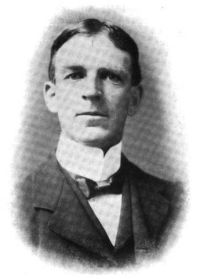
Portrait of Hugh Longbourne Callendar Hugh Longbourne Callendar,  1911 Encyclopædia Britannica (1911)

“ The effects of conduction and radiation may be approximately estimated if the conductivity of the gas and the nature and forms of the surfaces of the body and enclosure are known, but the effect of convection in any case can be determined only by experiment. It has been found that the rate of cooling by a current of air is approximately proportional to the velocity of the current, other things being equal. ”
Source: Wikisource

Get perspective with Kwize: daily news enlightened by great literature