Auxiliary verb

Definition and stakes

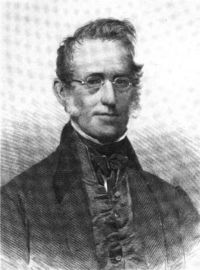
Portrait of Goold Brown Goold Brown,  The Grammar of English Grammars

“ There are four PRINCIPAL PARTS in the conjugation of every simple and complete verb; namely, the Present, the Preterit, the Imperfect Participle, and the Perfect Participle. [256] A verb which wants any of these parts, is called defective; such are most of the auxiliaries.
An auxiliary is a short verb prefixed to one of the principal parts of an other verb, to express some particular mode and time of the being, action, or passion. The auxiliaries are do, be, have, shall, will, may, can, and must, with their variations.
”
Source: Gutenberg

Henry Hallam,  Introduction to the Literature of Europe in the Fifteenth…

“ The active auxiliary verb, than which nothing is more distinctive of the modern languages from the Latin, came in from the same cause, the disuse, through ignorance, of several inflexions of the tenses; to which we must add, that here also the Latin language is singularly deficient, possessing no means of distinguishing the second perfect from the first, or ‘I have seen’ from ‘I saw.’ The auxiliary verb was early applied, in France and Italy, to supply this defect; and some have produced what they think occasional instances of its employment even in the best classical authors. ”
Source: Gutenberg

Get perspective with Kwize: daily news enlightened by great literature