Avocado

Definition and stakes

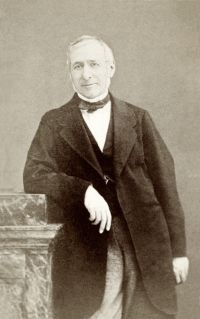
Portrait of Henry T. Finck Henry T. Finck,  Food and Flavor: A Gastronomic Guide to Health and Good Living

“ There are those who give it a slight sprinkling of salt, others who dust it over with a little white pepper, but personally I would as soon think of flavoring my currant jelly with garlic or my chateau Yquem with Trinidad rum."
This sounds plausible, and I admit that a perfect avocado is better without than with vinegar and oil. An imperfect one isn't; and in most cases we have found in our dining-room that the avocado is rather too rich to be eaten without a little acid dressing.
”

Source: Gutenberg

Various,  Popular Science Monthly (1896)

“ These berries grow in clusters on low bushes right on the very brink of the brimstone beds, and are so numerous that a bushel may be easily gathered in half an hour. In appearance they somewhat resemble a cranberry, and the flavor is pleasantly suggestive of grapes.
Space forbids more than passing mention of many other fruit trees of the tropics—such as the avocado, or alligator pear, tasting like our ordinary salad; the curious pineapple, with its cactuslike leaves; the mandarin orange, glowing brightly against its deep-green foliage
”
Source: Wikisource

William Saunders,  Catalogue of Economic Plants in the Collection of the U. S. Department of Agriculture

“ Persea gratissima.—The avocado or alligator pear, a common tree in the West Indies. The fruits are pear-shaped, covered with a brownish-green or purple skin. They are highly esteemed where grown, but strangers do not relish them. They contain a large quantity of firm pulp, possessing a buttery or marrow-like taste, and are frequently called vegetable marrow. They are usually eaten with spice, lime-juice, pepper, and salt. An abundance of oil, for burning and for soap-making, may be obtained from the pulp. ”
Source: Gutenberg

Get perspective with Kwize: daily news enlightened by great literature