Barrel organ

Definition and stakes

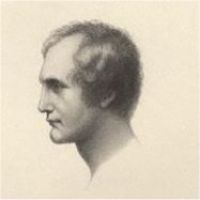
Portrait of George Albert Boulenger George Albert Boulenger,  The Cambridge natural history, Vol… (1904)

“ Each organ has the shape of a biconvex lens, sunk to about half its thickness in the skin. The inner half is formed of radially-arranged gland tubes filled with small granular cells, and converging towards the centre of the organ. Into the connective-tissue walls of the tubes extend blood-vessels and nerves. External to the gland tubes there is a layer of long slender cells arranged perpendicularly to the surface, and more externally still a layer of ganglion cells. There is evidence that these organs multiply by division. ”
Source: Gutenberg

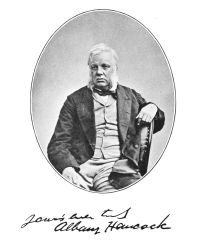
Portrait of A. S. Packard A. S. Packard,  A Text-book of Entomology

“ It is nothing more than a regulator; than an organ for directing the blood in a determinate course in order that this may not wholly stagnate, or only be the plaything of a force acting in another way, as, for example, through that afforded by the body-cavity and the inner digestive canal. At regular intervals a portion of the blood is sucked through the same, and then by means of the anterior supply tube it is pushed onward into the head, whence it passes into the cavities of the tissues. ”
Source: Gutenberg

Joel Dorman Steele,  Hygienic Physiology : with Special Reference to the Use of Alcoholic Drinks and Narcotics

“ It is curious to notice how our body is wrapped in membrane. On the outside, is the skin protecting from exterior injury, and, on the inside, is the mucous membrane reaching from the lips to the innermost air cell of the lungs. Every organ is enveloped in its membrane. Every bone has its sheath. Every socket is lined. Even the separate fibers of muscles have their covering tissue. The brain and the spinal cord are triply wrapped, while the eye is only a membranous globe filled with fluid. ”
Source: Gutenberg

Get perspective with Kwize: daily news enlightened by great literature