Bid (auction)

Definition and stakes

Ignaz Pallme,  Travels in Kordofan (1844)

“ This description of auction is not carried on at a fixed place, for the auctioneer, bawling out the price last bid, presses through the crowd of human beings, and runs from place to place until an advance is made, whereupon he is obliged to return to the former bidder, and inform him that his offer has been superseded. It is very remarkable that these criers can always accurately find out the man who has made a bid for the article in question, and thus expressed a wished to become a purchaser, in the immense crowd. ”
Source: Gutenberg

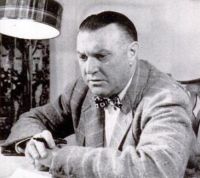
Portrait of A. S. W. Rosenbach A. S. W. Rosenbach,  Books and bidders (1927)

“ An exciting sale of books had just ended, and I was left a rather bitter young man. The purchaser of the one book I had so eagerly hoped to secure was a thin, wiry man, with a face of rare charm. He was not an auction habitué, at least not at Henkels’s, or I should have recognized him. One gets used to the same old faces in an auction room. Earlier that evening I had noticed him two rows ahead of me, a distinguished-looking person; but once the auctioneer’s hammer had struck, giving him the final decision on his bid, I changed my opinion, and he now appeared highly distasteful to me. ”
Source: Gutenberg

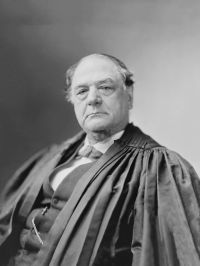
Portrait of Levi Woodbury Levi Woodbury,  Veazie v. Williams — Opinion of the Court

“ Therefore an auctioneer cannot bid for himself. This rule may not be very applicable in this case, because the auctioneer does not say that he intended to purchase the property for himself.
6. The owner of real estate, put up at auction, may protect himself in one of two ways.
1st. He may fix a minimum or starting point. If no bid is made for this amount, then it is no sale. This mode appears to have been pursued here. The minimum was fixed at $14,500, and this fact was made known to the purchasers at the sale. This fact is highly important.
”
Source: Wikisource

Get perspective with Kwize: daily news enlightened by great literature