
“ Of a truth, the foes of the book-lover are not few. One of the most insidious, because he cometh at first in friendly, helpful guise, is the bookbinder. Not in that he bindeth books—for the fair binding is the final crown and flower of painful achievement—but because he bindeth not: because the weary weeks lapse by and turn to months, and the months to years, and still the binder bindeth not: and the heart grows sick with hope deferred. ”
Binding (book)
Definition and stakes
The theme of “binding (book)” has been addressed by authors such as Arthur Low Bailey, S. T. Prideaux, John Cotton Dana, Irving Browne and E. Gordon Duff. It is often associated with terms like bookbinding, library, leather, printing and paper.
Quotes about “binding (book)”
Irving Browne, In the Track of the Bookworm
“ V. BINDING.he binding of books for several centuries has held the dignity of a fine art, quite independent of printing. This has been demonstrated by exhibitions in this country and abroad. But every collector ought to observe fitness in the binding which he procures to be executed. True fitness prevails in most old and fine bindings; seldom was a costly garb bestowed on a book unworthy of it. But in many a luxurious library we see a modern binding fit for a unique or rare book given to one that is comparatively worthless or common. ”
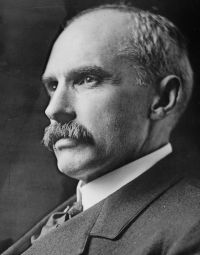 John Cotton Dana,
A Library Primer — Chapter XXVII, Binding and mending
(1899)
“ Binding a book means not only covering it, but preserving it. Good binding, even at a high price, educates the public taste and promotes a desire to protect the library from injury and loss. Cheap binding degrades books and costs more in the end than good work. ”
 Arthur Lee Humphreys,
The Private Library
“ Three weeks to a month at least should be allowed for the binding of such a work. (5) A folded copy in quires of a book is always preferable to a cloth-bound copy. (6) If a binder should ever suggest either a padded binding, a russia leather binding, or a tree calf binding, you may instantly leave his premises, for he cannot understand his business.It will be understood that the rules which apply to the binding of this Shakespeare equally apply to most other books. I propose, however, to take such instances as I think present difficulties not already met, and see how they can be overcome. ”
Joseph William Zaehnsdorf, The Art of Bookbinding (1890)
“ A book that has been sewed flexibly will not have any saw cut in the back, so that on examination, by opening it wide, it will at once be seen if it is a real flexible binding or not. Intelligence must, however, be used ”
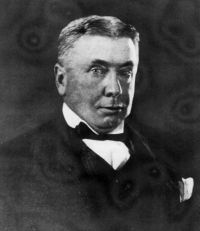 A. Edward Newton,
The Amenities of Book-Collecting and Kindred Affections
“ CHARLES LAMB’S HOUSE AT ENFIELD Nor am I unmindful how invariably in binding a book, in trimming, be it ever so little, and gilding its edges, one lops off no small part of its value. This fact should be pointed out to all young collectors. They should learn to let their books alone, and if they must patronize a binder, have slip-cases or pull-cases made. They serve every purpose. The book will be protected if it is falling apart and unpresentable, and one’s craving for color and gilt will be satisfied. ”
S. T. Prideaux, Modern bookbindings: Their design and decoration (1906)
“ The paper-maker, the printer and the binder would be more likely to work intelligently if they had some mutual knowledge of each other’s needs and limitations. The habit has been growing for some time of looking on the binding of a book as the most important thing in connexion with it. ”
 John Hill Burton,
The Book-Hunter
“ Among the elements which constitute the value of a book—rarity of course being essential—one might say he counted the binding highest. He was not alone in this view, for it would be difficult to give the uninitiated a conception of the importance attached to this mechanical department of book-making by the adepts. About a third of Dibdin's Bibliographical Decameron is, if I recollect rightly, devoted to bindings. There are binders who have immortalised themselves—as Staggemier, Walther, Payne, Padaloup, Hering, De Rome, Bozerian, Deseuille, Bradel, Faulkner, Lewis, Hayday, and Thomson. ”
John Cotton Dana,
Notes on Bookbinding for Libraries
“ The librarian cannot become a skilled binder. He should become familiar with the results of the binding he gets by a study of his books. If he finds they do not wear well, but rot, break or show loose pages, let him keep a few statistics, and if he learns he is wasting money on cheap work or poor material, let him change his material and his processes, and perhaps his binder. I hope this book may lead some to test the work they are now getting, and may help some to get more satisfactory workmanship and more enduring materials. It is not a guide to the craft of binding. ”
“ Thus in the course of his work he has not been wholly concerned with the external embellishment of the book, which he always endeavours to harmonise with its contents, but has also kept in view the practical purpose of the binding as a protective covering for the book. His great skill in achieving delightful effects with the simplest means is amply demonstrated by the numerous bindings he has designed for publishers. Thus in the bindings here illustrated, “Heimkehr” and “Buch Joram” (p. 169) , three lines of lettering suffice to animate and decorate the entire surface ”
Trow's Printing and Bookbinding Company, Bib-li-op-e-gis-tic (Pertaining to the art of binding books…
“ The true book lover as well as the collector desires for his treasures a suitable binding, and there is to-day an increasing demand for fine binding on individual volumes as well as on sets.This demand is not satisfied with “commercial binding” and is too intelligent to accept extravagant work, extravagant in over-decoration as well as in price. ”
Irving Browne, In the Track of the Bookworm
“ It is a sad spectacle to behold a unique binding wasted on a book of no more value than a backgammon board. There are of course not a great many of us who can afford unique bindings, but those who cannot should at least observe propriety and fitness in this regard, and draw the line severely between full dress and demi-toilette, and keep a sharp eye to appropriateness of color. I have known several men who bound their books all alike. ”
J. Herbert Slater, Book Collecting: A Guide for Amateurs
“ The first part of a book to get worn out is the binding, for some one or more of its previous owners are almost certain to have ill-treated it either by bending the covers until they crack, or by leaving the work exposed to the rain and damp. When the volume is coverless, and usually not before, it will have been re-bound, and the binder will, in ninety-nine cases out of every hundred, have trimmed the edges, that is to say, planed them smooth with a machine he has for the purpose. ”
Arthur Low Bailey, Library Bookbinding
“ It is reasonably safe to say that present methods of the best library binders make a book as strong as it is possible to make it. Progress no longer lies along the line of strength.In order to administer a binding department wisely, the librarian or assistant in charge of binding must know materials, processes, and books; and especially must he know how books should be bound to meet the use they are to receive. For example, fiction that is very popular should be bound differently from fiction which must be kept on the shelves, but which is not popular ”
John Cotton Dana,
Notes on Bookbinding for Libraries
“ As the large libraries have a good deal of work which the average commercial binder does not care to take, like map mounting, rare-book mending, and ordinary book repairs, the ideal condition for them would be a small bindery with two or three hands, in the building; a contract for all ordinary binding and rebinding with an outsider, and the purchase of many new books especially bound direct from the sheets. ”
James B. Nicholson, A Manual of the Art of Bookbinding
“ The volume must not only be well protected, but seem so. It should be solid, compact, square-edged, and enclosed in firm boards of a stoutness proportionate to its size, and these should be covered with leather at once pliable and strong. Unless it present this appearance, it will be unsatisfactory in spite of the richest colours and the most elaborate ornament. Thus far the mere mechanical skill of the binder goes. In the choice of his style of binding, and in the decoration of his book, if he perform his task with taste and skill, he rises to the rank of an artist. ”
Arthur Low Bailey, Library Bookbinding
“ In this way one should get from 25 per cent to 33-1/3 per cent of fiction replacements in a substantial binding at a cost much less than the cost of a book in the original publishers' binding.REINFORCED BOOKSFor those who wish strong bindings, but who wish them attractive also, reinforced bindings can be recommended. Reinforced books are those which have been strengthened either by the publishers in the regular course of manufacture, or by some binder who takes the book as it comes from the publisher, removes the cover, strengthens the book and puts it back into the same cover. ”
 Israel Zangwill,
Without Prejudice
“ There's no knowing where the artistic temperament may break out. "I don't think that a person ought to come to the binder and just say to him, 'Bind that book for so much money.' I think the binder ought to say, 'Is the book worth binding?' and that if it were not he ought to refuse." The applications of this remarkable principle, enunciated by a bookbinder, are obvious. Applied universally it would reform the race. The tailor, when a man came to be measured, would say, "Yes, but are you worth measuring?" ”
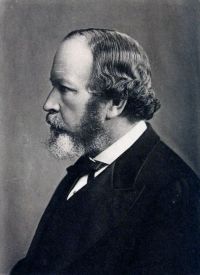 William Blades,
The Enemies of Books
“ My binder soon made for them a neat wooden box in the shape of a book, with morocco back properly lettered, where I trust the originals will be preserved from dust and injury for many a long year. Old covers, whether boards or paper, should always be retained if in any state approaching decency. A case, which can be embellished to any extent looks every whit as well upon the shelf! and gives even greater protection than binding. ”
S. T. Prideaux, Modern bookbindings: Their design and decoration (1906)
“ In these days of book lovers and 130collectors of every sort, it is certainly not unlikely that there are many who would welcome a new venture of this kind, in which they would associate the binding with the book, and have no desire to separate the one from the other. ”
John Cotton Dana,
Notes on Bookbinding for Libraries
“ As a great many of the library books which call for rebindings have to be trimmed at the back and overcast, it is essential that the overcast sewing be of a flexible nature, one that permits of the easy opening of the book. Probably few of the factors in book construction and book injury have been more effective than the tight binding, held open with difficulty, which is produced by nearly all of the current overcasting or whipstitching. ”
James B. Nicholson, A Manual of the Art of Bookbinding
“ The margins of an illustrated work on Art should never be cut away, except where it is absolutely necessary for the preservation of the book from dust, and the convenience of turning the leaves—that is, at the top. It is well here to enter a protest against the indiscriminate use of the antique style of binding, with dark-brown calf, bevelled boards, and red edges. ”
Arthur Low Bailey, Library Bookbinding
“ For example, if all the books are fiction it is perfectly feasible to send a written order, stating that they are all to be bound in half brown cowhide with red cloth sides, French joints, etc. If the shipment is a miscellaneous one of periodicals, reference books, fiction and juvenile books it may be necessary to state on the binding slips how each book is to be bound.2. For public libraries the question of keeping a record of books that are in the bindery is a simple one. The use of book cards for charging purposes is practically universal. ”
Joseph William Zaehnsdorf, The Art of Bookbinding (1890)
“ A later improvement of theirs was that of sewing the book on double raised cords, and making the book with a tight back, similar to the way in which our flexible books are now done, showing the raised bands. The ornamentation was entirely in blind, both on the back and sides, and the tools used were of a very solid character. This art of binding in vellum seems to be entirely lost at the present day; its imperishable nature is indeed its only recommendation. It has little beauty; is exceedingly harsh; and little variety can be produced even in the finishing. ”
P. B. M. Allan, The Book-Hunter at Home
“ Usually there is no need to rebind these ancient tomes whose 'joints' are so delicately described by the bookseller as 'tender': their very infirmity will ensure that they be accorded careful handling. But there comes a time when the old fellow succumbs to his arthrodial trouble, and there is nothing for it but to send him to the binder that he may acquire a second youth. Then it is that the collector's learning in the art of binding will prove of the greatest use. ”
John Cotton Dana,
Notes on Bookbinding for Libraries
“ Take fiction for example. More than half of the binding bills of most free public libraries are probably chargeable to novels. One of these comes to the hands of the person in charge of binding in such condition that at the first glance it seems desirable to rebind it. Let us suppose that it is still in publisher’s cloth; is quite soiled outside, but still fairly clean within; that the cover has parted from the [37] book in front; that several leaves are loose and two of them frayed at the edges; that at the back the outside sheets of several signatures are nearly worn through or broken ”
“ In a good shop, all books, no matter what the binding is to be, are treated alike in regard to workmanship, care, and materials. If a binder puts his name in the completed book, it is a sign that the book has been to the best of his ability honestly and well bound. ”
Florence O. Bean, Bookbinding for beginners (1918)
“ Newsboard, vellum, and paper for memorandum pad, or calendar, or pad to be mounted.We shall now begin to deal with materials that are more exclusively employed in bookbinding work. The simple articles considered at first are not books; but because the processes involved and the materials used will be used later in the more difficult work of binding a real book, they are made a part of this course.The wise teacher will become somewhat familiar with handling the required materials before attempting to give instruction. ”
Arthur Low Bailey, Library Bookbinding
“ Some libraries have an elaborate binding slip, giving on one side the different materials, colors, etc., and having the other divided into panels for lettering. A slip is made for each book and the binder follows it carefully. Some libraries arrange an arbitrary system with the binder making one letter or figure indicate much that otherwise would have to be written in full. For example, "C" under such an arrangement might mean "Bind in one-half red cowhide with green cloth sides." Some librarians give a general blanket order to bind all fiction in one way and all juvenile books in another. ”
Joseph William Zaehnsdorf, The Art of Bookbinding (1890)
“ Any holes caused by sawing-in, in previous binding, must be filled up with a piece of frayed cord, pasted. Any holes thus filled up must be made quite smooth when dry, as the least unevenness will show when the book is covered. ”
Supreme Council of the Order of Rameses, Book of the Dead (1916)
“ The Binding String is made use of to bind the whole of the apron to the body, indicating that man must need have something to hold fast to him those immortal truths inculcated by our Order, representing man's dependence upon the higher power. ”
Arthur Low Bailey, Library Bookbinding
“ It is hoped, however, that there is enough new material to make the book of interest to those who deal daily with binding problems, and that the book as a whole may help to solve some of the questions relating to binding in libraries both large and small. ”
Mitchell S. Buck, Book Repair and Restoration: A Manual of Practical Suggestions for Bibliophiles
“ It is very difficult to execute a satisfactory binding without going through a long period of practice and apprenticeship. And this work not only includes several long and dreary operations, such as sewing, which the average bibliophile would not have the time or patience to undertake, but also requires a number of bulky tools and presses, out of place except in a shop or work-room. Any book in serious need of rebinding is better placed in the hands of an experienced binder, preferably one who specializes in individual bindings. ”
James B. Nicholson, A Manual of the Art of Bookbinding
“ The amateur and book-collector, in commencing the foundation of a library, will do well to pause before they adopt a species of binding that will in after years create a feeling of annoyance, and perhaps lead to pecuniary sacrifice. ”
Related terms
Authors who wrote about “binding (book)”
Arthur Low BaileyS. T. PrideauxJohn Cotton DanaIrving BrowneE. Gordon DuffArthur Lee HumphreysCyril DavenportP. B. M. AllanHenri Pène du BoisTrow's Printing and Bookbinding CompanyJames B. NicholsonDouglas CockerellA. Edward NewtonMitchell S. BuckJ. Herbert SlaterWilliam BladesGertrude Burford RawlingsThomas K. FordJoseph William Zaehnsdorf Lewis Carroll
John Cotton DanaIrving BrowneE. Gordon DuffArthur Lee HumphreysCyril DavenportP. B. M. AllanHenri Pène du BoisTrow's Printing and Bookbinding CompanyJames B. NicholsonDouglas CockerellA. Edward NewtonMitchell S. BuckJ. Herbert SlaterWilliam BladesGertrude Burford RawlingsThomas K. FordJoseph William ZaehnsdorfLewis Carroll