“ Wheeling in spirals now above the river meadow, the great, man-made bird of prey turned and turned, hanging aloft in the sky like a giant hawk, sweeping in vast circles through the blinding blue, as though searching every clump and tussock in the fields below for some hidden enemy or victim. ”
Bird of prey
Definition and stakes
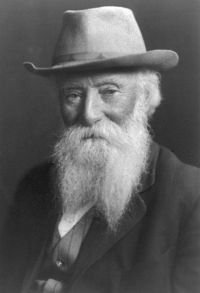
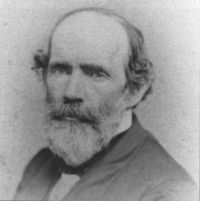
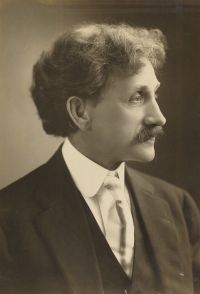
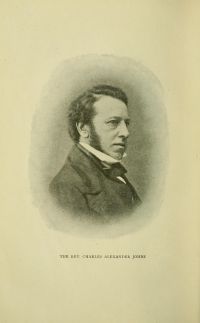
The "bird of prey" refers to raptorial birds distinguished by sharp beaks, claws, and predatory behavior, playing a crucial role in ecosystems as top predators. Authors have long examined this subject from various perspectives: Jules Michelet depicted them as ominous symbols of unbridled power, highlighting their "instruments of torture" and "deathlike masks," while Jean-Henri Fabre presented a naturalistic examination of their anatomy, explaining how their curved beaks and claws aid in hunting.
Chester A. Reed offered empirical observations, clarifying that their diet mainly consists of frogs and insects rather than domestic fowl, and John Burroughs emphasized their physical traits adapted for predation. These viewpoints together portray the bird of prey as both a biological wonder and a powerful metaphor for violence and survival.
Quotes about “bird of prey”
Theodore Wood, The Animal World, A Book of Natural History
“ But scientific men are not quite sure which of the orders ought to be placed first. Among the birds of prey, however, we find some of the largest and finest and most powerful of all the feathered race; so that we cannot do better than place these at the head of our list.You can always tell a bird of prey by two points in its structure. The first we find in its beak, which is always very large and [233] strong, and very sharply hooked. And the second we find in its talons, which are specially made for seizing and killing the animals upon which it feeds. ”
Jean-Henri Fabre,
Animal Life in Field and Garden
“ Emile asked. “You can readily understand that in its headlong chase the bird has no time to dismember its captives. Pouncing upon the insect with wide-open beak, snapping it up, and gulping it down—all this it does as it flies, without a moment’s pause. No sooner is the plumpest prey captured than down it goes, alive and struggling, into the bird’s crop.” ”
“ Our impressions are not less painful when we see in our galleries the endless series of birds of prey, prowlers by day and night, frightful masks of birds, phantoms which terrify the day itself. One is powerfully affected by observing their cruel weapons; I do not refer to those terrible beaks which kill with a blow, but those talons, those sharpened saws, those instruments of torture which fix the shuddering prey, protract the last keen pangs and the agony of suffering. ”
Chester A. Reed, Bird Guide: Water Birds, Game Birds…
“ Adults with the tail rusty-red, with or without a narrow blackish band near the tip; below white, with a band of blackish streaks across the breast, and dusky markings on the sides. Young birds are similar, but have the tail grayish-brown with black bands. An examination of the food of this bird of prey, made by the Department of Agriculture, shows that, instead of living upon poultry as most farmers think, their food consists chiefly of frogs, snakes, lizards, mice and insects, less than one in ten of the stomachs examined containing any remains of poultry. ”
Chester A. Reed, Bird Guide: Water Birds, Game Birds…
“ Adults, above bluish-slate, darkest on the crown; a whitish line over the eye; below white, finely waved with gray. Young, brownish-black, with lighter edgings to the feathers; below whitish, streaked with blackish-brown. Young birds can easily be distinguished from those of any other species by their large size and the long tail. This handsome species is one of the most rapacious and destructive of our birds of prey. Their short wings and long tail enable them to glide among the thickest foliage with great speed, and even the Ruffled Grouse cannot escape them. ”
John Burroughs,
Bird Stories from Burroughs
“ THE NORTHERN SHRIKEUsually the character of a bird of prey is well defined; there is no mistaking him. His claws, his beak, his head, his wings, in fact his whole build, point to the fact that he subsists upon live creatures; he is armed to catch them and to slay them. ”
“ Assuredly, when I survey, in the Museum, the sinister assemblage of nocturnal and diurnal birds of prey, I do not much regret the destruction of these species. Whatever pleasure our personal instincts of violence, our admiration of strength, may cause us to take in these winged robbers, it is impossible to misread in their deathlike masks the baseness of their nature. Their pitifully flattened skulls are sufficient evidence that, though greatly favoured with wing, and crooked beak, and talons, they have not the least need to make use of their intelligence. ”
Jean-Henri Fabre,
Our Humble Helpers: Familiar Talks on the Domestic Animals
(1918)
“ Rapacious birds that feed on live prey have the upper mandible short, strong, hooked, and terminating in a sharp point, sometimes with serrate edges. With this weapon the hunting bird kills its prey, and tears it to pieces while holding it with its vigorous talons armed with sharp, curved nails. “Fish-eating birds that tear the fish to pieces in order to swallow it have the hooked beak of the rapacious birds; those that swallow the fish whole have a straight beak with long, wide mandibles. ”
Various, The Atlantic Monthly (1858)
“ When the young birds have left the nest, upon seeing the flash of his plumage, they immediately utter their call, and by this note, which might not otherwise be sounded at the right moment, he detects them and supplies them with food. Should a bird of prey suddenly come into their neighborhood, he overlooks the plainly-dressed mother and off-spring, and gives chase to the male parent, who not only escapes, but at the same time diverts the attention of the foe from his defenceless progeny. ”
John James Audubon,
Ornithological biography, Vol. 1…
“ When feeding, it generally holds its prey with both feet, and tears and swallows the parts without much plucking. I must here remark, that birds of prey never cover their victims by extending the wings over them, unless when about to be attacked by other birds or animals, that evince a desire to share with them or carry off the fruit of their exertions. In the stomach of this bird I have found wood-frogs, portions of small snakes, together with feathers, and the hair of several small species of quadrupeds. ”
Alfred Edmund Brehm,
Cassell's book of birds; vol. 4
“ Of all the many feathered occupants of our shores, these birds are by far the most restless and pugnacious, though apparently without malice. Towards all their larger companions they exhibit an incessant desire to resent intrusion, and at once dart upon a bird of prey with loud cries, and drive the unwelcome visitor away from the spot. ”
Frédéric Houssay, The Industries of Animals
“ They fear him greatly, so that as soon as one appears singing ceases, and each suddenly closes his wings, falls to the earth and hides against the soil. But some have mounted so high to pour out their clear song that they cannot hope to reach the earth before being seized. Then, knowing that the bird of prey is to be feared when he occupies a more elevated position from which he can throw himself on them, they endeavour to remain always above him. ”
Chester A. Reed, Bird Guide: Water Birds, Game Birds…
“ Legs not feathered to the toes. Adults with white head and tail. Young birds similar in color to those of the Golden Eagle, but blacker and with the legs always bare on the lower half. Young, with brown eyes, like those of the last; adults with yellow eyes and feet. This handsome bird of prey, our national emblem, is resident and locally distributed throughout the United States and Canada, always near streams or lakes, and most abundant on the seacoasts. ”
Elliott Coues,
Citizen Bird: Scenes from Bird-Life in Plain English for Beginners
“ The Wise Men have been looking up the records of these cannibals—or Birds of Prey, as they are usually called—and find that very few of them—only two or three kinds, perhaps—should be condemned to death. The others belong to the secret guild of the Wise Watchers who, sitting silently in the shadows of the woods, or perching in the trees around the edges of fields, wait for rats, mice, moles, rabbits, gophers, beetles, cutworms, and many other creatures which destroy vegetable life. The Wise Watchers kill these hurtful creatures, and so become the guardians of the fields. ”
John Aikin,
Evenings at Home; Or, The Juvenile Budget Opened
“ If a large bird of prey hovers about a rookery for the purpose of carrying off any of the young ones, they all unite to drive him away. When they are feeding in a flock, several are placed as sentinels upon the trees all round, who give the alarm if any danger approaches. They often go a long way from home to feed; but every evening the whole flock returns, making a loud cawing as they fly, as if to direct and call in the stragglers. ”
Jean-Henri Fabre,
Animal Life in Field and Garden
“ The prey is seized by two strong claws warmly gloved in down as far as the roots of the nails. Each foot has four toes, three pointing habitually forward, and one backward; but, by a privilege peculiar to nocturnal birds of prey, one of the front toes is movable and can be turned back so that the set of talons is divided into two pairs of equal power whenever the bird wishes to grip, as in a vise, the branch on which it perches, or the victim struggling in its grasp. One blow of the beak breaks the head of the captured creature. ”
“ The infinitely varied and capricious pursuit of a prey which is ever fluttering—of the gnat, the fly, the beetle, the thousand insects that waver to and fro and never keep in the same direction—is, undoubtedly, the best training school for flight, and renders the swallow superior to all other birds. ”
Edward William Nelson, Wild Animals of North America
“ The discovery in these pits of the bones of a gigantic vulturelike bird of prey of far greater size than the condor is even more startling, since the folk-lore of the Eskimos and Indians of most of the tribes from Bering Straits to California and the Rocky Mountain region abound in tales of the “thunder-bird”—a gigantic bird of prey like a mighty eagle, capable of carrying away people in its talons. ”
Chester A. Reed, Bird Guide: Land Birds East of the Rockies…
“ Birds of prey have but little to do with the question of bird protection for, with a few exceptions, they rarely feed upon other birds, and nearly all of them are of considerable economic value themselves. Jays, Crows, and Grackles, by devouring the eggs and young of our smaller birds, are a far greater menace than are the birds of prey, but even these have their work and should be left in the place that Nature intended for them ”
J. G. Wood, Story of the Bible Animals
“ Smaller birds are carried off in the talons of their pursuers, and are killed by the grip of their tremendous claws, the Eagle in no case making use of its beak for killing its prey. If the great bird carries off a lamb or a hare, it grasps the body firmly with its claws, and then by a sudden exertion of its wonderful strength drives the sharp talons deep into the vitals of its prey, and does not loosen its grasp until the breath of life has fled from its victim. ”
Robert Southey,
The doctor, &c., vol. 6 (of 7)
(1834)
“ When a flight of these birds arrive at the prey which they have scented from afar, however ravenous they may be, they keep at a respectful distance from the banquet, till his Carrion Majesty has satisfied himself. But there is another Bird, in South America, whom all the Birds of prey of every species acknowledge for their natural sovereign, and carry food to him in his nest, as their tribute. ”
Sir Samuel White Baker,
The Nile Tributaries of Abyssinia…
“ From their immense elevation, the birds of prey possess an extraordinary field of vision; and, although they are invisible from the earth, there can be no doubt that they are perpetually hunting in circles within sight of each other. Thus, should one bird discover some object upon the surface of the earth below, his sudden pounce would be at once observed and imitated by every vulture in succession. Should one vulture nearest the earth perceive a body, or even should he notice the buzzards collecting at a given point, he would at once become aware of a prey ”
Chester A. Reed, Bird Guide: Water Birds, Game Birds…
“ In the white phase, the plumage is entirely, or nearly, white, including the plumes. As usual, these egrets associate in large flocks, of their own kind or other small herons. Their food consists of small fish, frogs, lizards, insects and mice. They will stand motionless in shallow water, for a long time waiting for their prey, and woe to the creature that comes within striking distance of their spear-like bill. Their flight is strong and graceful as they make their way from their breeding places to their feeding grounds on the mud flats, left bare by the receding tide. ”
“ Birds of prey show none of this confidence in man, and, when locating their nests, avoid rather than seek his haunts.In a certain locality in the interior of New York, I know, every season, where I am sure to find a nest or two of the slate-colored snow-bird. It is under the brink of a low, mossy bank, so near the highway that it could be reached from a passing vehicle with a whip. Every horse or wagon or foot passenger disturbs the sitting bird. ”
Elliott Coues,
Citizen Bird: Scenes from Bird-Life in Plain English for Beginners
“ Everywhere in North America I am a cannibal. I know I am small, but I can kill a bird bigger than myself, and I have a big brother who is a regular Chicken and Hen Hawk. I hide my nest in the lengths of thick evergreens, or on a rocky ledge, and all the year round I take my own wherever I find it. I prefer to prey on birds—Dove or Sparrow, Robin or Thrush, song bird or Croaker—all are alike to me. I consider myself a true sportsman, and I do not like such tame game as mice or frogs. ”
John James Audubon,
Ornithological Biography
(1831)
“ This I have thought is done by the bird to manifest its courage, and let the hearer know that it is not to be meddled with, although few birds of prey are more gentle when seized, as it will suffer a person to touch its feathers and caress it, without attempting to bite or strike with its talons, unless at rare intervals. ”
Leander S. Keyser, Our Bird Comrades
“ The same is true of the raptorial birds, or birds of prey, which are strong perchers and depend largely for their food supply on clutching their victims while on the wing. In all these birds the hind toe is also well developed, and is on the same plane as the anterior digits—a wise adaptation of means to ends. ”
Charles Owen, An essay towards a natural history of serpents (1742)
“ On the other hand, if four-footed Beasts were propagated by Eggs, they would soon cover the Face of the Earth, without a daily Destruction of them, which would take up no little time, tho’ an Army of Nimrods were employed. Birds increase by Eggs, and bring forth great Numbers; and perhaps, for this reason, that Birds of Prey and Serpents, Kitchens, &c. might not want proper Supplies. Now, if a Female Bird was great with six or twelve Young Ones at once, the Burden would be intolerable, her Wings would fail, and she would become an easy Prey to her Enemies. ”
Chester A. Reed, Bird Guide: Water Birds, Game Birds…
“ Their flight is perfectly silent, which aids them in securing their prey of field mice, which they usually get without stopping in their flight, just swooping down, extending their long legs, armed with wicked little claws, and it is all over with the little rodent, he being carried to a nearby stump, and devoured, fur, bones and all. ”
Arthur Humble Evans,
The Cambridge natural history, vol…
“ The bird rises to the surface to swallow its prey, but a strap round the neck allows it to dispose of the smallest only of its captures, while it is forced by its master to disgorge the remainder before it is rewarded with a portion of the catch. ”
Frank M. Chapman,
What Bird is That?
“ Thirty years ago the Flicker, High-hole or Yellow-hammer, was prey of any boy with a gun and was correspondingly wild and little known; now, thanks to the Audubon Society, he is almost as domestic as the Robin. In search of ants and their eggs, he hunts our lawns and even accepts the hospitality of our nest-logs. A great acquisition to our dooryard life is this bird of beautiful colors, quaint habits, and strange notes. ”
Austin Loomer Rand, Stray Feathers From a Bird Man's Desk
“ Now with the dead sparrow or mouse the shrike is at a disadvantage. With a powerful bill hooked at the tip its [Pg 61] feet are still those of a songbird and are not strong enough to hold its large prey while pulling it to pieces. Only small insects are held in one foot and pulled to pieces. To meet this need for holding large dead prey the impaling habit was evolved. The result of this is the so-called larders, which form a fancied resemblance to meat hanging in a butcher shop, and have given the birds their name of butcherbird. ”
Arthur Humble Evans,
The Cambridge natural history, vol…
“ The prey consists of antelopes, wolves, foxes, fawns, lambs, hares, rabbits, marmots, geese, ducks, grouse, and so forth, with carrion, if sufficiently fresh; the ground is often quartered at a low elevation, and wonderfully rapid in the chase is the flight of this apparently slow and ponderous bird, aided by its extraordinarily keen powers of vision. ”