“ A much more amiable little fellow, the great tit, has just added his modest assurance that spring is coming. He is not much of a singer, but he is good hearing to anyone whose thoughts are turning to his garden and the pests that lurk therein for the undoing of his toil. The tit is as industrious a worker in the garden as the starling, and, unlike the starling, he has no taste for my cherries. A pair of blue tits have been observed to carry a caterpillar to their nest, on an average every two minutes for the greater part of the day. ”
Blue tit
Definition and stakes
The theme of “blue tit” has been addressed by authors such as Geoffrey Egerton-Warburton, W. Houghton, William Henry Hudson, Douglas Dewar and Isabel De Nyse Conover. It is often associated with terms like breast, nipple, bird, clothing and insect.
Quotes about “blue tit”
Michael Wood, The willow weaver and seven other tales (1916)
“ On a bough a blue tit hung head downwards, and beneath the bough, half hidden in a crisp bed of last year’s leaves, lay a child who watched the tit with half-shut eyes, and shook with a delight he did not understand, which was akin to pain. A queer, lonely, shy child, lying in a wood, trembling with a force which was trying to express itself through him. ”
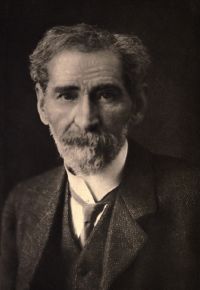 William Henry Hudson,
British birds
(1921)
William Henry Hudson,
British birds
(1921)
“ All the qualities that distinguish the tits and make them such engaging birds are found in a marked degree in the present species—sociability; extreme vivacity, especially in the cold season; and the power to assume an endless variety of graceful positions when clinging to the slender branches and twigs, upright or pendulous, of the leafless trees in winter. And as the blue tit is more abundant, and more familiar with man, than the others, besides having a gayer colouring, he is the favourite member of his genus. ”
Wilhelmina Stitch, Where sunlight falls (1929)
“ I hear, well, almost any hour, a secret whispered by the breeze. The sun's more generous with his gold; he spilt it at my feet to-day. A happy wren was very bold and carolled forth a roundelay. The sturdy tit with sable breast, the blue tit, lovely little thing, are pecking with the greatest zest at fat a-dangling from a string! On every slender willow bough (with ecstasy this news I write) the Persian Kittens frolic now; the boisterous wind gives them delight. They jump about like anything; and how their silver fur coats gleam! They prove that it is really Spring—and not a tantalizing dream! ”
W. Houghton, Country Walks of a Naturalist with His Children
“ See how the little fellow flits from branch to branch, seldom remaining long on one spot. It is a very small bird, almost the smallest British bird we have; of course I am thinking of the tit's body and not taking into account its tail. The skin is remarkably tender, and thin as tissue paper. Like all the titmice, the long-tailed tit feeds on insects and [Pg 25] their larvæ. I do not remember to have heard or seen this species tapping the bark of a tree with its beak, as the great and the blue tit are frequently in the habit of doing, but most probably they do the same. ”
various authors, editor W.L. Distant, The Zoologist (1897)
“ The Blue Tits here nest in the lamp-posts. The lamplighter tells me they all rear their young, and I lately heard the cry of a young one from the top of a lamp-post, and several others, just able to fly, were around the spot. An old Tit occupies about a minute in descending and re-ascending a lamp-post, and probably it proceeds by rapidly hopping from side to side ”
W. Houghton, Country Walks of a Naturalist with His Children
“ The little blue-tit, which has just fled across our path is a very pretty active bird and common everywhere, in lanes, woods, and gardens. The blue-tit makes its nest in a wall or a hole in a tree and lays about nine or ten pretty little spotted eggs. ”
W. Warde Fowler, A Year with the Birds
“ The ringing note of this Great-tit or his relations is the first to be heard in that garden in winter-time, and is always welcome. The little Blue-tit is also forthcoming there at times. One Sunday morning I saw a Blue-tit climbing the walls of my College quadrangle, almost after the manner 30 of a Creeper, searching the crannies for insects, and even breaking down the crust of weathered stone. ”
William Henry Hudson,
British birds
(1921)
“ In winter he may be easily won with a little food; and when he joins the mixed company of sparrows, dunnocks, blackbirds, and starlings that come to the door for crumbs and scraps, he is by contrast among them a ‘winged jewel’—a small wanderer from the tropics. In works of ornithology you will find the blue tit described as a little acrobat and harlequin, droll and grotesque and fantastic in his ways ”
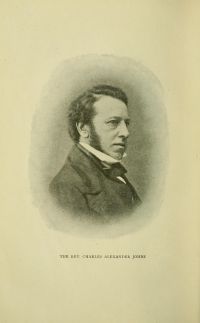 C. A. Johns,
British Birds in Their Haunts
C. A. Johns,
British Birds in Their Haunts
“ He is more frequently seen on the ground than either of the other species, and where it is the custom to throw out crumbs and the scrapings of plates, for the benefit of little birds, the Blue Tit rarely fails to present itself among Sparrows and Redbreasts. ”
Douglas Dewar, Birds of the Indian Hills
“ The head, breast, and upper abdomen are bright yellow, except the crown, crest, a broad streak behind the eye, and a band running from the chin to the abdomen, which are black. It is impossible to mistake this sprightly little bird, which is like the English tom-tit in shape. Tits are arboreal in habits; they seldom descend to the ground. Sometimes they go about in small flocks. They are supposed to live chiefly on insects, but most of them feed on fruit and seeds also, and the grey tit, alas, eats peas, among which it works sad havoc. ”
Douglas Dewar, Birds of the Indian Hills
“ Small wonder, then, that a pair of tits had elected to nest there.The green-backed tit is one of the most abundant birds in the Himalayas. It is about the size of a sparrow. The head is black with a small perky crest. The cheeks are spotless white. The back of the head is connected by a narrow black collar with an expansive shirtfront of this hue. The remainder of the plumage is bright yellow. The back is greenish yellow, the rest of the plumage is slaty with some dashes of black and white. Thus the green-backed tit is a smart little bird. It is as vivacious as it is smart. ”
Douglas Dewar, Birds of the Indian Hills
“ The Indian grey tit (Parus atriceps) is a bird of wide distribution. It is the common tit of the Nilgiris, is found in many of the better-wooded parts of the plains, and ascends the Himalayas up to 6000 feet. It is a grey bird with the head, neck, breast, and abdominal line black. The cheeks are white. It is less gregarious than the other tits. Its notes are harsh and varied, being usually a ti-ti-chee or pretty-pretty.I have not noticed this species at either Mussoorie or Naini Tal, but, as I have stated, it is common at Almora. ”
 Angela Brazil,
A Terrible Tomboy
Angela Brazil,
A Terrible Tomboy
“ Oh, look, Bobby! There goes one of the tits! I saw just where she flew from. Oh, here it is! See, isn't it just the prettiest little nest that ever was?'The tit's nest would certainly have gained the prize if all the birds had been asked to take part in a building [18] competition. It was made of the softest moss and lichens, fashioned together in the shape of a bottle with the neck downwards; for the tit must have some place in which to bestow her long tail, and she builds her home to suit her person.Peggy thrust a cautious finger through the tiny opening in the side. ”
Phil Robinson, Birds of the wave and woodland
“ The mesh of the{128} netting over the aviary was small enough to keep siskins inside, but the great tit, as we afterwards found, was not to be kept within the wires. It turns its body sideways, puts a wing through first and then its head and then squeezes the body out—exactly the same procedure, that is, reading arm instead of wing, as the professional child-burglar’s in India. If the great tit cannot get out of its prison, it commits suicide. For it thrusts itself so far through the wires or netting that it cannot move one way or the other, and is strangled. ”
Geoffrey Egerton-Warburton, In a Cheshire Garden: Natural History Notes
“ Some years ago all four kinds of tit used to come together to the food-stand, but (with the exception of a pair of coal-tits in the winter of 1910-11) since 1899 tom-tits and great-tits have had it all to themselves, neither marsh nor coal-tits have been there, though both are still frequent visitors to the garden at all times of the year.In June broods of young tits appear flying from tree to tree in little parties. The old birds tirelessly hunt for food, whilst the greeny-yellowy little ones sit expecting and cheeping among the boughs. ”
Geoffrey Egerton-Warburton, In a Cheshire Garden: Natural History Notes
“ One may often hear a tapping sound in trees and shrubs that is made by a great-tit, and I have watched the bird after considerable tapping draw out a grub of some sort from under the bark. I noticed on another occasion that a tit in making this tapping noise was beating something (through the glass it looked like a beetle) which it held in its beak against a bough of the tree.Like tom-tits, great-tits will fly off with grains of Indian corn, and, like coal-tits, they are fond of sunflower seeds. (In spite of what Gilbert White says, I have never seen tom-tits here touch sunflower seeds.) ”
Louisa M. Alcott, Eight Cousins — Chapter 15 (1875)
“ She thought her more "stuck up" than ever, but did not know how to bring her down, yet longed to do it, for she felt as if she had received a box on the ear, and involuntarily put her hand up to it. The touch of an ear-ring consoled her, and suggested a way of returning tit for tat in a telling manner. ”
Wilfred Mark Webb, The Heritage of Dress: Being Notes on the History and Evolution of Clothes
“ As age goes on, male students shift their liking towards the violet end of the spectrum which is the favourite one with men, while women keep to the red. Blue is associated in this country with the boat race held between representatives of the two old Universities of Oxford and Cambridge, and blue is usually taken to represent the Liberal side in political elections. The blue blouse of the butcher is characteristic, [308] and, as we have found, is a still better instance of the survival of a trade costume than that seen in the case of servants. ”
George H. Napheys, The Physical Life of Woman: Advice to the Maiden…
“ Changes in the breasts are valuable as symptoms. They become larger and firmer, and the seat of a pricking or stinging sensation. The nipples are swollen, prominent, and sometimes sore or painful. The veins beneath the skin appear more conspicuous, and of a deeper blue than ordinary. The peculiar circles of rose-coloured skin which surround the nipples increase in extent, change to a darker color, and become covered with a number of little elevations. ”
“ The deep blue, any pure blue, in fact, from forget-me-not to ultramarine, is as rare in this commonest type as warm or bright hair—chestnut, red, or gold; or as a brilliant skin. The skin is pallid, or dusky, or dirty-looking. Even healthy girls in their teens seldom have any colour, and the exquisite roseate and carmine reds of other counties are rare indeed. The best-looking girls at the time of life when they come nearest to being pretty, when they are just growing into womanhood, have an unfinished look which is almost pathetic. ”
 Charles Egbert Craddock,
In the "stranger people's" country
Charles Egbert Craddock,
In the "stranger people's" country
“ Her dull, light-blue cotton dress, defined against this sombre hue, was swaying slightly aslant, the wind breaking the straight folds of the skirt. Her complexion was of a clear creamy tone; the hair, curling on her brow, and massed at the nape of the neck and there tied closely, the thick, short, curling ends hanging down, was a dusky brown, not black; and her eyes, well set and with long dark lashes and distinctly arched eyebrows, were of that definite blue which always seems doubly radiant and lucent when illumined by an artificial light. ”
Isabel De Nyse Conover, A Complete Course in Dressmaking (1922)
“ For the woman who doesn't have to consider her height, a costume blouse in a lighter shade of the suit color is often effective, as a tan blouse with a brown suit or a grayish light blue with a navy blue suit. If the blouse in another color is used, it is well to work the suit shade into the trimming. For instance, a dull red blouse might be quite effective with a dark blue suit, if it were embroidered with dark blue yarn. ”
William Henry Hudson,
British birds
(1921)
“ As they move from tree to tree they attract other species of similar habits—the oxeye and blue and marsh tits, and goldcrests, and siskins, and perhaps a couple of tree-creepers. Occasionally a party of long-tailed tits will join, and keep with the flock for some time; but the long-tails are the most restless and vagrant of all, and eventually hurry on by themselves, leaving the more patient plodders behind. ”
Annabel Sharp, Peggy Parsons, a Hampton Freshman
“ And the very first thing that she put up was the wonderful suit of Belgian blue!As she mounted the swaying pile of cushions, her expression never softened to the hilarity that the occasion had held up till now. The light gleamed over the wonderful blue of the thing in her arms.“A suit,” she began, in that voice the freshmen worshipped, “a blue suit. Tailored to fit me. Do for any tall girl. The lining is, as you see, a good quality taffeta,” she turned the coat conscientiously inside out, “and a blue silk underskirt goes with the skirt. ”
Isabel De Nyse Conover, A Complete Course in Dressmaking (1922)
“ Just about the best rule a woman with a sallow complexion can follow is to look for warm rosy tints. If you choose brown, hunt out a warm reddish brown. A greenish brown is to be avoided. A navy blue that is a red blue, not a greenish blue, will become you if you touch it up with a little rose trimming—perhaps it will only be a placque enameled in rose, worn on a silk cord. Rose or henna wool embroidery is an effective way, too, of introducing the needed color. ”
 Edward Bulwer-Lytton,
Vril: The Power of the Coming Race…
(1871)
Edward Bulwer-Lytton,
Vril: The Power of the Coming Race…
(1871)
“ She wears gray, a neutral tint, to indicate that she is looking about for a spouse; dark purple if she wishes to intimate that she has made a choice; purple and orange when she is betrothed or married; light blue when she is divorced or a widow, and would marry again. Light blue is of course seldom seen. ”
 Rolf Boldrewood,
In Bad Company, and other Stories
Rolf Boldrewood,
In Bad Company, and other Stories
“ In colouring, the breast is a delicate slate-grey tinged with faintest pink as it rises towards the wing muscles, the front wings barred with dark, pencilled cross-lines, the larger feathers of the extremities a burnished green, and the last row having feathers of a vivid dark pink or crimson. ”
Isabel De Nyse Conover, A Complete Course in Dressmaking (1922)
“ Just an edge of gray blue and silver ribbon showing beyond the neck edge of a navy blue frock will tone it attractively. For street wear you have quite a variety from which to choose. Navy blue, gray, henna and neutral shades such as taupe. If your skin is clear and you have good color you can wear black well. In cottons, there are lovely flower sprigged dimities in gray and blue tones which are becoming to an older woman. Gray swiss dotted in blue is another good choice for the gray haired woman. Black and white effects too in voile, dimity, and swiss are considered very smart. ”
Maud C. Cooke, Social Life; or, The Manners and Customs of Polite Society
“ Blondes may, if they choose, wear yellows in harmony with their hair. This possibility was first daringly acted upon by Worth with most charming results.Blue eyes can always be deepened by wearing the appropriate shade of blue. White can be worn by women of all ages, and in almost all materials is it becoming. For evening wear and for day wear it is most satisfactory. Southern women make a point of dressing in it altogether. ”
Isabel De Nyse Conover, A Complete Course in Dressmaking (1922)
“ You may indulge your liking for brightness in trimmings if you choose, but be careful where you place the bright spot. As a matter of fact, it's better to make it a narrow piping or binding than a spot. An edge of bright red or green or peacock blue to outline a vest front, to finish the sleeve, or across a collar is quite permissible, and often the stylish touch to the garment. ”
 Vātsyāyana,
Kama Sutra
(1883)
Vātsyāyana,
Kama Sutra
(1883)
“ When five marks with the nails are made close to one another near the nipple of the breast, it is called "the jump of a hare." (8) A mark made on the breast or on the hips in the form of a leaf of the blue lotus, is called the "leaf of a blue lotus." When a person is going on a journey, and makes a mark on the thighs, or on the breast, it is called a "token of remembrance." On such an occasion three or four lines are impressed close to one another with the nails. ”
G. Woolliscroft Rhead, Chats on Costume
“ Both Strutt and some other writers on the subject of costume appear to be puzzled by the colouring of the earlier illuminators, principally, however, with respect to the colour of the hair and beard, but also in regard to the various details of costume. They remark the curious circumstance of the hair and beard being painted blue. "In representations of old men this might be considered only to indicate grey hair; but even the flowing locks of Eve are painted blue in one MS., and the heads of youth and age exhibit the same cerulean tint." ”
Related terms
Authors who wrote about “blue tit”
Geoffrey Egerton-WarburtonW. HoughtonWilliam Henry HudsonDouglas DewarIsabel De Nyse Conover Joyce KilmerEdward Bulwer-LyttonMaud C. CookeA. G. GardinerC. A. JohnsW. Warde Fowlervarious authors, editor W.L. DistantWilhelmina StitchMichael WoodWilfred Mark WebbPhil RobinsonAngela BrazilCharles Egbert Craddock
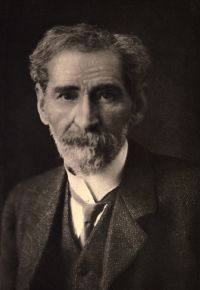 W. H. HudsonGeorge H. Napheys
William Henry HudsonDouglas DewarIsabel De Nyse ConoverJoyce KilmerEdward Bulwer-LyttonMaud C. CookeA. G. GardinerC. A. JohnsW. Warde Fowlervarious authors, editor W.L. DistantWilhelmina StitchMichael WoodWilfred Mark WebbPhil RobinsonAngela BrazilCharles Egbert CraddockW. H. HudsonGeorge H. Napheys