Boulder (geology)

Definition and stakes

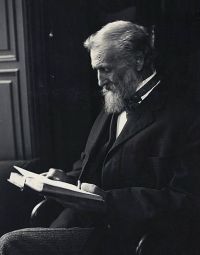
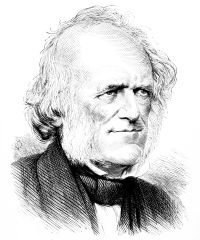
Portrait of Sir Charles Lyell Sir Charles Lyell,  A Manual of Elementary Geology

“ In the Western Hemisphere, both in Canada and as far south as the 40th and even 38th parallel of latitude in the United States, we meet with a repetition of all the peculiarities which distinguish the European boulder formation. Fragments of rock have travelled for great distances from north to south; the surface of the subjacent rock is smoothed, striated, and fluted; unstratified mud or till containing boulders is associated with strata of loam, sand, and clay, usually devoid of fossils. ”
Source: Gutenberg

Portrait of Sir Charles Lyell Sir Charles Lyell,  A Manual of Elementary Geology

“ By the hypothesis of such a slow and gradual subsidence of the land we may account for the fact that almost everywhere in N. America and Northern Europe the boulder formation rests on a polished and furrowed surface of rock,—a fact by no means obliging us to imagine, as some think, that the polishing and grooving action was, as a whole, anterior in date to the transportation of the erratics. ”
Source: Gutenberg

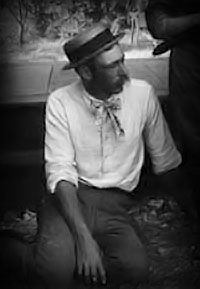
Portrait of Archibald Geikie Archibald Geikie,  The Story of a Boulder; or, Gleanings from the Note-book of a Field Geologist

“ Such I conceive to have been the origin of the sand, gravel, and imbedded plants of our boulder. It may be well, however, in going into the details of the subject, to take a wider view of this interesting branch of geology, and look for a little at the forms and modes of the decomposition of rocks, and the varied manner in which new sedimentary accumulations are formed.
All over the world, wherever a land surface spreads out beneath the sky, there goes on a process of degradation and decay.
”
Source: Gutenberg

Get perspective with Kwize: daily news enlightened by great literature