Brick and mortar

Definition and stakes

James Braidwood,  Fire Prevention and Fire Extinction

“ The brick-arching is also very liable to fall, especially if only four and a half inches thick, independently of the weight which may be placed upon it, for it is not uncommon after a fire in a large building, to find the mortar almost completely pulverized to the depth of three inches, or four inches, from the face of the wall. ”

Source: Gutenberg

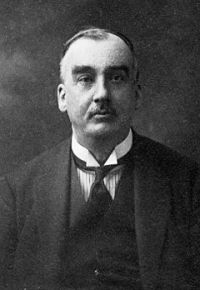
Portrait of Robert Koldewey Robert Koldewey,  The excavations at Babylon (1914)

“ In the narrow, often scarcely measurable joints there is fine white lime mortar as hard as stone, and here and there matting or reeds, which, however, do no damage to the hardness of the brickwork. In the lower parts the bricks are redder and softer and the mortar is grey, less solid, and reddish at the edges. For this reason the brick robbers have here preferred to work underground in search of the lower bricks, which are more easily removed. ”
Source: Gutenberg

Henry H. Saylor,  Making a Fireplace

“ It is dangerous to build a chimney with a single four-inch thickness of brick between the flue and whatever may adjoin the chimney. Of course no wood should be allowed to come within an inch or two of the brickwork in any event, but with a single thickness of brick, unlined, there is always the danger that the mortar will crumble from a joint and leave an opening through which it would be an easy matter [17] for sparks or flame to do considerable damage. ”
Source: Gutenberg

Get perspective with Kwize: daily news enlightened by great literature