Bricklaying

Definition and stakes

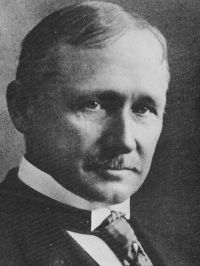
Portrait of Frederick Winslow Taylor Frederick Winslow Taylor,  The Principles of Scientific Management (1913)

“ His bricklayers were taught his new method of bricklaying by their foreman. Those who failed to profit by their teaching were dropped, and each man as he became proficient under the new method, received a substantial (not a small) increase in his wages. With a view to individualizing his workmen and stimulating each man to do his best, Mr. Gilbreth also developed an ingenious method for measuring and recording the number of bricks laid by each man, and for telling each workman at frequent intervals how many bricks he had succeeded in laying. ”
Source: Wikisource

James Bartlett,  1911 Encyclopædia Britannica (1911)

“ Every brick should be well wetted before it is laid, especially in hot dry weather, in order to wash off the dust from its surface, and to obtain more complete adhesion, and prevent it from absorbing water from the mortar in which it is bedded. The bricks are wetted either by the bricklayer dipping them in water as he uses them, or by water being thrown or sprinkled on them as they lie piled on the scaffold. In bricklaying with quick-setting cements an ample use of water is of even more importance. ”
Source: Wikisource

Get perspective with Kwize: daily news enlightened by great literature