Chronometer

Definition and stakes

Sir Norman Lockyer,  Stargazing: Past and Present

“ We have now given a description of the astronomical clock—the modern astronomical instrument which it was our duty to consider. There is another time-keeper—the chronometer—which we have to dwell upon. In the chronometer, instead of using the pendulum, we have a balance, the vibration of which is governed by a spiral spring, instead of by gravity, as the pendulum is. By such means we keep almost as accurate time as we do by employing a pendulum, the balance being corrected for temperature on principles, one of which we shall describe. ”
Source: Gutenberg

Various,  Graham's Magazine, Vol. XXX, No…

“ Mulford, though I fancy you can say little on such a subject, that I have not often heard, already, from my poor, dear, Mr. Budd.”
This was not very encouraging, truly, but Rose continuing to look interested, the mate proceeded.
“The use of the chronometer is to ascertain the longitude,” said Harry, “and the manner of doing it, is simply this: A chronometer is nothing more nor less, than a watch made with more care than usual, so as to keep the most accurate time. They are of all sizes, from that of a clock, down to this which I wear in my fob, and which is a watch in size and appearance.
”
Source: Gutenberg

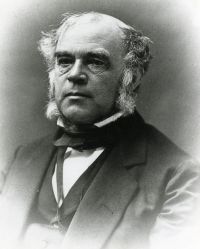
Portrait of Richard Anthony Proctor Richard Anthony Proctor,  Popular Science Monthly (1873)

“ But it must not be overlooked that in long voyages a chronometer, however perfect its construction, is more liable to get wrong than at a fixed station. That it is continually tossed and shaken is something, but is not the chief trial to which it is exposed. The great changes of temperature endured, when a ship passes from the temperate latitudes across the torrid zone to the temperate zone again, try a chronometer far more severely than any ordinary form of motion. ”
Source: Wikisource

Get perspective with Kwize: daily news enlightened by great literature