Chronograph

Definition and stakes

Frederick John Jervis-Smith,  1911 Encyclopædia Britannica, Volume 6… (1911)

“ Astronomical Chronographs.—The astronomical chronograph is an instrument whereby an observer is enabled to register the time of transit of a star on a sheet of paper attached to a revolving cylinder. A metal cylinder covered with a sheet of paper is rotated by clockwork controlled by a conical pendulum, or Dent.by a centrifugal clock governor such as is used for driving a telescope. By means of a screw longer than the cylinder, mounted parallel with the axis of the cylinder and rotated by the clockwork, a carriage is made to traverse close to the paper. ”

Source: Wikisource

Frederick John Jervis-Smith,  1911 Encyclopædia Britannica, Volume 6… (1911)

“ When an observation is about to be made the observer first notes the hour and minute, and, by pressing a contact key attached to a flexible cord at the transit instrument, marks the paper with a letter in Morse telegraph characters, indicating the hour and minute; he then waits till a micrometer wire cuts a star and at the instant closes the circuit, so that the second and fraction of a second are registered on the chronograph paper. ”
Source: Wikisource

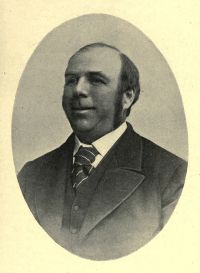
Portrait of Edward Singleton Holden Edward Singleton Holden,  Popular Science Monthly (1874)

“ Thus every second is automatically marked by the clock on the chronograph-paper. The observer also has the power to make a signal (easily distinguished from the clock-signal by its different length) , which is likewise permanently registered on the sheet. In this way, after the chronograph is in motion, the observer has merely to notice the instant at which the star is on the thread, and to press the key at that moment. At any subsequent time he must mark some hour ”
Source: Wikisource

Get perspective with Kwize: daily news enlightened by great literature