Commodity production

Definition and stakes

Guy Debord,  The Society of the Spectacle — Chapter 2… (1967)

“ It has been the economic basis of all human undertakings. Within natural economies, the emergence of a commodity sector represented a surplus survival. Commodity production, which implies the exchange of varied products between independent producers, tended for a long time to retain its small-scale craft aspects, relegated as it was to a marginal economic role where its quantitative reality was still hidden. But whenever it encountered the social conditions of large-scale commerce and capital accumulation, it took total control of the economy. ”
Source: Wikisource

J. A. Hobson,  The Evolution of Modern Capitalism…

“ Each kind of commodity, as it passes through the many processes from the earth to the consumer, may be looked upon as a stream whose channel is broader at some points and narrower at others. Different streams of commodities narrow at different places. Some are narrowest and in fewest hands at the transport stage, when the raw material is being concentrated for production, others in one of the processes of manufacture, others in the hands of export merchants. ”
Source: Gutenberg

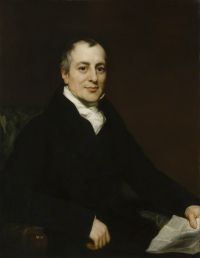
Portrait of John Stuart Mill John Stuart Mill,  Principles of Political Economy (1871)

“ When a commodity is not only made by labour and capital, but can be made by them in indefinite quantity, this Necessary Value, the minimum with which the producers will be content, is also, if competition is free and active, the maximum which they can expect. If the value of a commodity is such that it repays the cost of production not only with the customary, but with a higher rate of profit, capital rushes to share in this extra gain, and by increasing the supply of the article, reduces its value. ”
Source: Wikisource

Get perspective with Kwize: daily news enlightened by great literature