Common ownership

Definition and stakes

Sir John W. Salmond,  Jurisprudence (1913)

“ Among the various reasons for admitting this fictitious extension of personality, we may distinguish one as of general and fundamental importance, namely, the difficulty which the law finds in dealing with common interests vested in large numbers of individuals and with common action in the management and protection of such interests. The normal state of things—that with which the law is familiar, and to which its principles are conformed—is individual ownership. With a single individual the law knows well how to deal, but common ownership is a source of serious and manifold difficulties. ”
Source: Gutenberg

Sir John W. Salmond,  Jurisprudence (1913)

“ If two persons carry on a partnership, or own and manage property in common, complications arise, with which nevertheless the law can deal without calling in the aid of fresh conceptions. But what if there are fifty or a hundred joint owners? With such a state of facts legal principles and conceptions based on the type of individual ownership are scarcely competent to deal. How shall this multitude manage its common interests and affairs? ”
Source: Gutenberg

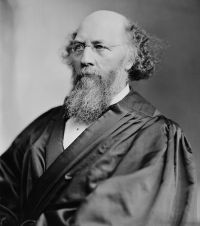
Portrait of Morrison Waite Morrison Waite,  Intermingled Cotton Cases — Opinion of the Court

“ Each contributor to a common fund becomes interested in the fund in proportion to his contribution. Each owner of property intermingled with other property of the same kind and value, and stored in a common mass, becomes the owner as tenant in common of an interest in the mass proportionate to his contribution. If loss occurs while the common ownership continues, each owner must sustain his proportionate share. ”
Source: Wikisource

Get perspective with Kwize: daily news enlightened by great literature